Workplace Investigations in the UAE: Identifying Risks and Responding to Misconduct
Legal & Compliance

Marie Roland
Partnership Marketing Manager
Published on
Reading time
6 min

Table of contents
Subscribe to our newsletter

Workplace Investigations in the UAE: Identifying Risks and Responding to Misconduct
Organizations are rarely dealing with a first-time incident when a workplace concern is finally reported. More often, it's the result of a problem that's been building over time. Fraud, misconduct, data misuse, and harassment often go unnoticed until they become serious.
In our recent webinar, employment law experts Dilini Loku, Legal Director, and Thenji Moyo, Partner at Gateley Middle East, shared practical guidance on workplace investigations in the UAE.
They discussed how organizations can identify risks early, conduct fair and legally defensible investigations, and build reporting channels employees trust. Here's what they covered.
Why Workplace Concerns Are Often Reported Too Late
Fraud, data misuse, harassment, expense abuse, and unresolved employee complaints often point to bigger problems within an organization.
As Dilini explained during the session:
“By the time an organization becomes aware of the problem, it's rarely the first incident. It usually points to issues that have taken place over weeks, months, or even years. None of these issues are isolated. There’s usually a broader pattern of behavioral issues within the organization."
These risks often go unnoticed because organizations rely too heavily on informal processes, don't document concerns consistently, lack effective reporting channels, or haven't built a culture where employees feel comfortable speaking up. Remote and hybrid work has added another layer of complexity, making it harder to spot patterns of behavior or identify misuse of resources.
The cost of waiting can be significant. Organizations risk reputational damage, legal exposure under UAE Labour Law, regulatory scrutiny, and a loss of employee trust when concerns aren't addressed early.
Building Reporting Channels Employees Trust
Clear policies are important, but they only work when employees understand them and know how to use them.
As Thenji put it:
"Governance doesn’t have to be overly complicated. If you break down different policies into bite-sized training sessions, maybe 10-minute sessions, you often find that this is a more effective way to make sure employees understand what the expectations are."
Under UAE Labour Law, organizations with 50 or more employees must have, at minimum, grievance and disciplinary procedures in place. Best practice goes further by covering anti-bribery, harassment, whistleblowing, and data protection, with policies communicated regularly—not just during onboarding.
It's equally important that employees know how to use those reporting channels. As Thenji highlighted, many employees don't know who to report concerns to, what happens after they report them, or how their confidentiality will be protected.
"Pulse checks and anonymous surveys are really important. When people feel that speaking up won't lead to any form of retaliation, that usually gives a real indication of the work culture and whether employees are happy within the organization."
Organizations like FaceUp help with exactly this by providing anonymous reporting channels, pulse surveys, case management tools, and investigations that give HR and compliance teams earlier visibility into workplace risks.
Trusted by more than 3,600 organizations across 70+ countries, FaceUp helps companies build the kind of structured, transparent reporting environment that Thenji and Dilini described throughout the session.
Key Steps in Workplace Investigations
Not every workplace concern requires a formal investigation. Before deciding how to respond, organizations need to understand the nature of the issue and determine the right course of action.
"When a concern is raised, the first step is to understand what you're dealing with. Is it bullying, harassment, discrimination, retaliation? A health and safety issue? Or conflicts with colleagues, managers, micromanagement, or unsafe working conditions?
Understanding the issue helps determine the right approach; can it be resolved informally, or does it require a full investigation?"
If a formal investigation is needed, Dilini walked through what that process should look like. It starts with an investigation plan, something that’s often overlooked. The plan should cover who’s involved, how confidentiality will be maintained, which witnesses will be interviewed, and how evidence will be gathered.
Dilini also highlighted an increasingly common challenge: off-channel communication. Important evidence is often found in WhatsApp messages, Teams chats, and other messaging platforms, so organizations need to include those sources when gathering evidence.
UAE Labour Law also sets clear statutory timelines. Allegations must be investigated within 30 days of discovery, and any sanctions must be imposed within 60 days of the investigation outcome. Missing those deadlines can expose organizations to legal risk.
Commons Mistakes During Workplace Investigations
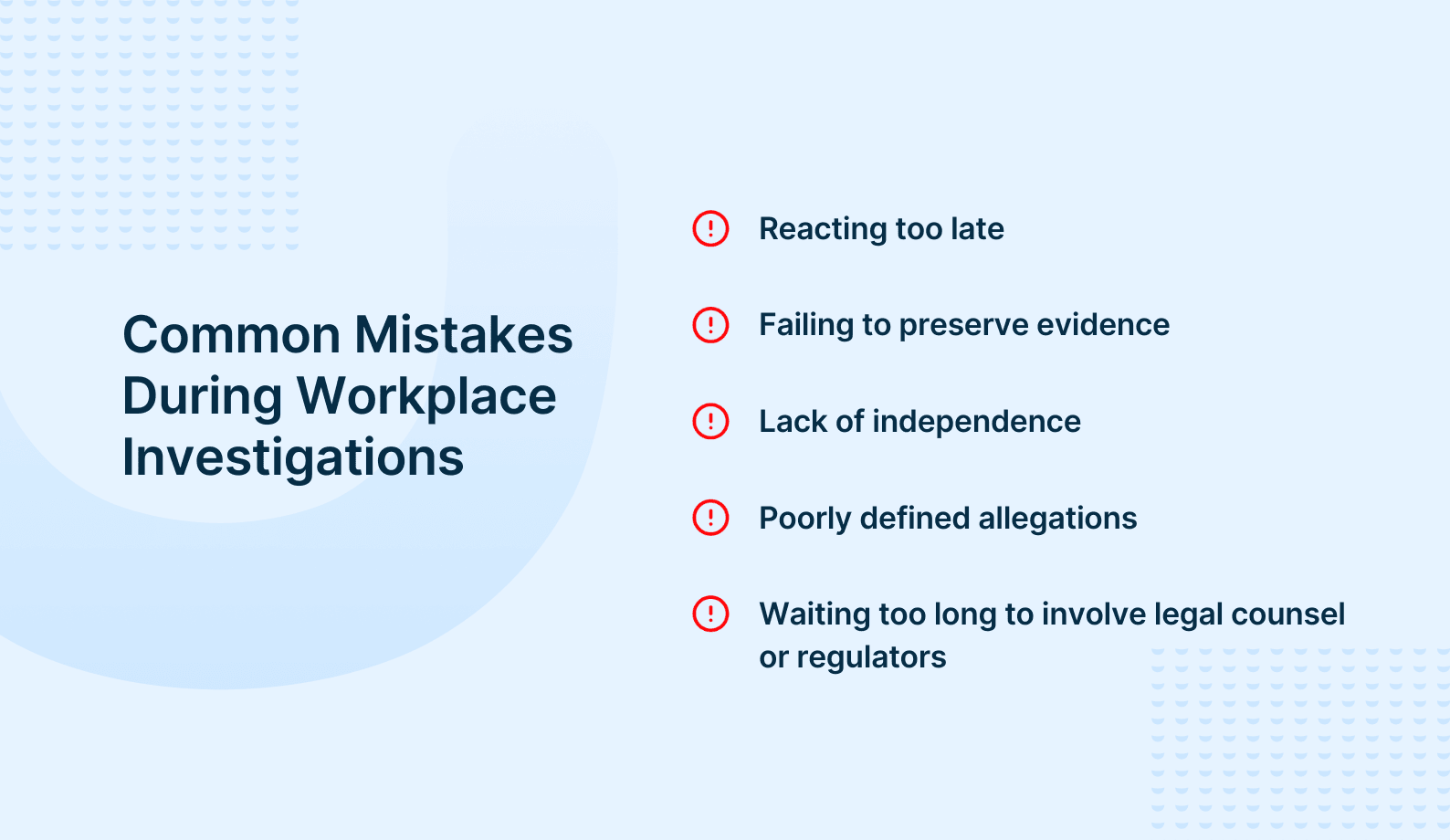
Both speakers highlighted common investigation mistakes that can make it harder to reach a fair and defensible outcome.
Reacting too late.
By the time organizations act, evidence may already be compromised and the legal window may be closing.
Failing to preserve evidence
Once an accused employee becomes aware of an investigation, important data can be deleted. Preservation notices and securing devices early are critical steps that organizations often miss.
Lack of independence
Investigations should be led by someone with no involvement in the underlying issue.
As Thenji noted:
"Making sure evidence is preserved is really important. If it's a very serious complaint, it's important to make sure that investigators are independent as far as possible. Sometimes that's difficult for small organizations, but having some level of independence is essential to preserving the integrity of the investigation."
Poorly defined allegations
Allegations that don't align with the specific grounds set out in Article 44 of UAE Labour Law can make termination decisions much harder to defend.
Waiting too long to involve legal counsel or regulators
Where a regulatory issue is involved, it's important to bring regulators in early. They would rather be informed upfront than discover later that an organization handled an issue they should have been notified about.
Building a Culture Where Employees Speak Up
Building a culture where employees report concerns early makes every part of the investigation process easier.
As Dilini explained:
"Employees will report concerns earlier if they trust that the organization will handle them fairly, consistently, and without any form of retaliation or detrimental treatment."
That trust is built through consistency, transparency, and follow-through. When employees see concerns handled fairly, regardless of seniority, they're more likely to speak up. When they see issues ignored or handled differently depending on who is involved, trust quickly erodes.
Moving From Reactive to Proactive Investigations
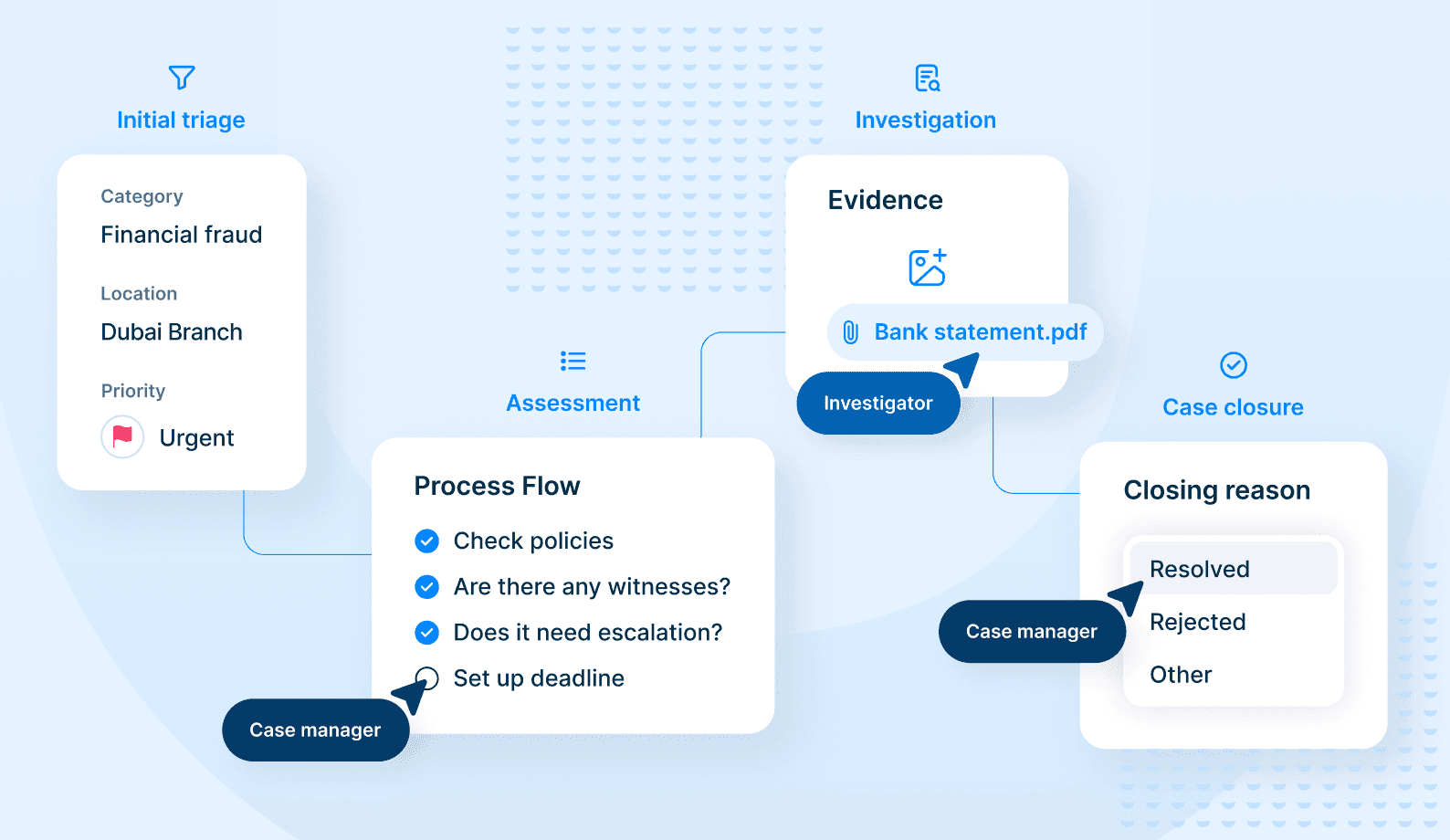
One of the biggest takeaways from the session was that workplace investigations shouldn't be seen as a burden or a sign that something has gone badly wrong. They're an important tool for uncovering issues, addressing breaches, and helping organizations operate the way they should.
As Dilini put it:
"It's always important to be proactive rather than reactive when it comes to workplace issues. What are we doing? We're fostering a positive work environment and culture. Investigations uncover legal issues and breaches, helping to ensure that the company operates the way it should."
The organizations that manage workplace risk best don't wait for problems to escalate. They build the right foundations from the start with clear policies, trained people, trusted reporting channels, and the confidence to act when concerns are raised.
Watch the Full Webinar
This article covers the key highlights, but the full session goes much deeper, including a live Q&A on the most common investigation challenges organizations face in the UAE, the mistakes employers make most often, and practical ways to encourage employees to report concerns earlier.
Watch the full webinar recording here.
Keep Reading
Alaa El-Shaarawi2026-10-0510 min
Gulf construction safety: Why on-site hazard reporting keeps breaking
Legal & Compliance
Alaa El-Shaarawi2026-10-028 min
UAE whistleblowing: The biggest programs are being built where no law requires them
Legal & Compliance
Alaa El-Shaarawi2026-09-249 min
EU AI Act Whistleblowing: What Changed on August 2, 2026
Legal & Compliance
Alaa El-Shaarawi2026-09-095 min
Introducing Documents: Your Own Compliance Library in FaceUp
Legal & Compliance