Legal & Compliance

Alaa El-Shaarawi
Copywriter and Content Manager
Published
2026-01-07
Reading time
8 min
Table of contents
Subscribe to our newsletter

Discrimination can be subtle or overt, but its effects are always damaging. It shows up when supervisors repeatedly overlook certain employees for projects, students are sidelined because of their identity, or staff face repeated microaggressions in meetings or everyday interactions. Over time, these behaviors break trust, even when each incident seems minor on its own.
For organizations and schools committed to fairness, a comprehensive equal opportunity and anti-discrimination policy is both a legal obligation and a practical necessity for protecting people and creating a healthy, inclusive environment. The policy shapes daily interactions, guides decisions, and sets clear expectations for how people treat one another.
For HR professionals, DEI officers, school administrators, business owners, and compliance managers, creating this policy means balancing legal requirements with real-world application. It must clearly guide behavior, define reporting channels, and establish accountability without becoming abstract or unreadable.
In this post, we’ll explore what an anti-discrimination policy should include, how it supports equal opportunity, and practical steps to make it effective in workplaces and schools.

An anti-discrimination policy lays out how an organization prevents and responds to unfair treatment, harassment, and other unwelcome conduct based on protected characteristics like race, national origin, gender identity, sexual orientation, marital status, military status, age, disability, or genetic information.
These policies are grounded in federal laws, including Title VII of the Civil Rights Act, the Americans with Disabilities Act, Title IX, and the Age Discrimination in Employment Act. State and local laws, university policies, and internal guidelines build on these requirements and translate them into everyday practice..
Discrimination doesn’t always look the same. It can appear subtly, through favoritism or exclusion from key projects, or more overtly, through harassment or deliberate exclusion.
Equal opportunity policies focus on giving everyone fair access to jobs, promotions, or educational programs, while anti-discrimination policies guide how people are treated day to day. Confusing the two can leave blind spots: fair hiring matters little if daily behavior goes unchecked, and strong conduct rules fall flat if opportunities aren’t equal.
Together, they help organizations comply with federal laws, including U.S. Equal Employment Opportunity Commission (EEOC) guidelines, and create environments where people feel respected, included, and safe.
Policies should cover all individuals, including employees, students, volunteers, and contractors, and ideally include a visual checklist of protected characteristics for clarity. They often complement an anti-harassment policy, creating a clear, comprehensive framework for fairness.
Without clear policies, workplaces and schools can quickly lose trust and engagement. People hold back, unsure what’s acceptable or afraid of retaliation, and small issues can escalate into bigger problems.
A well-crafted anti-discrimination policy tackles this head-on. It sets clear expectations for behavior, explains how to report concerns, defines consequences, and makes protections against retaliation obvious.
Whistleblowing tools like FaceUp let individuals report issues anonymously, giving them the confidence to speak up without putting themselves at immediate risk.
A policy only works when it’s practical, clear, and tied to real situations people encounter every day. Here’s what your policy should include:
Start with a statement that shows the organization’s commitment. For example:
| “Our organization is committed to a work and educational environment free from discrimination, harassment, and retaliation. Every individual has the right to equal treatment regardless of race, national origin, gender identity, sexual orientation, marital status, military status, age, disability, or genetic information.” |
This statement sets the tone and gives staff and students a point of reference when questions arise.
Spell out who and what the policy covers—employees, students, contractors, and volunteers—and where it applies, from offices and campuses to remote work, events, and social media. Being specific prevents confusion about when the policy matters.
List all protected characteristics, including gender expression, genetic information, and marital status. Using checklists or examples helps everyone understand what’s protected and reduces misunderstandings.
This policy covers discrimination or harassment based on:
| Category | Examples / Notes |
| Race & Ethnicity | All racial and ethnic backgrounds |
| National Origin | Country of birth, ancestry, or citizenship |
| Gender Identity & Expression | Including transgender, non-binary, and gender non-conforming |
| Sexual Orientation | Gay, lesbian, bisexual, pansexual, asexual, etc. |
| Marital / Family Status | Married, single, divorced, parenting status |
| Military / Veteran Status | Active duty, reserves, veterans |
| Age | All ages; protects against ageism |
| Disability | Physical, mental, or sensory disabilities |
| Genetic Information | Family medical history, genetic testing results |
| Religion / Belief | Faith, spirituality, or lack thereof |
| Other Protected Categories | As defined by local or state law (customizable) |
Define discrimination, harassment, and unwelcome behavior with examples people actually encounter: in meetings, classrooms, online communication, or during educational programs.
Include anonymized case studies or sample complaints to illustrate common issues and make expectations easier to understand and enforce.
Explain how people can request accommodations under ADA, Title IX, or other laws. Outline review steps, possible outcomes, and conditions. Clear guidance protects both the individual requesting support and the organization responding.
Offer multiple ways to report concerns, including human resources contacts, supervisors, anonymous forms, EEOC anonymous complaint, or platforms like FaceUp. Early reporting matters. The easier it is to speak up, the faster problems can be addressed.
Describe the steps from acknowledgment to resolution, using a reasonable person standard. Keep confidentiality while maintaining transparency in timelines and process. Consistency in investigations builds trust and credibility.
Explain what happens when rules are broken—formal warnings, demotion, or termination—and make clear that retaliation is never allowed. Clear consequences show that the policy is enforceable, not just symbolic.
Provide regular training on discrimination and harassment. Platforms like FaceUp can track participation and highlight gaps. Ongoing learning keeps expectations visible and the policy alive in daily practice.
Review policies regularly to stay aligned with federal, state, local, and institutional requirements. Policies should evolve with social norms and organizational needs, keeping them relevant and practical.
Putting a policy on paper is just the start. The real work is making it part of everyday life. Implementation means building habits, setting clear expectations, and creating systems that reinforce the policy every day. It’s about turning guidance into action so that managers, staff, and students know what’s expected, how to respond, and where to go for support.
Bias at work rarely announces itself. It shows up in patterns: who gets listened to, who gets passed over, who stops raising their hand. Over time, those patterns affect morale, performance, and whether people stay or quietly disengage.
A clear anti-discrimination policy helps interrupt that cycle. It gives managers a shared baseline for decisions and gives employees a way to speak up before frustration turns into resignation or formal complaints.
Policies are most effective in areas like:
For practical guidance on reducing bias and protecting employees, see our guide on how to prevent workplace discrimination. Even subtle situations, like being excluded at work, can count as discrimination.
In schools, discrimination often feels quieter but cuts just as deep. It can shape who feels safe participating, whose concerns are taken seriously, and who learns to stay silent.
A strong policy gives schools a shared response when something goes wrong. It supports students, guides staff, and makes expectations clear across classrooms, offices, and activities.
Key focus areas include:

Effective implementation is a process. It starts with clear documentation, but succeeds through repetition, visibility, and accountability.
Organizations that implement policies well tend to:
Policies become meaningful when people see them applied consistently, even when it’s uncomfortable.
This kind of language only works when it reflects how the organization actually responds, not how it hopes to be seen.
| Our organization prohibits discrimination and harassment in all employment, educational, and organizational activities. Staff and students are entitled to an environment free from bias based on race, national origin, gender identity, sexual orientation, marital status, military status, age, disability, genetic information, or any other protected characteristic. Reports of discrimination will be investigated promptly, confidentially, and without retaliation. |
Technology helps when it lowers the cost of speaking up.
Anonymous reporting tools like FaceUp remove some of the fear that keeps people silent. They make reporting easier, documentation clearer, and follow-up harder to avoid. The value isn’t the tool itself, but what changes when people believe they can be heard.
Even well-intentioned policies can fail if they are unclear or incomplete. Common issues include:
When people don’t see follow-through, they stop reporting. And once reporting stops, problems don’t disappear. They just go underground.
When policies are applied consistently, people feel safer reporting issues, investigations are fairer, and the overall environment becomes more inclusive. Organizations notice higher trust, better morale, and lower legal risk.
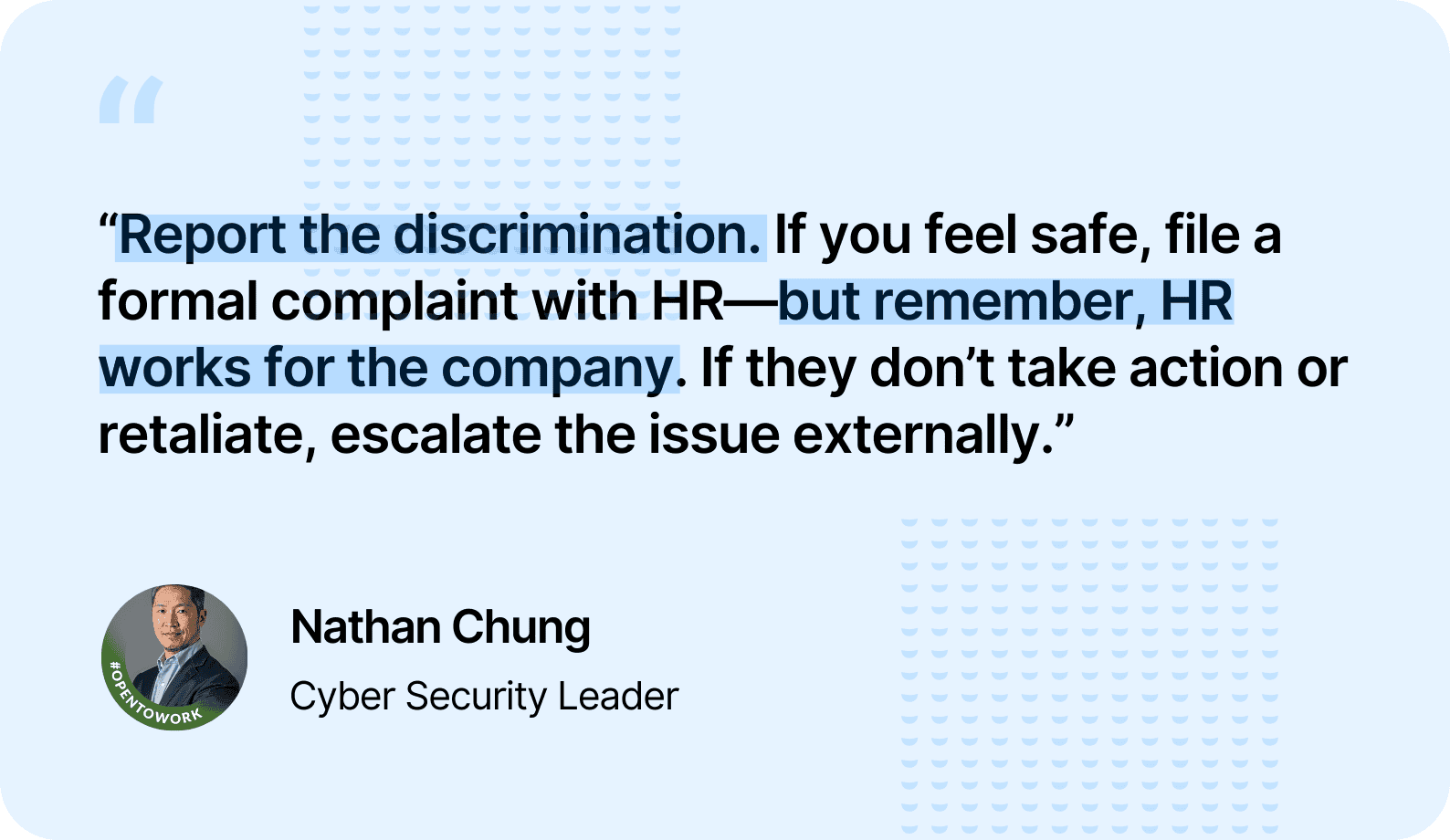
This shows why having clear escalation paths and trusted reporting options is essential for any organization. Tools like FaceUp help individuals raise concerns anonymously, so they can speak up without fear of immediate backlash.
Policies don’t fail because they’re incomplete. They fail because they aren’t lived.
Implementation works best when policies are introduced through conversation, reinforced through training, and revisited when things go wrong—feedback matters. So does consistency, especially when enforcement feels uncomfortable.
When people see the policy applied fairly, even in difficult situations, it starts to mean something.
Download our risk assessment and engagement checklist to create a safer, more equitable environment today. Or book a demo to experience a smarter, more effective approach to anti-discrimination compliance.

Keep Reading
Alaa El-Shaarawi2026-10-0510 min
Legal & Compliance
Alaa El-Shaarawi2026-10-028 min
Legal & Compliance

Alaa El-Shaarawi2026-09-249 min
Legal & Compliance
Alaa El-Shaarawi2026-09-095 min
Legal & Compliance