

Centralize Reports & Cases
Replace outdated processes with modern, compliant workflows.

Alaa El-Shaarawi
Copywriter and Content Manager
Published
2025-12-21
Reading time
6 min
Table of contents
Subscribe to our newsletter

Work doesn’t just happen in offices or on video calls. It happens in conversations, feedback sessions, Slack messages, jokes that land well, and jokes that don’t. Most organizations don’t set out to create a hostile or offensive work environment, yet many find themselves reacting to complaints they never expected.
An anti-harassment policy exists for exactly this reason. Not as a defensive document, but as a shared understanding of how people are expected to treat one another at work.
For HR managers, business owners, compliance professionals, and employee relations teams, the challenge is rarely about intent. It’s about clarity, consistency, and having a process employees trust when something goes wrong.
An anti-harassment policy defines the standards of behavior in the workplace and explains what happens when those standards are violated. It addresses workplace harassment in all its forms, including:
It also makes clear that harassment can be based on protected characteristics such as sex, sexual orientation, gender identity, marital status, national origin, genetic information, medical conditions, religion, or disability.
Importantly, the policy applies to everyone and everywhere work happens. Offices, business travel, conferences, chats, emails, video calls, and hybrid or remote work environments are all part of the same work environment.
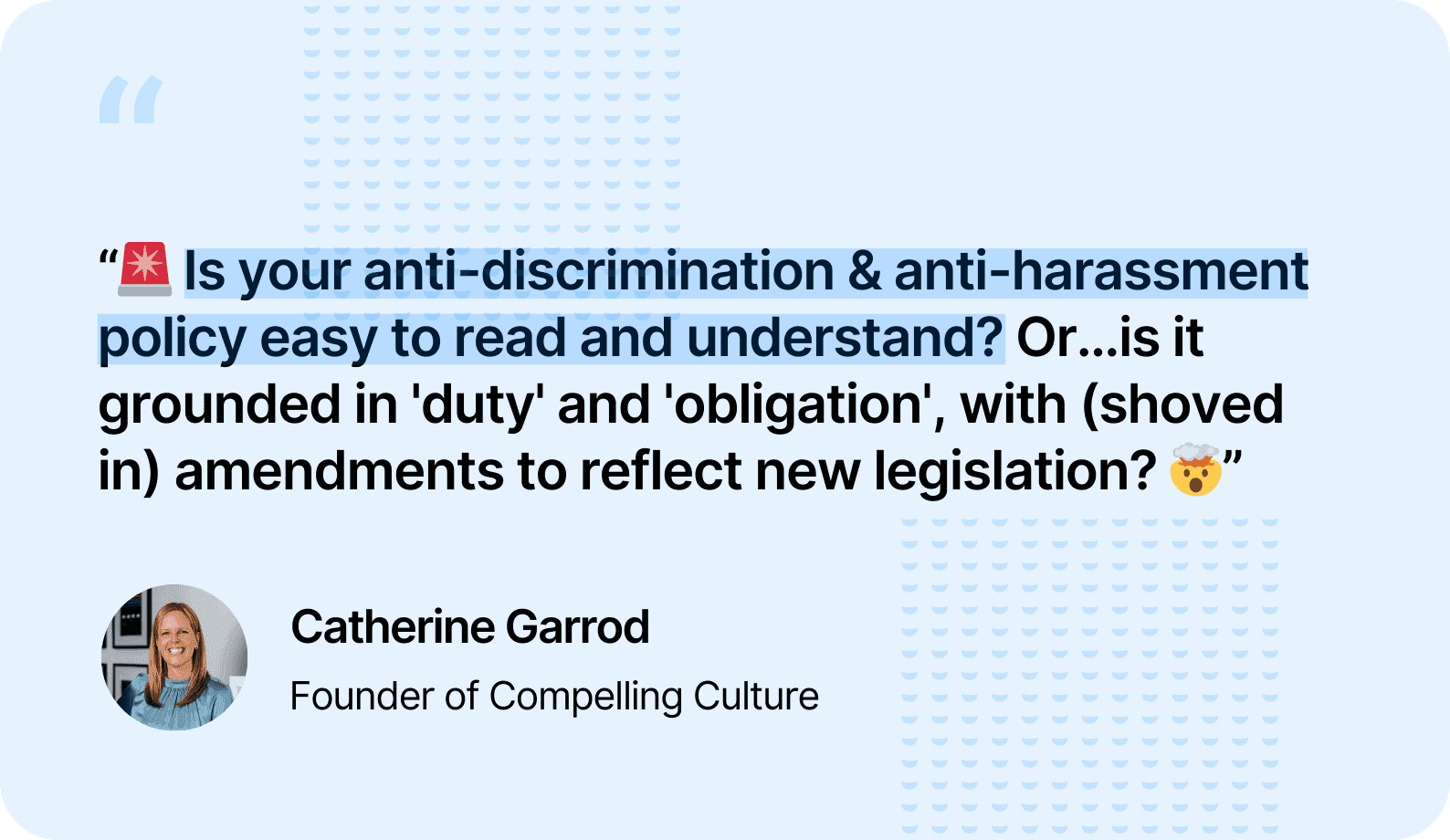
A policy that employees can’t understand won’t be used. A policy that feels disconnected from daily work will be ignored.
Most organizations anchor their policy in federal law and guidance from the Equal Employment Opportunity Commission (EEOC). The EEOC anti-harassment policy framework helps employers meet their obligations under Title VII and other applicable laws while protecting equal employment opportunity.
Harassment under federal law is unwelcome conduct that a reasonable person would find intimidating, hostile, or abusive. When harassment influences an employment decision, interferes with work performance, or creates an offensive work environment, employers are expected to take appropriate action.
Referencing the official EEOC guidance is essential, but copying it word for word rarely works. Employees need to understand how the law translates into real behavior and real consequences inside their organization.
It’s easy to describe the purpose of an anti-harassment policy in legal terms: reduce risk, comply with the law, and avoid lawsuits. In practice, its purpose is far more human.
A strong policy prevents harassment by setting expectations early. It gives employees confidence that reporting harassment won’t harm their careers. It gives managers a framework for responding consistently. And it signals that silence isn’t the preferred strategy.
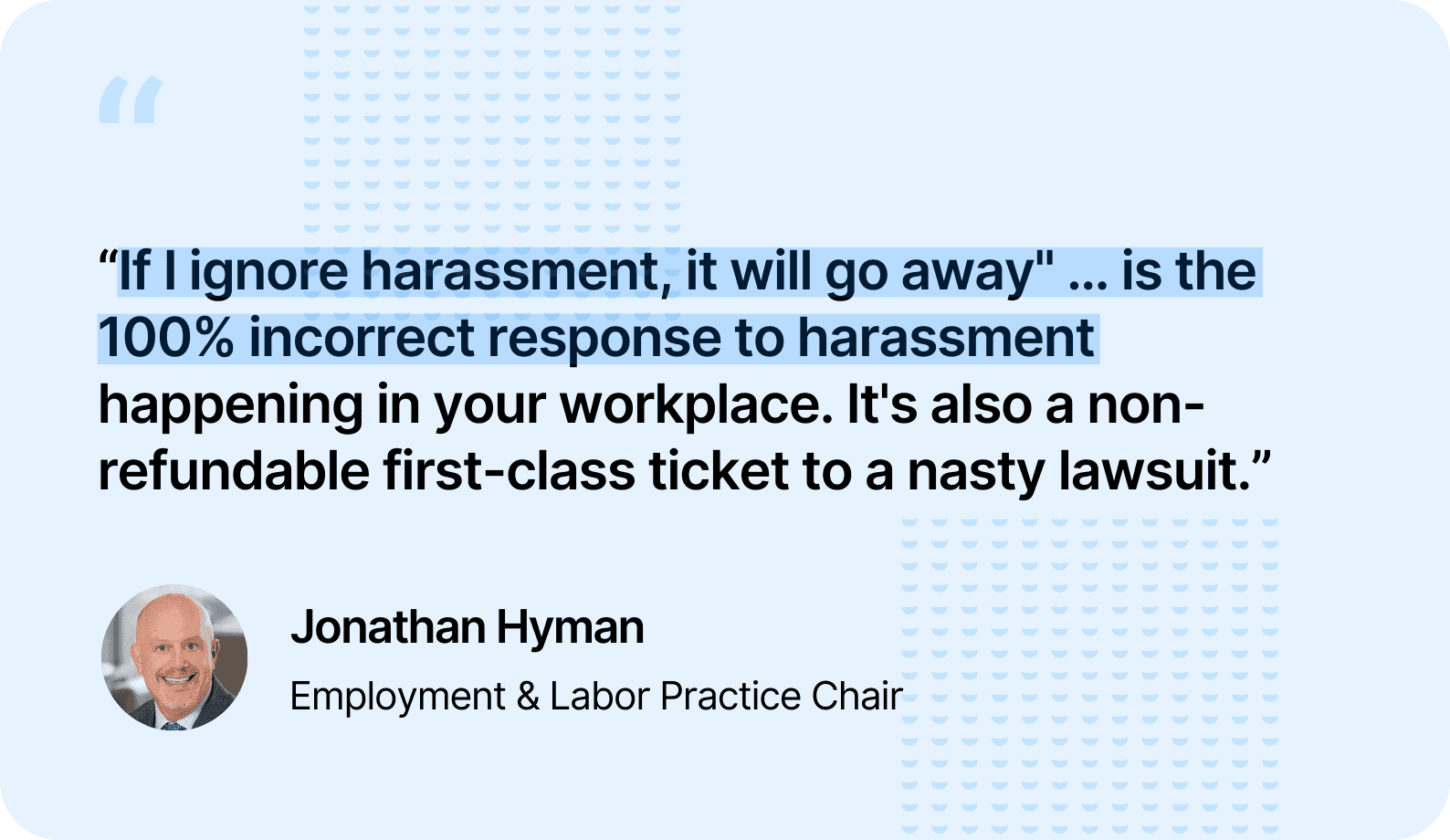
Ignoring harassment rarely makes it disappear. More often, it allows patterns of behavior to escalate.
A practical anti-harassment and discrimination policy in the workplace should include the following sections:
| Section | Why It Matters |
| Statement of Policy | Establishes commitment to a respectful, non-discriminatory work environment. |
| Scope | Clarifies who is covered, including contractors, interns, remote workers, and third parties. |
| Definition of Harassment | Explains what harassment means, including sexual harassment and other forms of harassment. |
| Types of Harassment | Covers verbal, physical, visual, digital, and psychological harassment. |
| Prohibited Conduct | Lists behaviors such as slurs, epithets, unwelcome conduct, sexual favors, or offensive jokes. |
| Reporting Harassment | Explains how employees can report harassment and violations of this policy. |
| Complaint Process | Describes what happens after a complaint of harassment is made. |
| Investigation Process | Commits to a prompt and impartial investigation of allegations of harassment. |
| Corrective Action | Outlines disciplinary action, demotion, or termination of employment if needed. |
| Protection From Retaliation | Reinforces that retaliation for reporting harassment is prohibited. |
| Policy Review | Confirms regular updates based on federal law and local laws. |
Employees often ask what is considered harassment, especially when behavior sits in a gray area. Harassment doesn’t require malicious intent. It’s assessed based on impact.
Examples of harassment at work include:
The reasonable person standard is often used. Would a reasonable person find the conduct hostile or abusive in this work environment?

Clear reporting channels are the difference between early intervention and prolonged harm. Employees should never have to guess how to report harassment or a violation of the anti-harassment policy.
A strong policy allows employees to:
Anonymous reporting tools like Faceup remove one of the biggest barriers to speaking up: fear of retaliation or career damage. This is especially important in small businesses or close-knit teams.
For employees unsure where to start, our guide on how to report a hostile work environment safely offers practical support.
Enforcement is where many policies fail. A policy that exists but is never used undermines trust.
Effective enforcement includes:
Corrective action may include training, formal warnings, demotion, or termination of employment. The goal is not punishment for its own sake but restoring a safe and respectful work environment.
Smaller organizations often worry they lack the capacity to implement a compliant anti-harassment and anti-discrimination policy. In reality, clarity matters more than scale.
Even without an internal legal or HR team, small businesses can:
Digital whistleblowing and compliance tools like Faceup help bridge the gap, providing structure and confidentiality without heavy overhead.
Harassment does not disappear when employees work remotely. It often shifts form. Messages, emojis, memes, and video calls can all become vehicles for harassing behavior.
Policies must explicitly address remote conduct and clarify that the same standards apply regardless of location. This is increasingly relevant as organizations navigate global teams and local laws.
For region-specific considerations, particularly in Europe, this overview of UK workplace harassment law provides useful context.
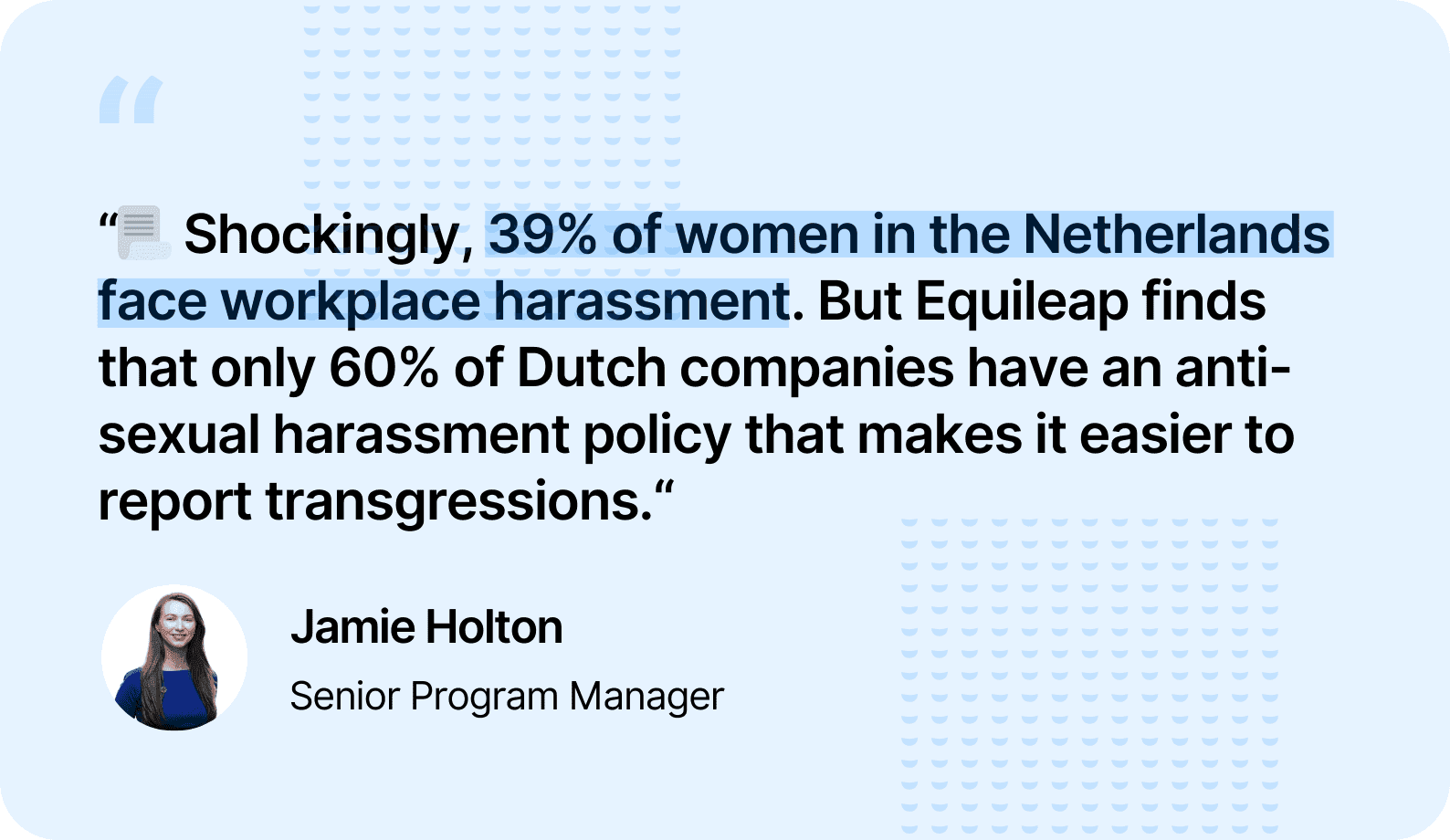
An anti-harassment policy sends a message long before it’s ever used. It tells employees whether the organization takes complaints seriously, whether leadership is accountable, and whether speaking up is safe.
When policies are clear, reporting is straightforward, and investigations are handled fairly, trust grows. Employees focus on their work instead of navigating uncertainty or fear.
If you’re building or reviewing your policy, our harassment investigation checklist offers a practical way to assess whether your reporting and investigation process is ready when it matters.
Most workplaces will face uncomfortable moments at some point. What defines an organization isn’t whether issues arise, but how they’re handled. A thoughtful anti-harassment policy provides structure when emotions run high and clarity when decisions matter most.
When employees know what harassment looks like, how to report it, and what will happen next, the workplace becomes more predictable, more respectful, and more human. That’s not just compliance. It’s culture, written down and lived every day.
Book a FaceUp demo to see how anonymous reporting and investigations can support your anti-harassment policy in practice.
Replace outdated processes with modern, compliant workflows.
Keep Reading
Alaa El-Shaarawi2026-10-028 min
Legal & Compliance

Alaa El-Shaarawi2026-09-249 min
Legal & Compliance
Alaa El-Shaarawi2026-09-095 min
Legal & Compliance

Mary Shirley2026-07-285 min
Workplace Environment