Legal & Compliance

Alaa El-Shaarawi
Copywriter and Content Manager
Published
2026-02-10
Reading time
8 min
Table of contents
Subscribe to our newsletter

Most workplace problems don’t start as major scandals. They usually start small. A missed overtime payment. A supervisor sharing private medical details without consent. A team member quietly pushed out after raising concerns about safety.
Many employees and even employers don’t immediately recognize these situations as employment law violations. That uncertainty creates risk for everyone involved. Employees may feel powerless or afraid to speak up. Employers may unknowingly allow practices that can lead to lawsuits, regulatory penalties, or long-term reputational damage.
Understanding how employment law violations happen, what legal protections exist, and how reporting works is essential for building workplaces where people feel safe and organizations remain compliant.
This guide breaks down the most common violations, explains legal consequences, and outlines practical steps for reporting concerns safely and effectively.

Employment law violations occur when an employer breaks federal, state, or local labor laws designed to protect workers’ rights, safety, and fair treatment. These laws regulate wages, working hours, workplace safety, discrimination, medical privacy, and union protections, among many other areas.
A violation of employee rights can look different depending on the situation. Sometimes it’s intentional misconduct. Other times it results from outdated policies, poor training, or misinterpreted regulations. Either way, employer violation of labor laws can have serious consequences for both the workforce and the organization.
The legal landscape surrounding employment practices continues to evolve. Regulations connected to the Fair Labor Standards Act (FLSA), Equal Employment Opportunity Commission (EEOC), Occupational Safety and Health Administration (OSHA), and Department of Labor (DOL) frequently change or expand.
Remote work, gig economy roles, data privacy rules, and expanded family leave protections have added complexity. Many employers struggle to maintain detailed records, track eligibility for benefits, or correctly classify independent contractors and non-exempt employees.
Employees face a different challenge. They often lack access to legal advice or internal HR support. Fear of retaliation or job loss discourages reporting. That silence can allow workplace misconduct to escalate.
Wage violations remain among the most common employment law violations globally. These violations typically fall under the FLSA and include:
One commonly misunderstood concept is the 7 minute rule for employees. Under federal guidance, employers may round time tracking to the nearest quarter hour. However, rounding must remain neutral and cannot consistently disadvantage workers. If rounding regularly reduces recorded work time, it may become a wage violation.
The Wage and Hour Division of the U.S. Department of Labor helps workers recover back wages and addresses hour law violations related to overtime pay, hours of work, and workweek record accuracy.
Violation of equal opportunity employment laws occurs when employees face unfair treatment based on protected characteristics such as race, gender, disability, religion, age, or sexual orientation.
Employment practices that can be challenged as discriminatory include:
Employees experiencing workplace discrimination have legal protections under the Civil Rights Act and related legislation. Remedies can include reinstatement, financial damages, and policy changes.
Retaliation happens when an employer punishes an employee for reporting misconduct, participating in an investigation, or filing complaints with regulatory bodies. It’s one of the most frequently reported employment law violation cases.
Examples include:
Strong whistleblower protections exist in many jurisdictions, but fear of retaliation remains a major barrier. Anonymous reporting channels can reduce that risk and help organizations detect issues early.
HIPAA law violations by employers occur when protected health information is improperly shared or accessed. Employer violation of HIPAA laws may include:
HIPAA protections extend to sensitive medical data, including mental health and disability-related information. Violations can trigger significant regulatory fines and lawsuits.
FMLA ensures eligible employees can take unpaid leave for medical or family reasons without losing their job or benefits. Violations may include:
Unsafe working conditions remain a serious issue across industries. OSHA regulations require employers to provide safe work environments and adequate training.
Employers cannot deny workers’ compensation when employees are injured performing job duties. Attempts to discourage reporting workplace injuries may qualify as an employer violating labor laws.
Violation of collective bargaining agreements occurs when employers fail to honor negotiated contracts with unions. Common examples include:
Employers violating collective bargaining agreement obligations can lead to arbitration disputes, regulatory action, or legal claims.
Serious misconduct often overlaps with employment law violations and may justify termination or legal action. Typical examples include:
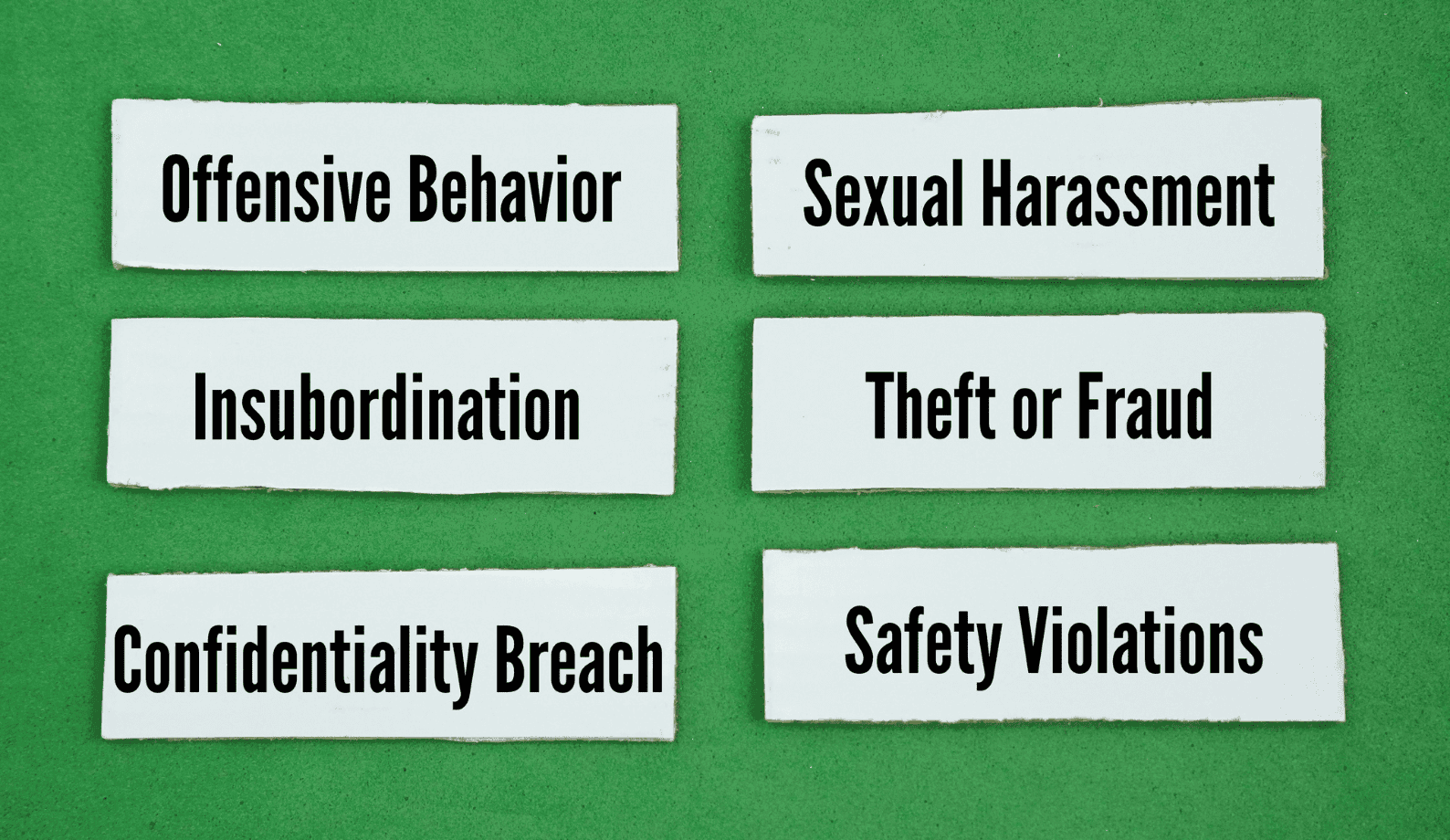
Many organizations address these issues through internal investigations and structured complaint procedures. For a deeper look at internal response strategies, FaceUp explores best practices in handling employee complaints and identifying misconduct in the workplace.
Several hospitality companies have faced lawsuits for unpaid overtime and off-the-clock work expectations. In many cases, employees were required to complete tasks before clocking in or after clocking out. Courts often required payment of back wages and additional damages.
Lesson: Accurate time tracking and transparent overtime policies are critical compliance tools.
In healthcare environments, employer violation of HIPAA laws has occurred when supervisors accessed medical records without authorization. These cases often resulted in federal fines and internal leadership changes.
Lesson: Medical privacy training must extend beyond compliance teams to frontline managers.
Manufacturing employees who reported unsafe machinery conditions faced termination or reassignment. Investigations later confirmed OSHA violations and wrongful termination claims.
Lesson: Encouraging safe reporting protects both employees and operational continuity.
Consequences for employers who violate laws extend beyond financial penalties. They may include:
Many organizations underestimate reputational damage. Negative publicity surrounding employment law violation cases can affect hiring, partnerships, and customer confidence.
Employees and HR professionals often ask how to report employment law violations safely. Reporting can occur through internal or external channels depending on the severity and nature of the concern.
Maintain detailed records including:
Documentation strengthens investigations and legal claims.
Most organizations encourage reporting through HR departments, ethics hotlines, or compliance teams. Anonymous reporting tools can help employees share concerns without fear of retaliation.
Whistleblowing platforms like FaceUp support confidential reporting and help organizations track patterns, investigate complaints, and resolve issues earlier before they escalate into regulatory violations.
If internal reporting fails or feels unsafe, employees can contact regulatory bodies such as:
These agencies can investigate complaints, enforce penalties, and support legal remedies.
Employment attorneys can help employees understand legal rights, evaluate claims, and pursue lawsuits if necessary. Employers may also consult legal advisors to address compliance gaps proactively.
Many workers hesitate to report misconduct because of fear. Anonymous reporting tools provide a safe way to escalate concerns while protecting employee identity.
Modern reporting systems allow organizations to:
FaceUp helps organizations build reporting systems that encourage open communication while reducing legal risk. When employees trust reporting processes, companies often identify issues before they become employment law violation cases.
Prevention requires more than written policies. It requires active culture building and ongoing education.
Key prevention strategies include:
The Fair Labor Standards Act protects employees through:
Enforcement remedies under the FLSA can include payment of back wages, civil penalties, and litigation support.
Employment law compliance is more than a legal responsibility. It’s a trust issue. Employees want fair pay, safe working environments, and protection against discrimination. Employers want sustainable operations and strong reputations.
When violations go unreported, both sides lose. Early reporting, transparent investigations, and supportive reporting channels allow organizations to correct issues quickly and maintain healthy workplace cultures.
Employees should never have to choose between job security and doing the right thing. Organizations that prioritize safe reporting mechanisms and proactive compliance often build stronger, more resilient teams.
If your organization is reviewing its reporting processes or looking to improve how workplace concerns are managed, exploring structured reporting tools can be a meaningful next step. FaceUp provides organizations with a secure way to receive, manage, and resolve workplace complaints while supporting compliance and employee trust.
Keep Reading
Alaa El-Shaarawi2026-09-249 min
Legal & Compliance
Alaa El-Shaarawi2026-09-095 min
Legal & Compliance
Mary Shirley2026-07-285 min
Workplace Environment
Marie Roland2026-07-276 min
Legal & Compliance