

Centralize Reports & Cases
Replace outdated processes with modern, compliant workflows.
Workplace Environment

Alaa El-Shaarawi
Copywriter and Content Manager
Published
2026-01-08
Reading time
8 min

Table of contents
Subscribe to our newsletter

Every office has moments that test a team’s culture. A junior developer spots a flaw in the product but stays quiet. A team member hesitates to share a bold idea in a meeting. Someone notices behavior that could become harassment, but isn’t sure if speaking up is safe. These micro-moments accumulate, shaping employee engagement, trust, and overall performance.
Psychological safety at work is the antidote. It allows people to take risks, voice ideas, and bring their full selves without fear of judgment or reprisal. Creating it is a cultural practice, actively cultivated by leaders, supported by HR, and reinforced in day-to-day interactions.
For HR professionals, team leaders, DEI specialists, and business owners, psychological safety can feel abstract. How do you measure it? How do you know it exists? How do you grow it without sacrificing accountability?
This guide provides a practical roadmap, real-world examples, and actionable tips for building a psychologically safe workplace your team can rely on every day.
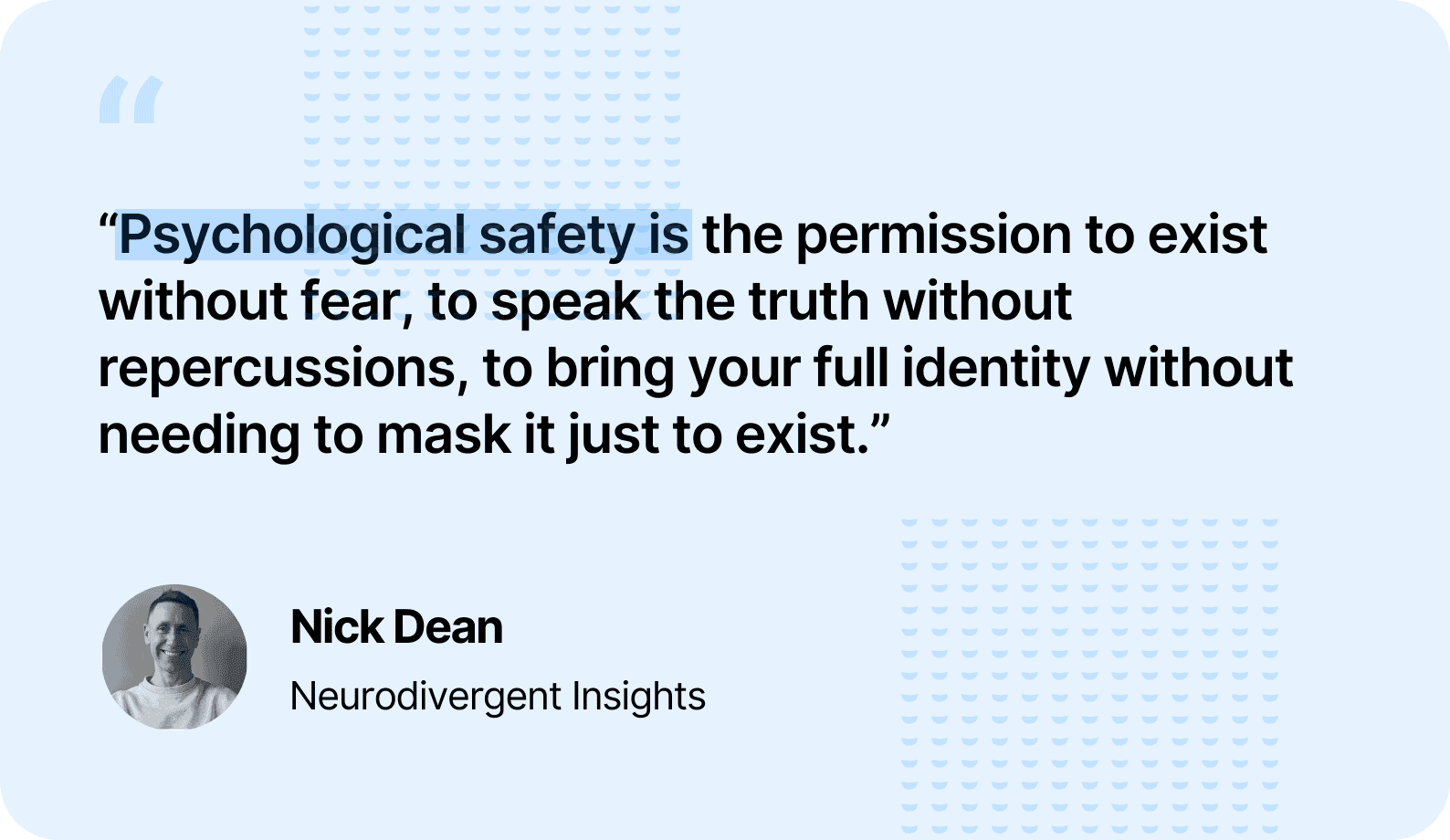
Psychological safety at work is the shared belief that employees can speak up with ideas, questions, or concerns without fear of negative consequences. It means they can take interpersonal risks, like admitting uncertainty, challenging decisions, or flagging mistakes, without fear of ridicule, punishment, or marginalization.
Psychological safety is often invisible until it isn’t there. Teams without it experience subtle disengagement: people hold back ideas, avoid challenging decisions, and hide mistakes. Over time, this silence costs innovation, productivity, and employee retention, ultimately leading to burnout.
High-performing organizations understand that safety fuels engagement. Google’s Project Aristotle and Gallup studies highlight a clear correlation: psychologically safe teams are more innovative, resilient, and collaborative.
Employees are willing to take interpersonal risks, like suggesting a new approach, reporting errors, or voicing concerns, because they trust their input will be valued rather than punished.
Even in a small startup, the stakes are real. Imagine a remote design team where a developer sees a critical bug but hesitates to speak up. Without psychological safety, the bug goes unnoticed, delaying launch and frustrating clients.
In a safe environment, employees speak up without hesitation, turning risks into faster solutions and better outcomes.
Psychological safety in the workplace isn’t about avoiding disagreement, lowering standards, or shielding people from accountability. Healthy teams still debate, make decisions, and hold one another responsible for outcomes. The difference is how those moments are handled.
In psychologically safe workplaces, mistakes are examined rather than hidden. Questions are welcomed rather than dismissed. Challenging a decision isn’t seen as disloyal, but as part of good work.
The concept can be broken into four pillars, each guiding leaders in their daily behavior:
Each pillar is a lens for assessing how well your team supports open communication, trust, and inclusion.
Before you can build psychological safety, you need to recognize when it’s missing. The absence of safety rarely shows up as open conflict or formal complaints. More often, it appears quietly, through behaviors that feel “normal” over time.
In fear-based cultures, teams often default to self-protection rather than contribution. You may notice:
These behaviors are often misattributed to personality, confidence, or motivation. In reality, they’re signals of a culture where speaking up feels unsafe.
Leaders are the architects of psychological safety. Every action, word, and decision sets the tone for what’s safe, expected, and rewarded. Without visible leadership buy-in, even the best initiatives will struggle to take hold.
Cultivating safety is also a critical aspect of leadership development, helping leaders grow in empathy, accountability, and team influence.
Key behaviors that make a difference:
It’s not about creating a “safe bubble,” but about enabling challenge, accountability, and growth. Teams thrive when they know their leaders are guiding by example.
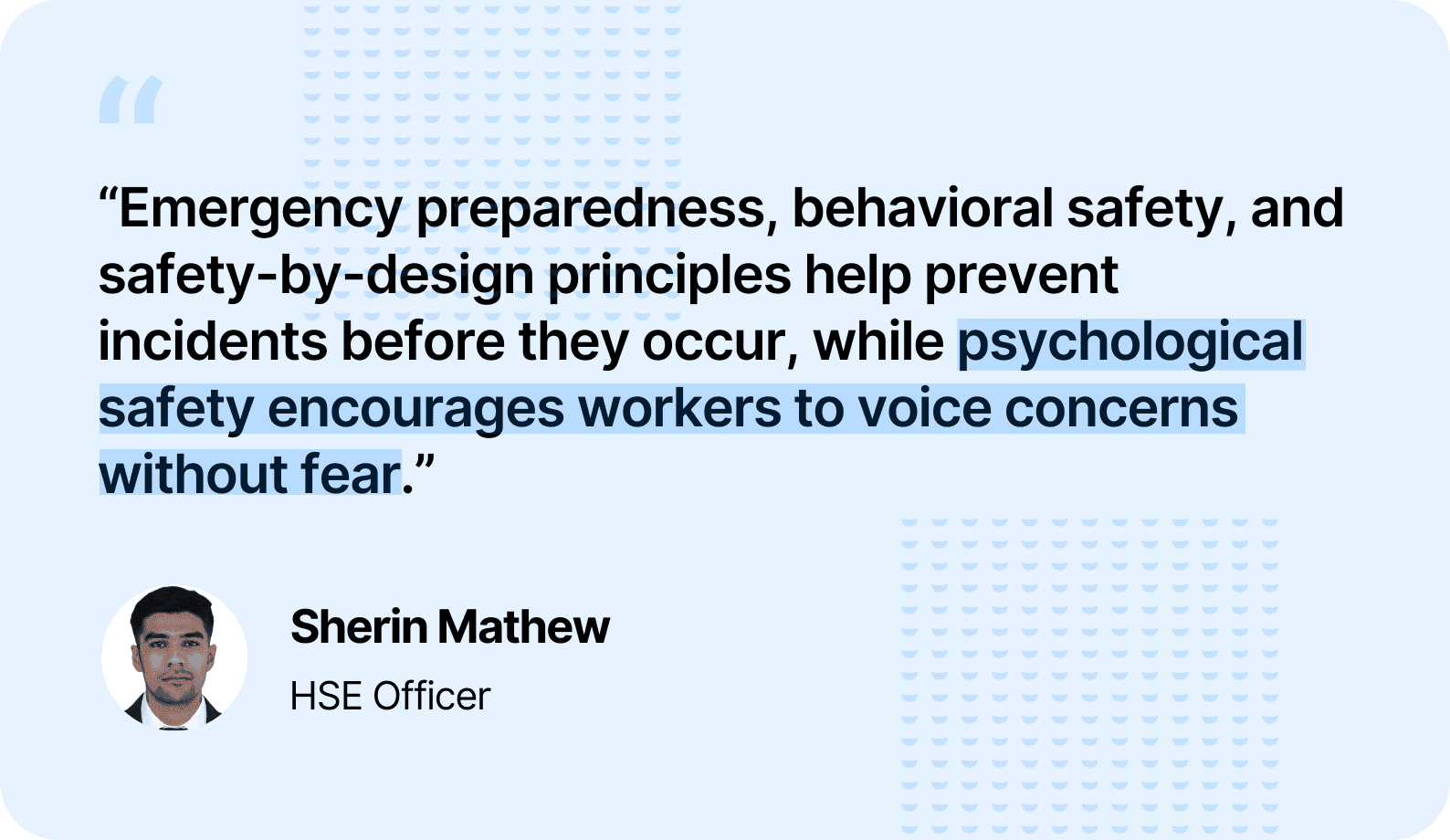
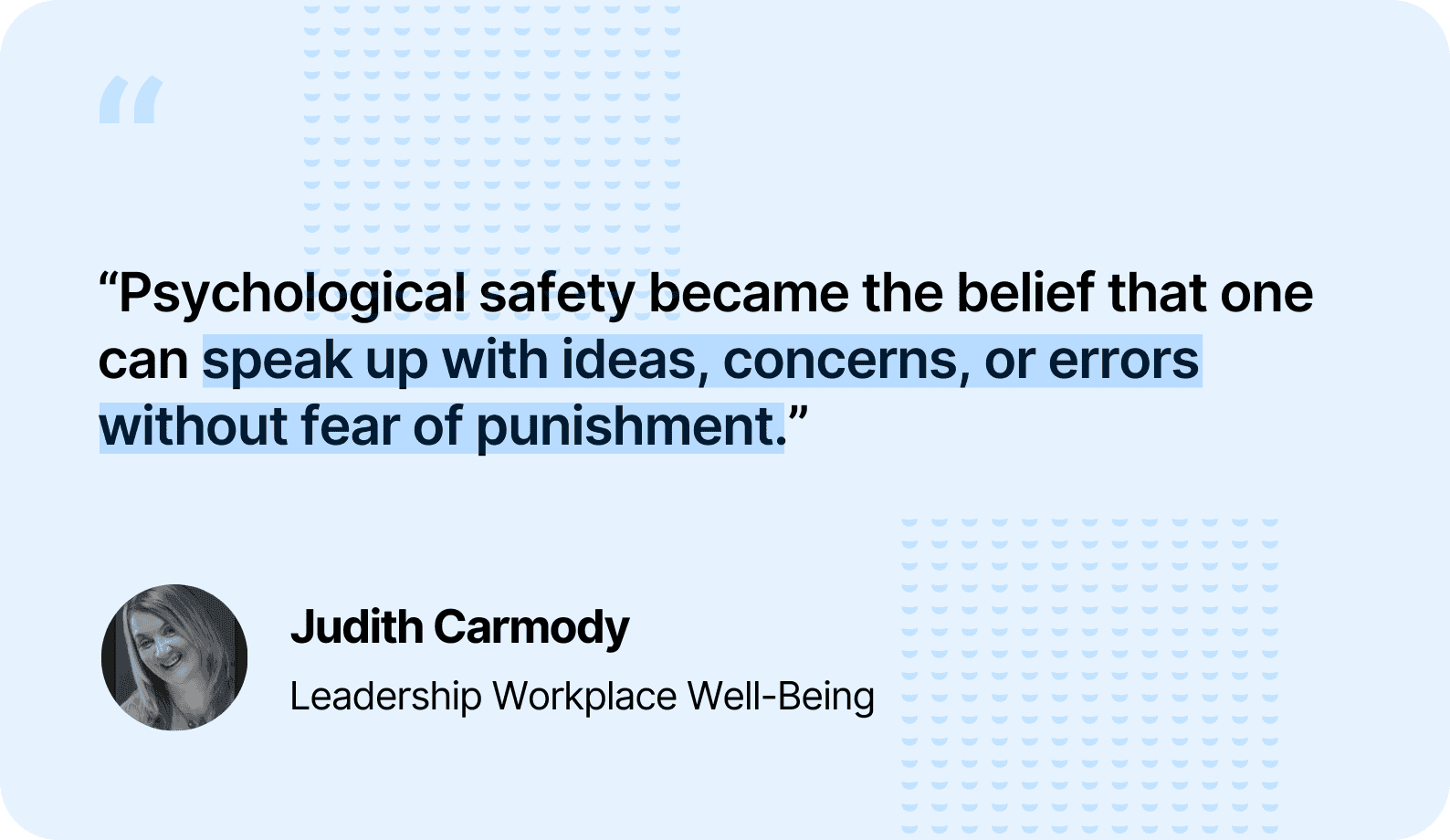
Psychological safety shows up in the small moments of everyday work, like the decision to raise a concern, the courage to share a new idea, or the relief of being heard. Seeing these moments in action helps teams understand what safety looks like in practice.
Creating psychological safety doesn’t happen by accident. Leaders need an intentional, repeatable approach that encourages risk-taking while maintaining accountability. This framework helps teams feel confident sharing ideas, admitting mistakes, and challenging assumptions without fear.
Define what’s acceptable: speaking up, challenging ideas respectfully, and giving constructive feedback. Clear norms reduce uncertainty and encourage employees to engage confidently.
Use meetings, surveys, and one-on-one check-ins to solicit input. Normalize disagreement and debate as part of collaborative problem-solving.
Treat errors as learning opportunities rather than reasons for punishment. When teams see mistakes reframed as lessons, people are more willing to take smart risks.
Celebrate effort, innovative ideas, and diverse perspectives. Recognition reinforces participation and builds trust, creating a culture where people feel valued.
Track psychological safety with pulse surveys, anonymous reporting tools, and ISO 45003 standards. Use the data to refine practices and improve team outcomes, not punish mistakes.
Frameworks provide guidance, but practical tools make psychological safety actionable. Leaders who combine intention with hands-on support see faster and more sustainable results.
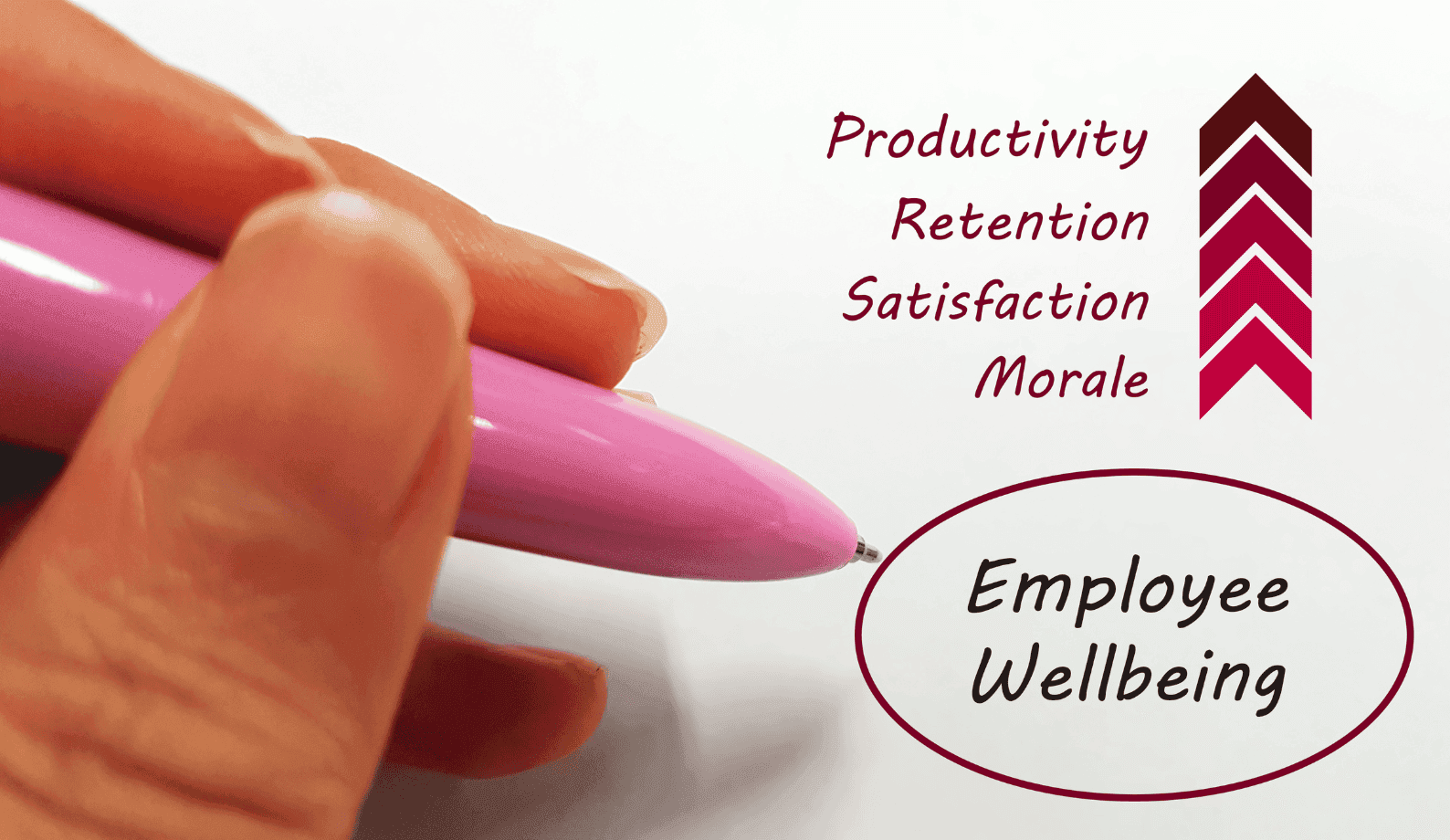
Psychological safety isn’t something you set up once and forget. Even with the best intentions, it can break down if leadership doesn’t model the right behaviors, policies feel disconnected from daily work, or feedback is overlooked.
Maintaining safety means recognizing potential pitfalls, keeping remote and hybrid teams connected, measuring progress, and balancing openness with accountability, so that your team feels safe to speak up every day.
Even with the best intentions, safety initiatives can fail if the organizational culture doesn’t support them. Watch for these pitfalls:
Being aware of these challenges helps embed psychological safety as a lived practice, not just a program or training session.
Distance naturally adds complexity. Without in-person cues, small miscommunications can feel threatening, and team members risk being excluded from important discussions.
Why remote work amplifies risk:
Explicitly addressing remote behaviors in policies, through structured virtual feedback, inclusive decision-making, and tools for anonymous reporting, ensures safety applies everywhere, not just in the office.
“You can’t improve what you don’t measure.” Use consistent metrics to make psychological safety visible and actionable:
Psychological safety isn’t the same as leniency. Teams need to balance openness with responsibility:
This balance allows teams to stay honest, learn from mistakes, and still deliver high standards of work.
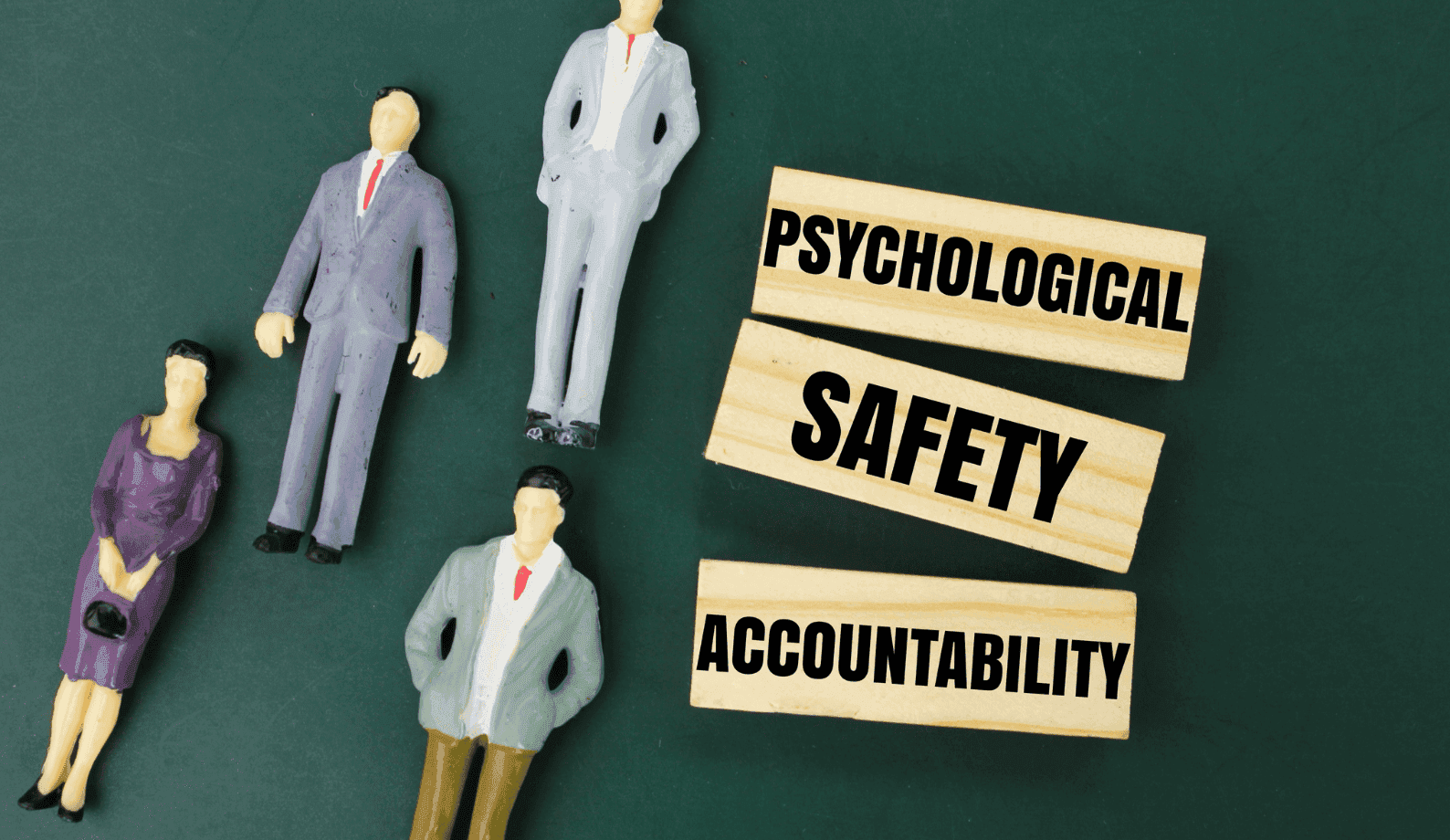
Those early micro-moments, the hesitation before speaking, the swallowed concern, the unshared idea, are where culture is quietly decided. Psychological safety shapes what happens in those moments.
When employees feel safe, work becomes more human. Mistakes become opportunities to learn. Ideas flourish. Engagement grows. Teams not only perform, but they thrive. The journey to safety is ongoing, but every small moment of trust compounds into a resilient, courageous workplace.
Investing in psychological safety is investing in your people, your culture, and your organization’s long-term success. Book a demo to see how FaceUp can help you measure and strengthen psychological safety in your team.
Replace outdated processes with modern, compliant workflows.
Keep Reading
Alaa El-Shaarawi2026-10-0510 min
Legal & Compliance
Alaa El-Shaarawi2026-10-028 min
Legal & Compliance

Alaa El-Shaarawi2026-09-249 min
Legal & Compliance
Alaa El-Shaarawi2026-09-095 min
Legal & Compliance