

Centralize Reports & Cases
Replace outdated processes with modern, compliant workflows.
Whistleblowing

Marie Roland
Partnership Marketing Manager
Published
2025-12-16
Reading time
5 min
Table of contents
Subscribe to our newsletter

Karin’s Law, enacted in 2024, marks a pivotal shift in Chile’s approach to workplace safety, harassment, and whistleblowing. Named after the tragic death of a young woman in the workplace, this law introduces new obligations for companies to protect employees from workplace violence, sexual harassment, and psychosocial risks.
While its initial impact has been significant, with more than 44,000 complaints filed in its first year alone, the road to full compliance remains uneven, particularly for small and medium-sized businesses.
Patricio Guzman, Director of Dilo Confidencial, and Javiera Zlatar, a compliance expert, agree that the law has quickly become one of the most operationally impactful regulations in the country.
Patricio explains, “Large enterprises have adapted rapidly, with over 90% implementing formal reporting channels and investigation protocols. Micro and small businesses, however, lag behind, with compliance rates as low as 40–50%.”
This disparity highlights the challenges ahead for companies of all sizes as they work to align with the law’s internal regulations, employer obligations, and preventive measures.
Javiera highlights the surge in complaints under the new law, particularly in workplace harassment and sexual harassment, which increased 126% and 65% respectively between 2023 and 2024. She notes,
“This rise reflects not only awareness of the new legal framework but also a cultural shift toward formal reporting systems.”
Women are driving much of this change, filing 65–75% of complaints. Employees are increasingly using formal channels and moving away from informal complaints, which is a significant cultural shift in Chilean workplaces.
While the law’s enforcement is active, with over 2,100 inspections in its first year, the biggest gaps remain in preventive measures. Javiera explains,
“Core obligations such as conducting psychosocial risk assessments, updating internal policies, and providing mandatory training have low implementation levels.”
This reveals a disconnect: reporting systems are in place, but many businesses still struggle with broader compliance obligations and protective measures required under the new law.
Karin’s Law introduces several provisions that businesses must follow to ensure workplace safety, harassment prevention, and whistleblowing compliance. These rules protect both whistleblowers and organizations while ensuring transparent, efficient complaint handling.
The law requires companies to establish confidential reporting mechanisms to track complaints securely and protect whistleblowers from retaliation. Patricio emphasizes,
“Companies must implement these channels to ensure all complaints are securely tracked and the integrity of the process is maintained.”
Secure, accessible reporting channels are critical for handling both harassment and workplace violence complaints effectively, supporting employer obligations and the prevention of sexual harassment.
Karin’s Law mandates specific timelines for receiving, processing, and investigating complaints. Companies must also classify complaints to determine legal relevance under internal regulations.
Patricio notes,
“About 40% of complaints in Chile are dismissed for not meeting criteria, highlighting the need for robust classification and review systems.”
This ensures complaints are handled timely, according to employment law requirements, and in line with risk assessment protocols.
Businesses must implement prevention protocols and investigation procedures, available to all employees and aligned with legal standards.
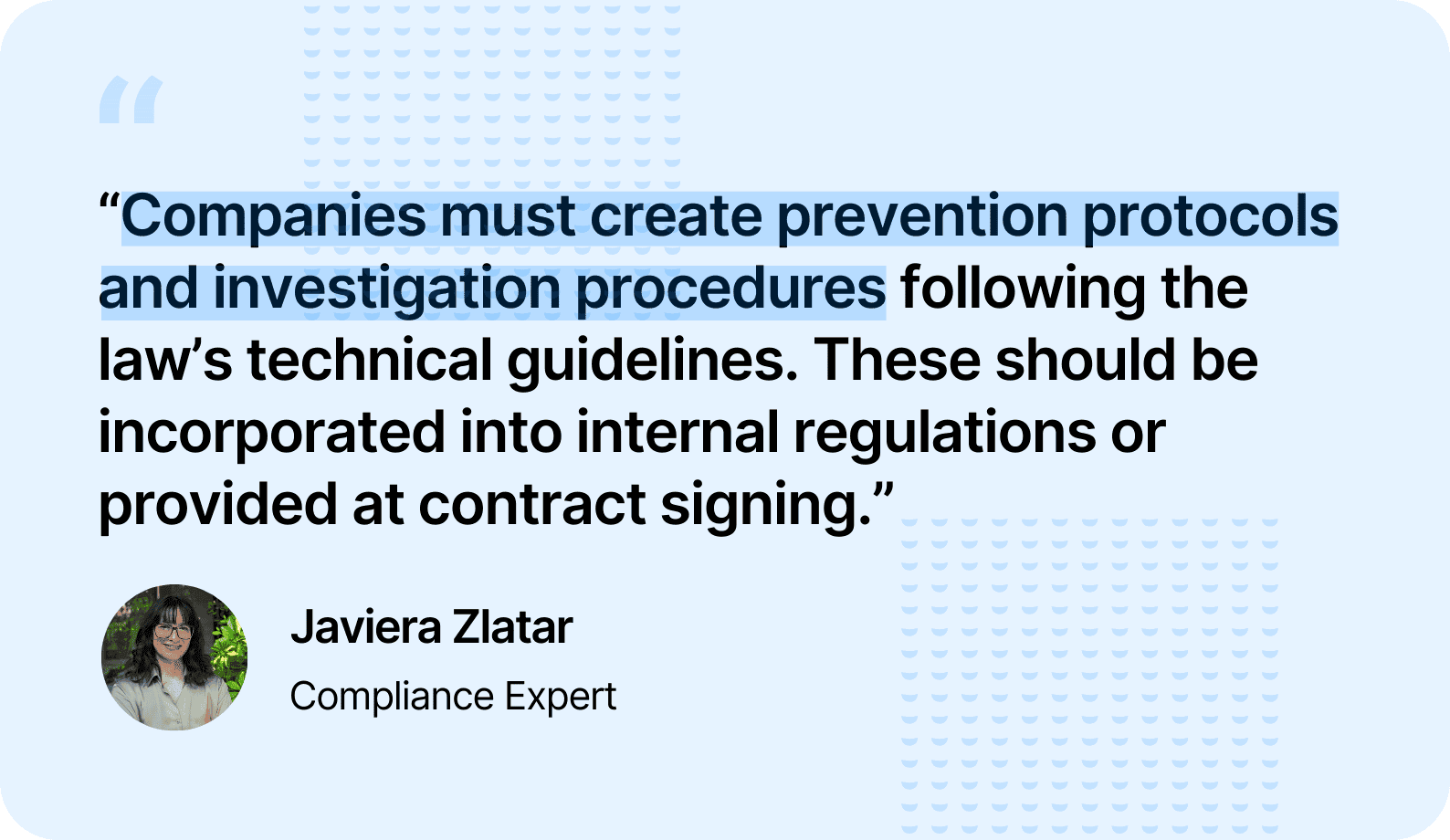
Javiera explains, “Companies must create prevention protocols and investigation procedures following the law’s technical guidelines. These should be incorporated into internal regulations or provided at contract signing.”
These measures prepare businesses to handle complaints properly, ensure compliance with labor code requirements, and inform employees how to raise concerns safely.
Confidentiality and non-retaliation are core requirements under Karin’s Law. Businesses must protect the identities of complainants and respondents to prevent retaliation.
Javiera emphasizes,
“Formal complaints must be handled under strict confidentiality to protect both parties, preventing exposure or adverse treatment.”
This encourages whistleblowers to report misconduct without fear, supporting employer obligations and workers’ rights in a respectful workplace.
While Karin’s Law provides strong legal protections, businesses face challenges. Anonymous reporting is not allowed; complainants must identify themselves, which increases vulnerability.
Javiera notes,
“Many employees fear retaliation, including job loss or worsening treatment after filing complaints.”
Patricio adds, “Despite these challenges, Karin’s Law provides protections comparable to the EU Whistleblowing Directive, particularly regarding confidentiality and formal investigation protocols.”
Training and communication are key. Patricio explains,
“Companies must educate employees on their rights, reporting channels, investigation expectations, and confidentiality safeguards under employment law.”
Javiera emphasizes mandatory training for all employees on workplace harassment and violence prevention, risk awareness, protective measures, and workers’ rights. Employees should also be informed every six months about internal reporting channels, social security benefits, and labor directorates where complaints can be filed.
Cultural factors heavily influence reporting. Javiera explains, “Many workplaces have a culture of silence, particularly regarding sexual harassment and workplace violence.”
Patricio suggests,
“Leadership must foster a speak-up culture through open communication, ethical reinforcement, and follow-through on investigations. Anonymous tools combined with transparent processes build trust and respect in the work environment.”
Small companies face unique challenges: lack of expertise, technological infrastructure, and employee trust. FaceUp and similar professional platforms can help, providing secure reporting, training support, and transparent case management.
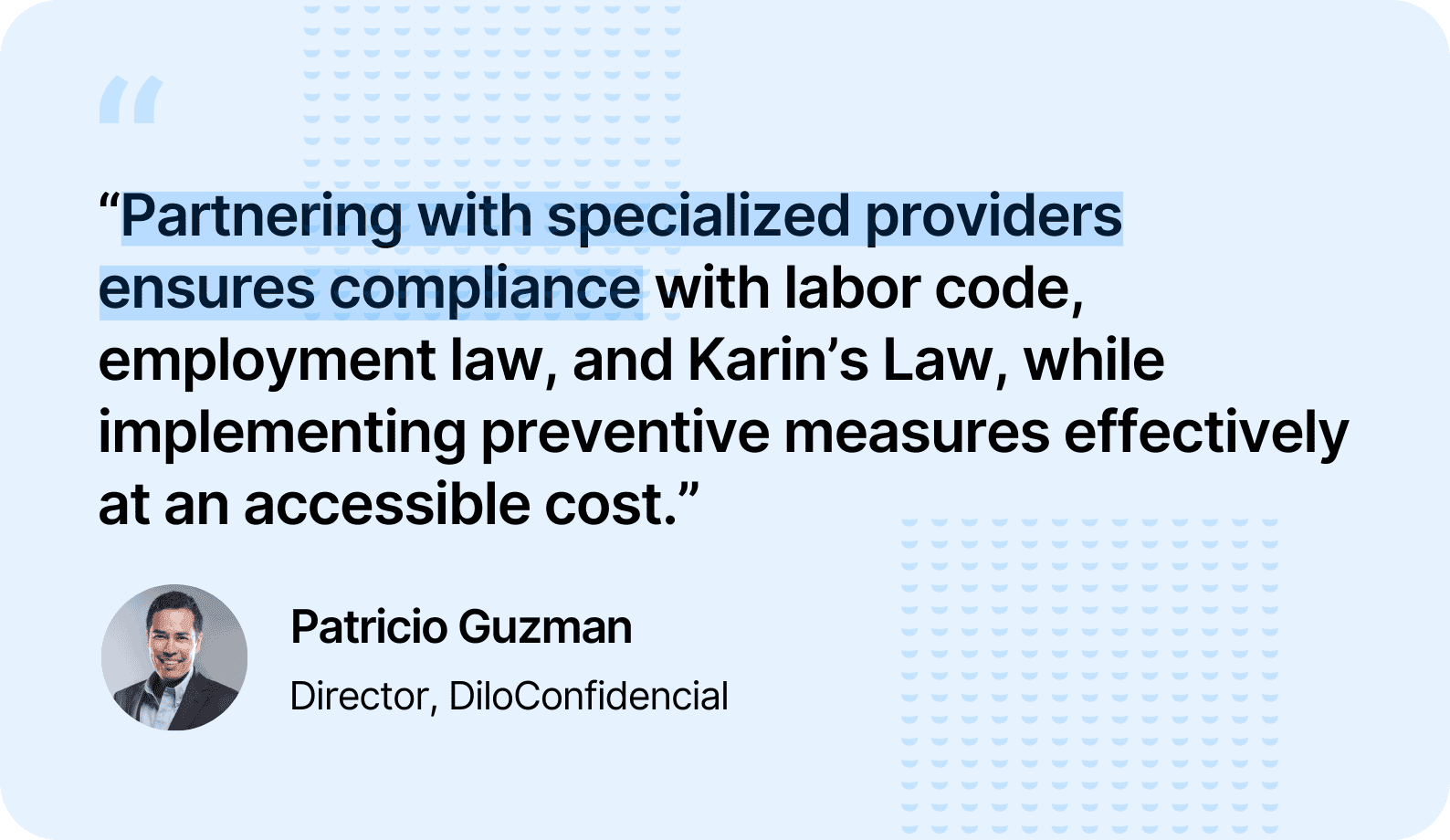
Patricio adds, “Partnering with specialized providers ensures compliance with labor code, employment law, and Karin’s Law, while implementing preventive measures effectively at an accessible cost.”
To comply with Karin’s Law, companies should:
Technology is critical for complying with Karin’s Law.
Patricio notes,
“Platforms like FaceUp help manage confidential reporting, case documentation, and audit trails efficiently, meeting employer obligations and prevention protocols.”
Javiera adds, “Such tools support compliance, strengthen information security, and allow early anonymous reporting, helping detect risk factors and acts of violence before escalation.”
Integrating FaceUp with local partners ensures compliance with Chilean laws, labor code requirements, and employment law while addressing operational challenges in the work environment.
Karin’s Law is a major step toward safer, fairer workplaces in Chile.
However, businesses must overcome cultural and operational challenges to fully comply with its prevention measures and internal regulations. By leveraging technology like FaceUp and adopting robust compliance frameworks, organizations can meet legal obligations, protect workers’ rights, and foster a respectful work environment.
Patricio and Javiera stress, “Compliance isn’t just about avoiding fines; it’s about creating workplaces where employees feel empowered to speak up and know they will be protected.”
A culture of transparency, accountability, and respect, supported by risk assessment, internal investigation, and preventive protocols, is essential not only for legal compliance but also for long-term organizational success.
Replace outdated processes with modern, compliant workflows.
Keep Reading
Alaa El-Shaarawi2026-10-028 min
Legal & Compliance
Alaa El-Shaarawi2026-09-249 min
Legal & Compliance
Alaa El-Shaarawi2026-09-095 min
Legal & Compliance

Mary Shirley2026-07-285 min
Workplace Environment