

Bring All Confidential Reports Into One Secure Place
We’ll assess your needs and recommend the right setup for anonymous reporting or surveys - aligned with your compliance or HR goals.
Case Study
A global tech company implemented FaceUp to scale reporting across regions and remote teams, protect talent retention, and reduce operational risk among 4,000+ professionals.
 Size:4,000+ professionals/
 Location:San Francisco, U.S./
 Industry:Technology & Software Development/
As BairesDev scaled, informal reporting created blind spots that threatened client delivery and talent continuity. FaceUp replaced the chaos with structured workflows, clear accountability, and visibility — turning people risk into a managed process.

The Problem
Reporting relied on not secure forms, shared inboxes, and spreadsheets, limiting anonymity and creating manual case handling.

Our Solution
FaceUp introduced a centralized, anonymous reporting platform with clear ownership, structured workflows, and fast implementation.
Table of content
Subscribe to our newsletter
BairesDev, a global technology company delivering software development services to clients like Google, Pinterest, Rolls-Royce, Johnson & Johnson, faced a growing challenge: how to manage team members' concerns and reporting in a fully remote, multicultural environment. With over 4,000 professionals distributed across multiple regions, the company needed a professional, scalable system to handle sensitive workplace issues while keeping anonymity, clarity, and trust intact.
Throughout this case study, insights and quotes are shared by Jean Pierre “JP” Chavez, Director of People Experience Partners at BairesDev, who leads teams responsible for talent well-being across client-facing engineers and internal support functions.
“We aim to make sure the team member experience is the best it can be. We deal with performance follow-ups, retention, and well-being. I tend to say that we are like lifeguards—people reach out when something isn’t going well and they need support.”
Before FaceUp, reporting relied on Google Forms, shared inboxes, and spreadsheets. “Some people were not comfortable using those channels. They didn’t want to put their name on something or point fingers.”
Manual tracking created risks: if a key person left, case information could disappear.
“If everything lives in someone’s inbox and that person leaves, that information can be lost. With FaceUp, everything is stored in one place.”
For a remote company, centralization was essential for continuity and reliability.
In a services company like BairesDev, talent well-being directly impacts client delivery.
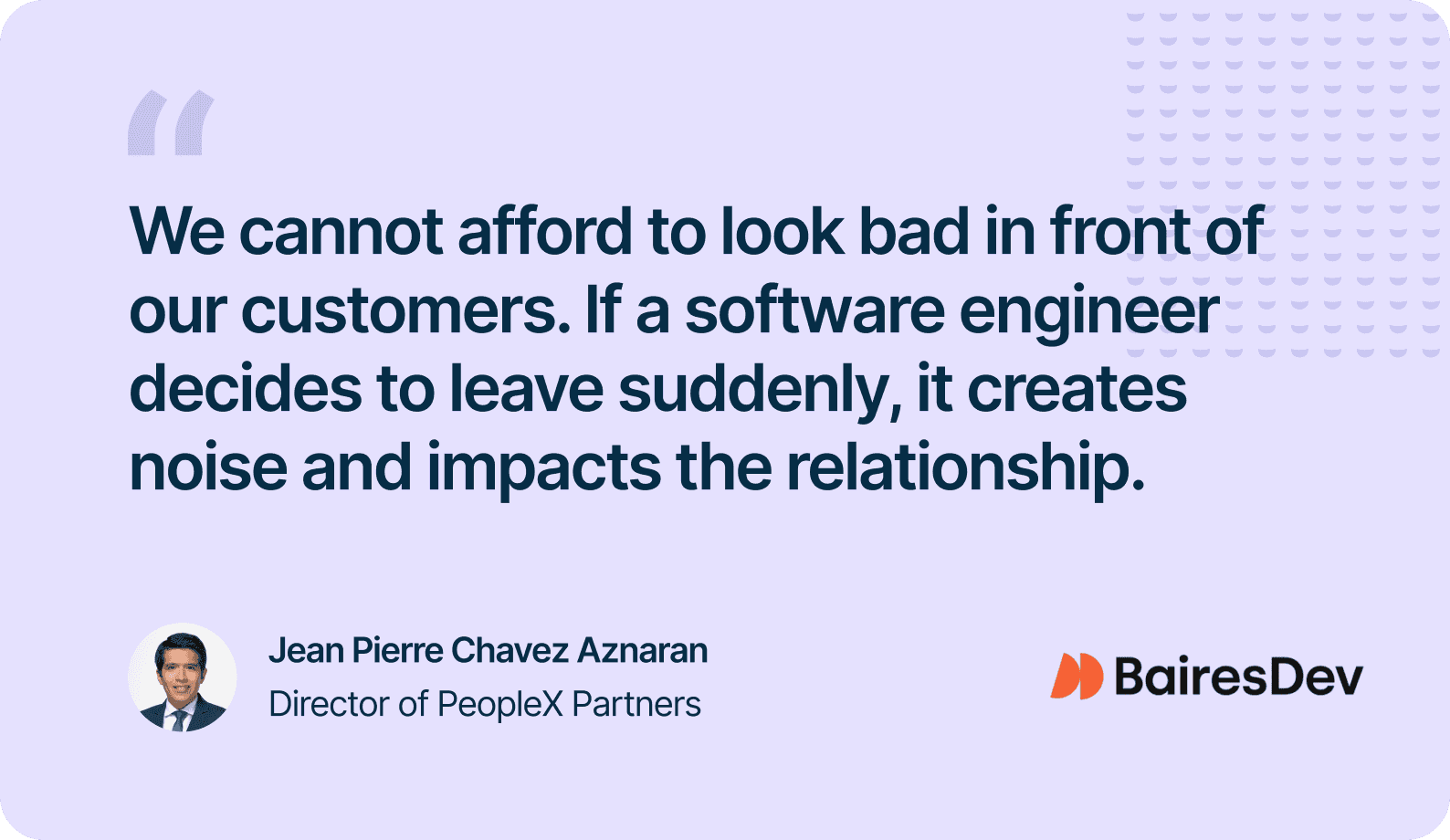
By enabling early, anonymous reporting, FaceUp reduces the risk of sudden departures and operational disruption. Leadership gains visibility and a structured way to intervene before issues escalate.
Rapid growth demanded a system that could scale.
“We started growing a lot… from hundreds to thousands. So we needed a clean process that stays organized and can be shared across multiple admins, especially in a remote environment.”
The goal wasn’t to fix a broken system, but to professionalize and structure reporting.
FaceUp introduced clear case ownership and structured workflows.
“Before, someone would send an email to a shared inbox or distribution list, and it could get messy. Now, when a case comes in, I can determine who will own it—so we keep responsibility clear and the process consistent.”
Cases are reviewed by an internal committee. Simple cases are handled directly; complex ones may involve HR or Legal, with escalation to senior leadership if needed. FaceUp provides:
“It’s all in one place. Internal comments on one side, communication with the reporter on the other. That organization makes a difference.”
BairesDev had non-negotiables for a reporting solution:
“Anonymity was the first thing. It doesn’t make sense to say something is anonymous and then ask for a full name. Speed also mattered. I needed this to be implemented right away.”
FaceUp delivered, without lengthy onboarding or complex setup.
Remote operations add layers of challenge. “I can’t always sit in front of someone and read body language. It’s not the same as being in an office. People communicate differently depending on where they’re from. What feels direct to one person might feel confrontational to another.”
A structured, centralized platform provides a neutral, accessible channel for all team members, no matter where they work or their cultural background.
For BairesDev, the team member experience is a top priority. “You’re welcome to join this company. We want you to grow, to have a safe journey, and if one day you leave, we want you to walk out feeling you had a great experience.”
Even with low case volume, FaceUp signals seriousness and professionalism.
“It makes us look more serious. It shows we’re taking this properly.”
JP emphasizes the human side of reporting:
“Be mindful of the experience of the person who is going to use it. Not everything in a company is perfect. At some point, something will go wrong. You have to be prepared. Sometimes something that looks small is actually much more complicated. People underestimate the small signs of stress or burnout.”
A reporting system isn’t just for extreme cases. It provides an accessible channel before issues escalate.
FaceUp has helped BairesDev:
“It worked. It’s simple. It’s organized. And it gives us what we need.”
For a global, fully remote company, FaceUp provides structured anonymity, clear processes, and sustainable case management without adding operational burden.
BairesDev’s story shows what happens when anonymous reporting is treated as a serious, people-first process. With FaceUp, ad-hoc tools and manual workflows gave way to a structured system that empowers team members to speak up early and HR to handle concerns with clarity, accountability, and consistency.
We’ll assess your needs and recommend the right setup for anonymous reporting or surveys - aligned with your compliance or HR goals.
More Case Studies