


Bring All Confidential Reports Into One Secure Place
We’ll assess your needs and recommend the right setup for anonymous reporting or surveys - aligned with your compliance or HR goals.
Legal & Compliance

Alaa El-Shaarawi
Copywriter and Content Manager
Published
2026-03-20
Reading time
8 min
Table of contents
Subscribe to our newsletter

Workplaces and public services in Canada are expected to operate on a basic principle: individuals must be treated fairly and without discrimination. That expectation is codified in the federal Canadian Human Rights Act (CHRA).
The Act protects people from discrimination and harassment based on personal characteristics such as race, sex, disability, gender identity, family status, and several other protected grounds. It also protects individuals from retaliation if they file complaints or participate in investigations related to discrimination.
For federally regulated employers, the CHRA creates both legal obligations and operational responsibilities. Organizations must ensure equal treatment in employment and services, respond appropriately to complaints, and remove barriers that prevent individuals from participating fully in the workplace.
Understanding how the CHRA works in practice is essential for federal departments, Crown corporations, and regulated industries such as banking, telecommunications, and transportation. This guide explains how the law operates, how complaints are handled, and how organizations can build systems that support compliance and fairness.
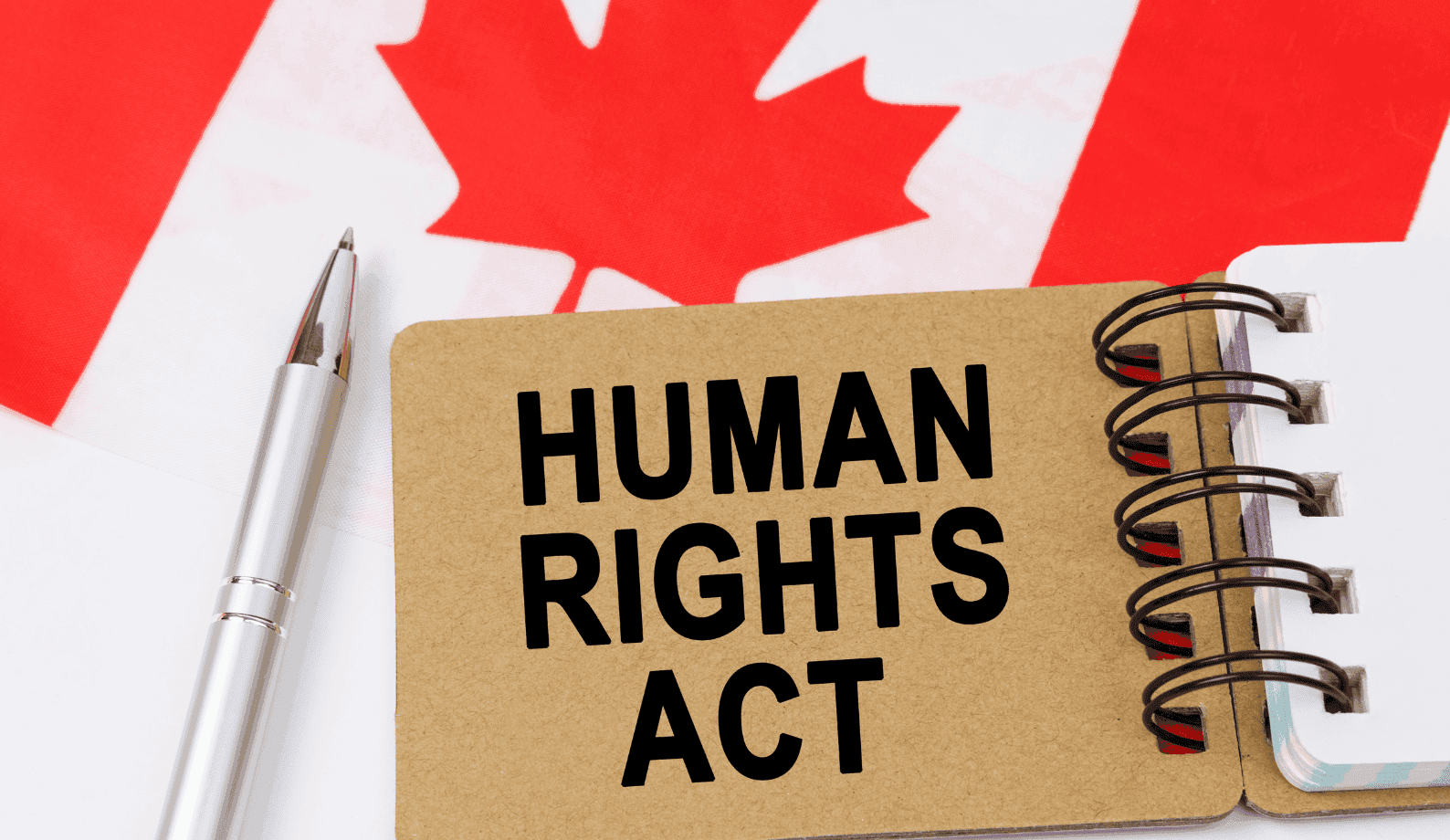
The Canadian Human Rights Act came into force in 1978 during a period when many countries were formalizing legal protections against discrimination. Prior to the Act, human rights protections in Canada existed mainly at the provincial level.
While these laws addressed discrimination in housing, employment, and services, the federal government recognized the need for consistent protections within federal institutions and industries regulated at the national level.
The CHRA was introduced to fill that gap. It established a legal framework that prohibits discriminatory practices and created a mechanism for individuals to file complaints and seek remedies when their rights are violated.
The law also reflects Canada’s broader commitment to equality and inclusion, principles reinforced by the Canadian Charter of Rights and Freedoms and provincial human rights codes.
Since its introduction, the CHRA has been updated multiple times to reflect social and legal developments, including expanded protections for gender identity and gender expression.
The CHRA applies primarily to federal institutions and federally regulated sectors.
Organizations covered by the law include:
Employees and applicants in these sectors are protected from discrimination in hiring, promotion, compensation, training opportunities, and workplace treatment.
It is important to note that the CHRA does not generally apply to most private businesses or institutions regulated by provincial governments, such as healthcare providers, schools, or local businesses. These organizations are usually governed by provincial human rights legislation instead.
Two federal bodies play key roles in administering the Canadian Human Rights Act.
The Canadian Human Rights Commission (CHRC) is responsible for promoting human rights and addressing discrimination complaints under federal jurisdiction.
The Commission receives complaints from individuals who believe their rights under the CHRA have been violated. It reviews the complaint, gathers information from both parties, and may attempt to resolve the issue through mediation.
If mediation does not resolve the matter, the Commission may refer the case to the Canadian Human Rights Tribunal.
The Tribunal acts as an independent decision-making body. When a case is referred to it, the Tribunal conducts a formal hearing where both parties present evidence and arguments.
The Tribunal then determines whether discrimination occurred and may order remedies to address the situation. These rulings are legally enforceable and may be reviewed by the Federal Court of Canada.
This two-step process ensures that complaints receive independent evaluation and provides multiple opportunities for resolution before formal legal decisions are issued.
The CHRA prohibits discrimination based on a list of protected personal characteristics.
These protected grounds include:
Discrimination can occur in several ways. It may involve direct actions such as refusing to hire a qualified candidate because of disability or race. It may also appear in policies or practices that unintentionally disadvantage certain groups.
For example, workplace policies that fail to accommodate employees with disabilities or family responsibilities may create barriers even if discrimination was not intended.
The Act also prohibits harassment related to protected characteristics. Persistent misgendering, offensive comments, or hostile behavior linked to protected characteristics can fall within the scope of the law.

Over the years, several tribunal decisions have demonstrated how the Canadian Human Rights Act (CHRA) is applied in real-world situations.
Wallace v. Canada
Canada (Human Rights Commission) v. Canada (Attorney General)
Bilac v. Abbey et al.
These cases show that the CHRA addresses both individual workplace discrimination and systemic discrimination affecting broader groups. This enforcement history demonstrates how it protects individuals and supports accountability within federally regulated sectors.
Individuals who believe they have experienced discrimination must typically file a complaint with the Canadian Human Rights Commission within 12 months of the alleged violation.
The complaint process generally follows several stages:
Even organizations committed to equality can face challenges in implementing human rights protections.
Several recurring issues appear across federally regulated sectors:
Addressing these challenges requires both clear policies and practical systems that support fair decision-making.
Organizations subject to the CHRA can strengthen compliance by implementing several operational practices.
When these steps are integrated into daily operations, organizations are better prepared to prevent discrimination and respond appropriately when concerns arise.
Employees are often the first to notice workplace issues such as harassment or discriminatory practices. However, reporting systems must be trusted and accessible for those concerns to surface.
Effective reporting programs often include:
These systems allow organizations to address concerns early, reducing the risk of formal complaints escalating to regulatory investigations or tribunal hearings.
Although the Canadian Human Rights Act does not explicitly require internal whistleblowing systems, having structured reporting channels can help organizations address complaints early.
FaceUp provides a reporting platform designed to help organizations manage sensitive reports confidentially.
Employees can submit concerns through the web portal, mobile app, or hotlines, with the option to remain anonymous. Each report generates a case record that allows compliance teams to document investigations and maintain clear records.
For organizations with diverse workforces, multilingual reporting options with 113+ languages help ensure accessibility across teams and locations.
By supporting confidential reporting and structured case management, platforms like FaceUp help organizations address workplace concerns before they escalate into formal human rights complaints.

More than four decades after its introduction, the Canadian Human Rights Act continues to play a central role in protecting equality within federal institutions and regulated industries.
The law ensures that individuals can challenge discriminatory practices and seek remedies when their rights are violated.
For organizations, compliance with the CHRA represents more than a legal obligation. It encourages workplaces that value fairness, accessibility, and respect for individual dignity.
Institutions that invest in inclusive policies, effective reporting systems, and transparent investigations are better positioned to maintain trust with employees and the public.
Secure reporting channels can help organizations identify discrimination or harassment concerns early and address them before they escalate into formal complaints.
Book a demo to see how FaceUp supports compliance with the Canadian Human Rights Act.
We’ll assess your needs and recommend the right setup for anonymous reporting or surveys - aligned with your compliance or HR goals.
Keep Reading
Alaa El-Shaarawi2026-09-095 min
Legal & Compliance

Mary Shirley2026-07-285 min
Workplace Environment
Marie Roland2026-07-276 min
Legal & Compliance

Marie Roland2026-07-275 min
Legal & Compliance