
Workplace Environment

Alaa El-Shaarawi
Copywriter and Content Manager
Published
2026-03-25
Reading time
8 min

Table of contents
Subscribe to our newsletter

Every day, workplaces experience incidents that almost happen. A worker slips but regains balance, a forklift narrowly misses a colleague, or a chemical spill is noticed just in time. These are called near misses. While they leave no physical mark, near misses provide critical insights into potential hazards and gaps in safety processes.
For HSE managers, compliance officers, HR leads, and operations directors, understanding these events is essential for building a workplace where safety, accountability, and proactive reporting are part of daily operations.
This guide explores over 25 real-world near-miss examples, practical reporting frameworks, and actionable prevention strategies to help organizations strengthen safety culture, reduce risk, and stay compliant.
Near misses are early warnings that something in the workplace could go wrong. Reporting them helps teams prevent accidents, protect employees, and build a culture where everyone feels safe speaking up.
A near miss is an unplanned event that could have caused injury, damage, or disruption, but didn’t. Unlike accidents, which result in measurable harm, near misses are signals that underlying risks exist.
For teams managing workplace safety, documenting these events provides insight into patterns, informs risk assessments, and contributes to compliance with OSHA, ISO 45001, and other regulatory frameworks.
Recognizing and acting on near-miss indicators allows organizations to intervene before someone is hurt or a process fails. If you want to explore this topic in more detail, you can find out more in our guide to near miss reporting.
Despite their value, near misses are often under-reported. Employees may fear retaliation, think nothing will change, or simply not know how to report. Consistent reporting, however, creates clear benefits:
When near misses are reported without fear, organizations can identify systemic hazards early, prioritize interventions, and prevent future incidents.
Whistleblowing platforms like FaceUp support this by allowing anonymous reporting, helping employees feel safe while giving organizations a clear view of risk trends.

Understanding the different types of near misses helps employees and managers spot hazards and report them effectively. Near misses can occur in any industry, from construction and manufacturing to healthcare and office settings.
Being able to identify these events allows organizations to address risks proactively. Here are common examples grouped by risk type:
Slips and trips are the most frequent near misses across workplaces. While minor at times, these incidents often indicate issues with housekeeping, floor maintenance, or signage. Proactively addressing these risks can prevent costly injuries and downtime.
Examples:
Prevention tips: Conduct regular floor inspections, use non-slip surfaces, and ensure visual warnings are in place. Encourage employees to report hazards immediately.
Machinery can fail without warning. Near misses in this category help prevent serious injuries and operational disruptions.
Examples:
Prevention tips: Implement mandatory pre-use inspections, schedule timely maintenance, and log near misses for trend analysis.
Handling chemicals carries inherent risks. Near misses reveal gaps in labeling, storage, or PPE usage and allow for immediate intervention.
Examples:
Prevention tips: Train staff in chemical handling protocols, provide clear labeling, maintain accessible PPE, and reinforce reporting even minor issues.
Working at heights or around elevated objects requires strict safety protocols. Near misses highlight potential training or equipment weaknesses.
Examples:
Prevention tips: Inspect scaffolding and ladders daily, enforce secure tool storage, and conduct regular height safety training.
Human error and unsafe behavior often create hazards. Near misses in this category provide a non-punitive opportunity to address unsafe practices.
Examples:
Prevention tips: Use near misses to tailor behavior-based safety programs and reinforce procedural training across teams.
Workplace vehicles can pose serious risks. Near misses provide early warnings about operational or site design issues.
Examples:
Prevention tips: Implement speed limits, designated pedestrian zones, and spotter protocols to mitigate transport risks.
Electrical and fire hazards are high-consequence risks. Near misses here provide an early warning for preventative action.
Examples:
Prevention tips: Conduct routine equipment checks, secure hazardous materials, and maintain functional alarms. Encourage near-miss reporting to track recurring issues.
Environmental factors such as poor lighting, uneven surfaces, or excessive noise create hidden risks.
Examples:
Prevention tips: Perform regular environmental risk assessments, communicate hazards clearly, and encourage immediate reporting of unsafe conditions.
Reporting is the bridge between awareness and prevention. Employees need clarity on what qualifies as a near miss and confidence that reporting leads to action, not blame.
A structured reporting process includes:
FaceUp supports all these steps with a unified platform for anonymous near-miss reporting, automated workflows, and consolidated records for audits.
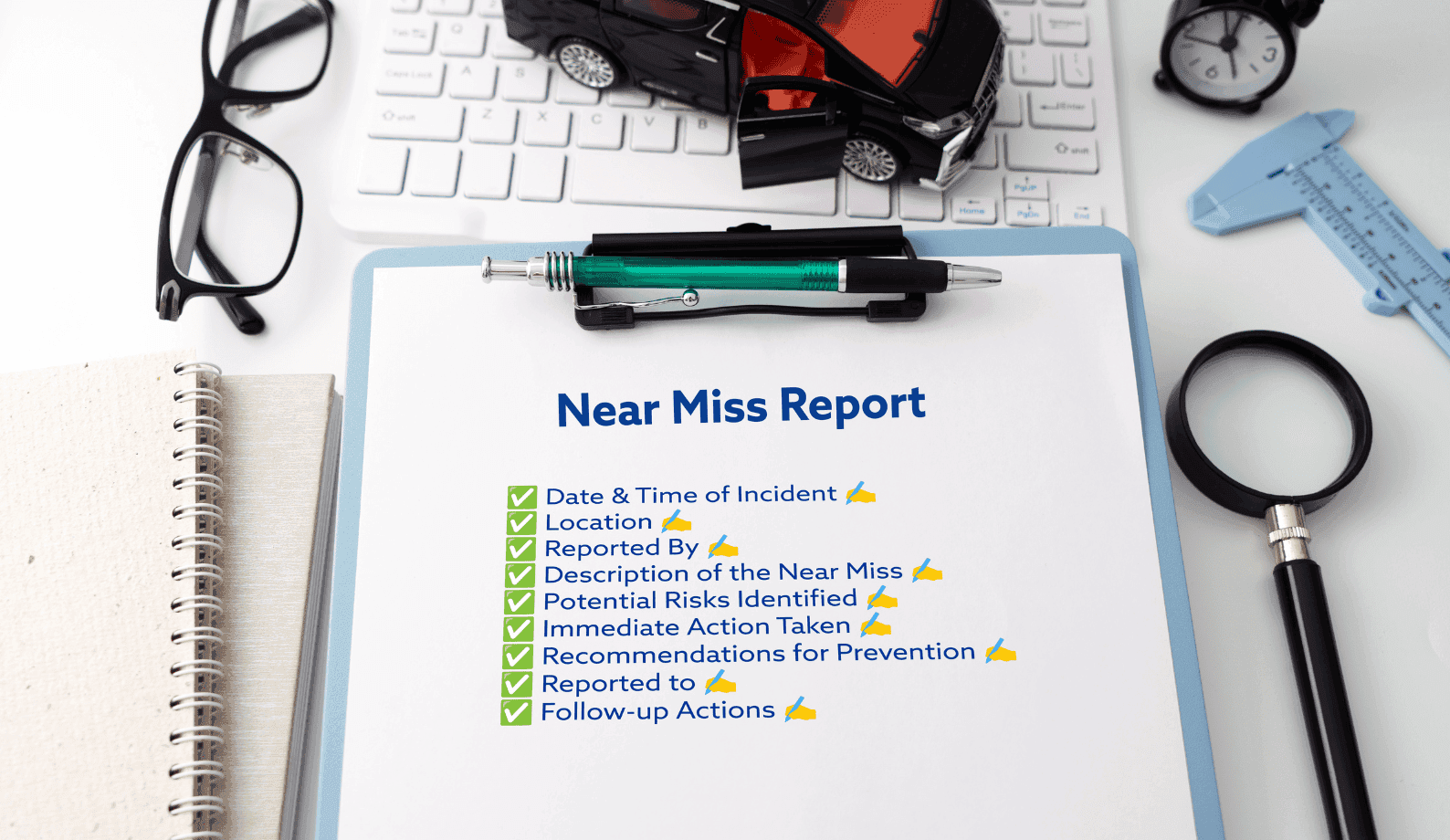
Capturing a near miss is just the first step. The real value comes from turning that information into actionable improvements across your organization.
This process spans investigation, culture-building, compliance, and technology; interconnected areas that, when managed effectively, transform near misses into prevention strategies.
Every near miss tells a story. To learn from it, collect all relevant details: what happened, who was involved, and the environmental context.
Techniques like the 5 Whys, where you repeatedly ask “why” until you reach the root cause, or fishbone diagrams, help uncover systemic issues rather than surface-level mistakes.
Example: A wet floor incident might seem like a simple oversight. But asking “why” multiple times could reveal inconsistent cleaning schedules, unclear ownership of spill response, missing signage, and gaps in employee training. Each answer brings you closer to the real cause, and each insight becomes a target for corrective action.
Practical steps:
Investigation is ineffective without a culture that encourages reporting. Employees are more likely to share near misses when they trust the organization to act without retaliation. Anonymous reporting systems, like FaceUp, provide a safe avenue for employees to report hazards honestly and consistently.
Actionable steps:
Near misses support more than safety; they demonstrate regulatory diligence. OSHA and ISO 45001 emphasize proactive hazard identification and risk mitigation. A consolidated, auditable record of near misses proves that organizations are actively managing risk and accountability.
Tips for teams:
FaceUp simplifies this with a workplace compliance software platform that centralizes reporting, investigations, and corrective actions.
Modern reporting tools give teams real-time visibility, reduce manual work, and help identify trends. Integrating safety reporting with whistleblowing platforms ensures organizations capture operational, ethical, and safety concerns in one place, providing a holistic view of workplace risks.
Near misses are powerful learning opportunities. Trend analysis informs training, improves signage and procedures, and allows teams to adjust workflows proactively. Communicating improvements back to employees reinforces the value of reporting and strengthens shared responsibility for safety.
Practical guidance:
This is closely linked to how organizations handle reporting unsafe working conditions in practice.
Near misses reveal hidden hazards in everyday operations. When captured, analyzed, and acted upon, they protect employees, enhance safety culture, and demonstrate compliance.
At FaceUp, we combine anonymous reporting, structured investigations, and centralized documentation to help organizations transform these insights into preventive action, making workplaces safer for everyone.
Your next step: Want to make near-miss reporting effortless and effective? FaceUp’s confidential whistleblowing platform lets employees report safety concerns without fear, so your team can prevent incidents before they happen.
Book a demo today and start turning near misses into actionable insights.
Keep Reading
Alaa El-Shaarawi2026-09-095 min
Legal & Compliance

Mary Shirley2026-07-285 min
Workplace Environment
Marie Roland2026-07-276 min
Legal & Compliance

Marie Roland2026-07-275 min
Legal & Compliance