
Non-Compliance in the Workplace: Spot, Report, and Prevent Risks Before They Escalate

Legal & Compliance

Alaa El-Shaarawi - FaceUp Copywriter and Content Manager

Alaa El-Shaarawi

Copywriter and Content Manager

Published

2025-12-05

Reading time

8 min
Table of contents

    Subscribe to our newsletter

    Non-Compliance in the Workplace: Spot, Report, and Prevent Risks Before They Escalate

    On any given day at work, non-compliance can look like two very different things. It might be a loud, undeniable breach like a worker welding without a face shield, an expired fire extinguisher ignored in plain sight, or payroll processed with glaring errors. 

    Other times it’s subtle, almost imperceptible. A shortcut someone takes to meet a deadline, a forgotten checkbox on a compliance form, or an informal workaround that everyone has quietly normalized.

    Both types are dangerous. Loud violations can cost money, safety, and trust instantly. Subtle ones fester, slowly creating gaps and confusion until they explode into fines, lawsuits, or damage to the company’s reputation.

    The work isn’t just about catching mistakes. It’s about seeing patterns, understanding why rules are broken, and building systems that make it easy for employees to do the right thing. It’s also about giving people a voice early, before problems grow, while making the organization resilient enough to handle both subtle and obvious breaches.

    What is Non-Compliance in the Workplace

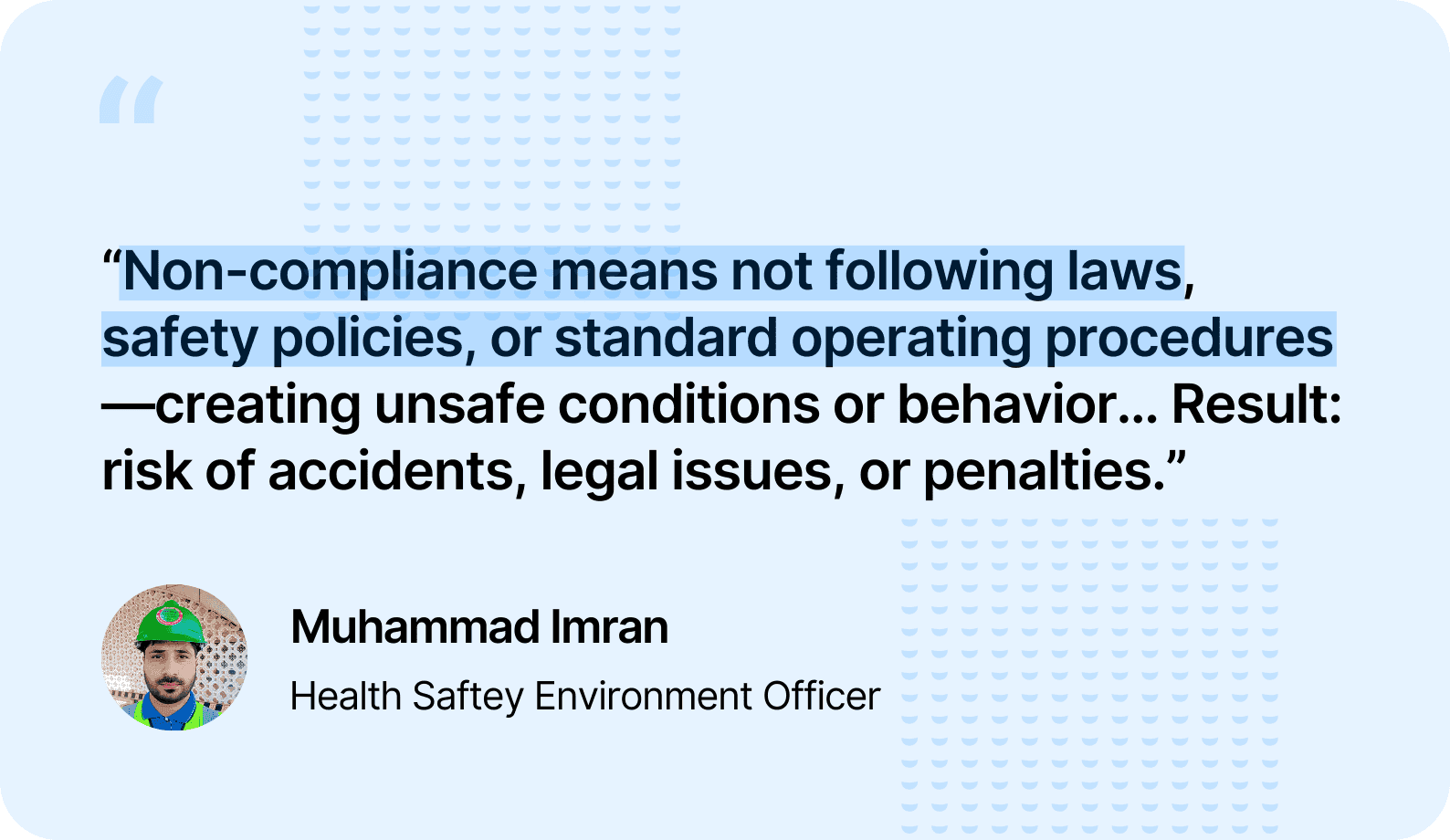
    Search for “non-compliance in the workplace,” and the first results are legal definitions and lists of policies, but the reality is more textured. Non-compliance isn’t just a breach of law; it’s a breakdown in the way work is done, often hidden in the everyday.

    It occurs whenever laws, regulations, internal company policies, safety standards, or standard operating procedures are not followed. The causes can range from ignorance and oversight to culture-driven habits and intentional shortcuts.
    Some real-world examples include:

    • A supervisor ignoring psychosocial risks, believing “we’ve always handled stress this way.”
    • Workers performing tasks without proper PPE because equipment is unavailable or locked away.
    • Finance teams skipping double-checks under pressure to meet end-of-month deadlines.
    • Employees avoiding reporting harassment or unsafe conditions because past reports led to awkward situations or inaction.

    Even minor lapses compound over time, creating situations that regulators, auditors, or journalists later highlight. Understanding the full spectrum of non-compliance, from subtle missteps to blatant violations, is essential for effective compliance.

    Mini Case Study: The Overlooked Fire Extinguishers

    At a mid-sized manufacturing plant, annual OSHA inspections repeatedly flagged expired or missing fire extinguishers. Staff noticed informally but had no formal reporting channel. When a small fire broke out, the lack of equipment caused significant property damage and fines.

    Lesson: Non-compliance was visible but ignored because reporting channels were unclear and the culture discouraged escalation.

    Why Non-Compliance Happens

    When leadership asks, “What are the reasons for non-compliance in the workplace?” there’s rarely a single answer. Instead, multiple factors interact:

    1. The policy-reality gap: Policies may exist but workflows don’t support them. Overly complex or cumbersome processes encourage employees to create shortcuts.
    2. Culture sends mixed signals: Teams watch what leadership tolerates. If minor compliance issues are ignored, employees learn that rules are optional.
    3. Lack of clarity: If ten employees are asked about a policy, do their answers match? Discrepancies indicate guesswork rather than understanding.
    4. Insufficient training: People rarely violate rules they fully understand. Most compliance lapses arise from incomplete onboarding, insufficient refreshers, or fading procedural knowledge. Scenario-based training, onboarding checklists, and regular refreshers are crucial.
    5. Psychosocial and environmental factors: Burnout, stress, and time pressure encourage employees to postpone compliance, skip steps, or rationalize workarounds. 
    6. Fear of reporting: Employees who fear retaliation or think nothing will change often remain silent, letting minor problems grow.
    7. Outdated or overloaded systems: Manual reporting, rare audits, and inconsistent workflows create hiding spots for non-compliance. Automation and accessible reporting tools reduce these blind spots.

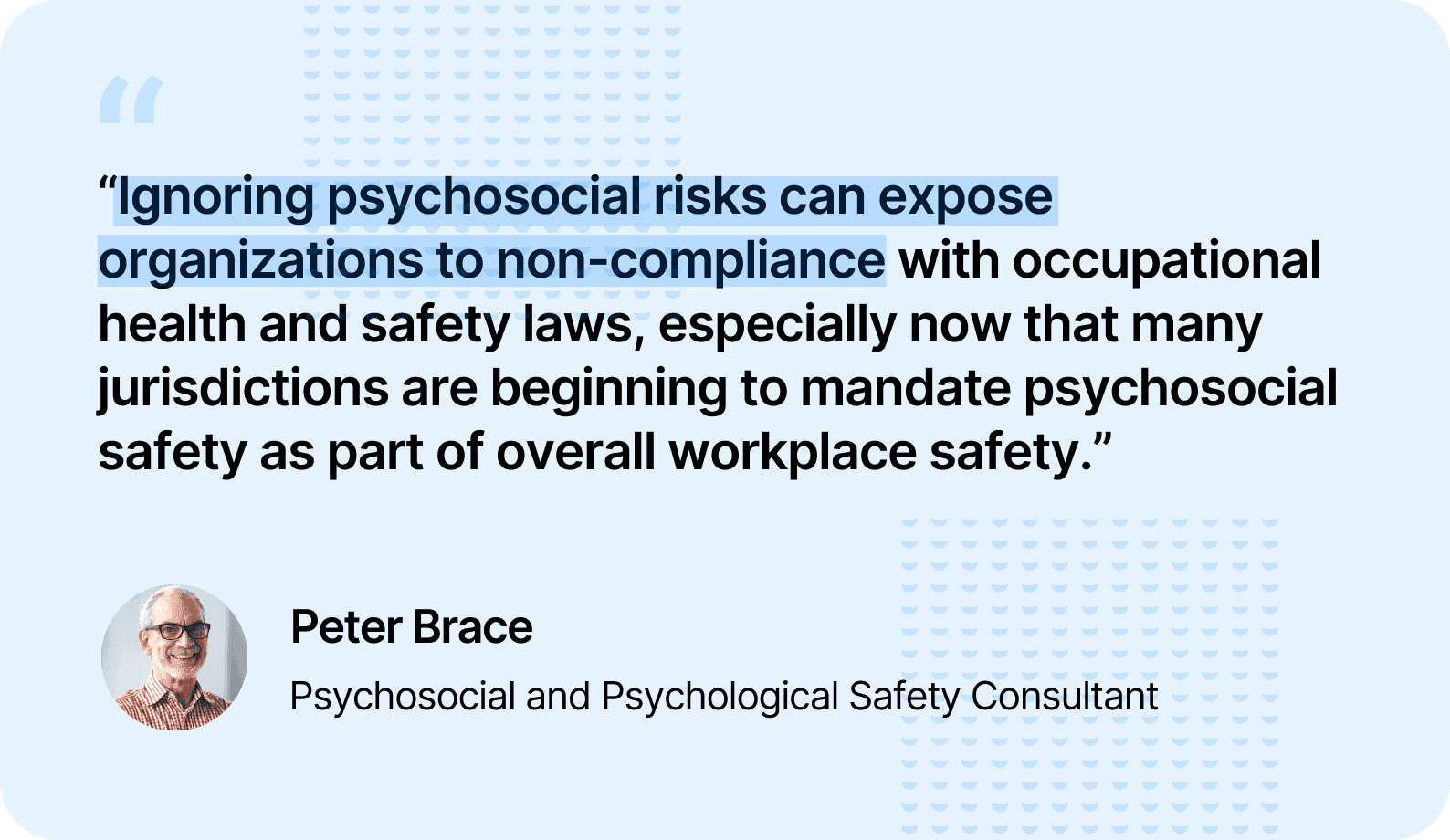
    Organizations that overlook these risks not only put employees at harm but also expose themselves to major regulatory penalties and safety violations.
    How to Identify Non-Compliance Before It Becomes a Crisis

    The first step in handling non-compliance is detection. Waiting for a crisis is reactive; early identification is proactive.

    Look for Hotspots

    • Fast-growing teams may struggle to adapt processes quickly.
    • Departments with high turnover may have inconsistent training or unclear expectations.
    • High-pressure teams meeting tight deadlines often create shortcuts.
    • Remote or distributed teams may have less visibility and informal oversight.

    Map Behavior, Not Just Processes

    Non-compliance hides in human habits: workarounds, informal workflows, and unwritten “rules” that contradict official policy. Observing patterns, listening to informal feedback, and conducting audits beyond paperwork helps uncover these gaps.

    Red-Flag Frameworks

    Signals to watch for:

    • Rising incident rates in certain departments
    • Repeated exceptions to the same rules
    • Employees repeatedly asking the same policy questions
    • Managers gatekeeping information
    • Periods of unusual silence or lack of reporting

    Mini Case Study: Payroll Shortcut

    A company outsourced payroll but maintained manual overtime approvals in spreadsheets. Employees noticed discrepancies but assumed “it’s always been this way.” Months later, a large payroll error forced retroactive corrections, damaging trust and creating operational headaches.

    Lesson: Non-compliance often arises from a combination of process gaps and a culture of silence.

    Metrics and Dashboards for Early Detection

    MetricWhat it ShowsRed Flag
    Number of reported incidentsEngagement with reporting systemsLow = potential underreporting
    Resolution timeEfficiency of compliance workflow>7 days = bottleneck
    Recurrence rateProcess effectiveness>10% = systemic failure
    Incident type distributionPatterns by categoryConcentration in one area = hotspot

    Whistleblowing platforms like Faceup can integrate these dashboards in real time, giving management actionable insights to surface compliance issues early.

    Reporting Non-Compliance in the Workplace Safely

    Many employees hesitate to report non-compliance. Fear of retaliation, lack of clarity, and inaccessible channels are common barriers. Effective reporting systems address all three.

    Key Principles for Reporting

    • Clear: Employees know what to report
    • Accessible: Easy to submit, mobile-friendly
    • Safe: Protect anonymity and prevent retaliation
    • Structured: Standardized forms for investigation
    • Trackable: Issues don’t disappear

    Faceup strengthens reporting by providing a trusted, low-friction platform that encourages employees to speak up without fear.

    Reporting Flow

    1. Describe the incident factually
    2. Identify affected policies or laws
    3. Explain the risk (safety, legal, operational, ethical)
    4. Submit through proper channels (HR, compliance, or Faceup)
    5. Track progress and feedback
    6. Review trends monthly

    Checklist for Reporting

    • Incident clearly described
    • Risk category assigned
    • Severity assessed
    • Stakeholders engaged
    • Actions documented
    • Resolution communicated

    How to Address Non-Compliance After It's Reported

    Once a case is reported, addressing it goes beyond punishing the individual, and requires system-level solutions.

    Root-Cause Analysis

    • Was the policy clear and accessible?
    • Was training sufficient?
    • Was the workload realistic?
    • Did culture allow safe escalation?

    Fix Processes, Not Just People

    Discipline alone doesn’t prevent recurrence. Strengthening workflows, clarifying policies, and improving oversight create long-term compliance.

    Mini Case Study: Early Detection with Faceup

    A mid-sized tech company implemented Faceup. Within two months, a junior analyst flagged a minor data-handling error that would otherwise have gone unnoticed. Corrective training programs and workflow updates prevented regulatory escalation.

    Lesson: Early detection preserves trust, reputation, and operational stability.

    Consequences of Non-Compliance in the Workplace

    Non-compliance leads to more than just hefty fines. It’s a multiplier of organizational problems.

    Risks of non-compliance can include:

    • Financial: Fines, remediation costs, legal expenses, lost contracts.
    • Operational: Downtime, workflow disruption, missed deadlines.
    • Cultural: Loss of trust, shortcuts, disengagement.
    • Talent: Employee turnover, difficulty attracting skilled workers.
    • Reputation: Public incidents overshadow years of good work.
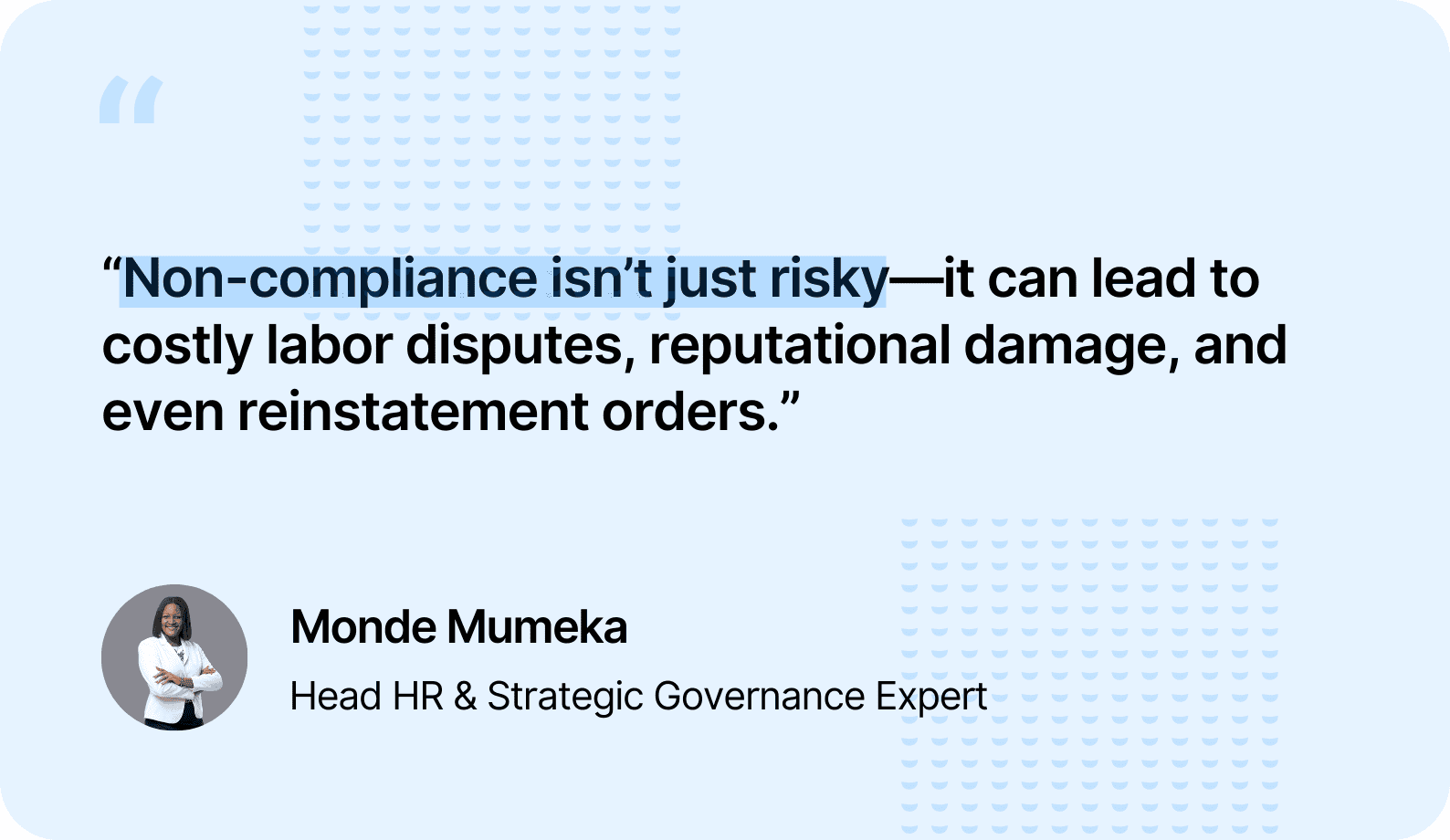
    • Legal & Regulatory Exposure: OSHA, GDPR, labor law, or safety violations can lead to fines, lawsuits, or even criminal liability.

    Even subtle lapses matter. Detecting them early prevents a minor issue from turning into a crisis and supports a culture of compliance.
    Regulations You Can’t Ignore

    Occupational Safety (OSHA, EU Workplace Safety Laws)

    • Covers workplace hazards, safety protocols, fire prevention, accident reporting.
    • Why it matters: Non-compliance risks injuries, fines, and legal liability.
    • Action today: Conduct regular audits, check PPE availability, and clarify reporting channels.

    Data Privacy (GDPR, CCPA)

    • Covers personal data protection, handling, consent, secure storage, breach reporting.
    • Why it matters: Mishandled data leads to fines, lawsuits, and reputational harm.
    • Action today: Train staff, maintain privacy policies, and review access controls.

    Labor & Wage Laws

    • Covers minimum wage, overtime, working conditions and hours, record-keeping.
    • Why it matters: Violations cause back pay, fines, and audits.
    • Action today: Automate payroll checks and maintain clear time-tracking.

    Health & Benefits Compliance

    • Covers insurance, ergonomics, occupational health measures, healthcare regulations.
    • Why it matters: Inadequate coverage or unsafe conditions trigger claims or lawsuits.
    • Action today: Review coverage annually, assess ergonomics, and communicate standards.

    Automation & Internal Controls

    • Streamlines compliance tasks, internal audits, error prevention.
    • Why it matters: Manual processes increase risk of oversight.
    • Action today: Implement dashboards, automated alerts, and workflow checks.

    Whistleblower Protection & Reporting Channels

    • Covers legal protections for reporting non-compliance or unsafe practices.
    • Why it matters: Employees report more when they feel safe; lack of protection hides violations.
    • Action today: Provide secure, anonymous reporting options and anti-retaliation policies.

    How to Prevent Non-Compliance in the Workplace

    Catching issues early keeps your team safe, your workflows smooth, and your company’s reputation intact. It’s also about helping people do the right thing naturally by encouraging compliant behavior.

    Here’s how to make it part of everyday work:

    1. Policy design: Policies should be short, clear, accessible, and aligned with actual workflows. 
    2. Compliance training: Scenario-based, continuous, role-specific, and integrated into onboarding.
    3. Monitoring & metrics: Automated and human oversight; dashboards tracking incidents, resolutions, recurrence, and risk types.
    4. Culture of compliance: Leadership models compliance; psychological safety is treated as a KPI.
    5. Reporting channels: Anonymous, low-friction, easy to access.
    6. Technology support: Platforms reduce friction in auditing, reporting, and monitoring. 

    If you want to go deeper, you can explore more practical steps to ensure workplace compliance and see a few of the workplace compliance solutions that make these processes easier.

    The Signals Were There All Along

    Compliance is about reading subtle signals—hesitations, contradictions, and gaps between “what should happen” and “what actually happens.” Both subtle and obvious non-compliance matter. 

    When employees feel safe to speak, workflows match reality, and organizations treat workplace compliance as a living ecosystem, small issues can be caught before they become crises.

    Faceup isn’t the whole ecosystem, but it’s the first landing place for early signals, giving organizations visibility into both minor and serious breaches before they escalate.

    See how Faceup helps surface early signals and strengthen reporting, trust, and proactive compliance. Book a demo today and stay ahead of risk before small issues become expensive crises.

    FaceUp Whistleblowing system

    Try FaceUp Today

    Set up anonymous reporting in minutes and start building a stronger, safer culture.

    No credit card required

    Workplace Non-Compliance FAQ