

Bring All Confidential Reports Into One Secure Place
We’ll assess your needs and recommend the right setup for anonymous reporting or surveys - aligned with your compliance or HR goals.
Legal & Compliance

Alaa El-Shaarawi
Copywriter and Content Manager
Published
2025-12-04
Reading time
8 min

Table of contents
Subscribe to our newsletter

There comes a moment in every growing organization. Sometimes quietly, sometimes after a close call or an audit that exposes more than anyone expected. It’s the moment you realize that inboxes, spreadsheets, and half-connected workplace compliance tools aren’t “temporary fixes” anymore. They’re the very thing slowing you down.
Maybe it’s the compliance officer who can’t follow an incident from first report to final corrective action. Maybe it’s the HR leader buried in manual documentation for safety training and employee relations cases. Or the HSSE manager trying to reconcile three different reporting tools across five regions, each with its own definition of “audit-ready.”
Whatever the trigger, the turning point is the same: fragmented systems, limited visibility, and a compliance program held together with more improvisation than intention.
This guide is for the people standing right there. Compliance officers, risk managers, HR/ER leaders, legal counsel, operations directors, and IT partners who are evaluating, selecting, or rebuilding workplace compliance solutions for safety, reporting, and legal/regulatory alignment.
Here, you’ll find a walkthrough of the workplace compliance landscape: what tools exist, what features matter, how to compare platforms, and how to integrate everything into a cohesive, trusted, future-ready compliance program.
If your organization spans multiple sites, states, or countries, or is growing fast, you already know what compliance requires. It’s about real-time visibility, secure documentation, consistent reporting, and integrated workflows that reduce risk and strengthen workplace safety and trust.
Most leaders searching for workplace compliance software face the same core challenges:
Safety inspections in one tool, training in another, anonymous reports handled manually, audit logs in shared drives, and EHS documentation in a third system.
It’s nearly impossible to answer basic questions like:
The market is full of tools claiming to offer “complete compliance solutions,” yet each one is built for a different purpose; EHS, HR, ethics, reporting, GRC, workflows, audits, and so on. Knowing which platform actually solves your compliance needs is half the battle.
Compliance data needs to connect with your HRIS, safety systems, LMS, document storage, and internal communication tools. But too often, integrations work “in theory” rather than in practice, leaving teams with new manual processes instead of fewer.
Organizations need workplace compliance software that respects regional differences without creating new complexity.
Even the most powerful tool can fail if employees don’t trust it, can’t access it, or can’t use it easily. Accessibility, anonymity, and usability directly impact reporting rates, safety culture, and overall compliance outcomes.

Compliance lives in multiple departments, which is why so many teams struggle with ownership. This gives you a simple mental model that connects safety, legal, and culture into one framework.
Worker safety, incident reports, EHS management, risks, OSHA training, wellness, corrective action, and safety audits.
Labor laws, whistleblowing protection, environmental health requirements, mandatory training, audit trails, and defensible documentation.
Anonymous reporting channels, HR investigations, harassment and misconduct reporting, workplace culture monitoring, and transparent processes.
A workplace compliance platform brings all this together through:
In other words: It transforms compliance from reactive oversight to proactive, data-driven decision-making.
If you’re still defining what workplace compliance really means in your organization, check out our guide for a deeper look.
With hundreds of vendors claiming to “do everything,” it’s easy to compare marketing pages instead of capabilities. This framework helps you cut through the noise and compare tools in a structured, practical way.
A strong workplace compliance solution should include:
This is where FaceUp fits naturally, providing an accessible, multilingual, intuitive reporting system that plugs into broader compliance processes without overwhelming them.
Platforms like KPA Flex excel in this space, helping teams save time and reduce costs through automated EHS processes and unified safety data.
Tools such as HSI and WorkHub offer strong training libraries for safety and compliance needs.
Platforms like ACSS are strong here, though many lack robust reporting or safety modules.
Critical integrations include:
Without integrations, compliance becomes manual again.
This is where tools like FaceUp stand out. Global accessibility encourages higher reporting rates and better visibility.

Not all platforms are built for the same job, and that’s where many teams get stuck. Below is a category-first map so you can match tools to your real workflows instead of forcing your workflows into the wrong system.
Great for: worker safety, inspections, OSHA tracking, environmental health.
Examples:
Strengths:
✔ Safety checklists and audits
✔ Corrective actions
✔ EHS dashboards
✔ OSHA alignment
Considerations:
➖ Limited reporting/whistleblowing features
➖ HR investigations require additional tools
Great for: HR compliance, training, documentation, employee relations workflows.
Examples:
Strengths:
✔ Training libraries
✔ Policy management
✔ HR compliance documentation
Considerations:
➖ EHS capabilities vary
➖ Anonymous reporting is often minimal
Great for: misconduct reporting, integrity concerns, HR investigations, cultural compliance.
Examples:
Strengths:
✔ Multilingual, anonymous reporting
✔ Mobile accessibility
✔ Investigation management
✔ Secure audit trails
Considerations:
➖ Typically integrated alongside EHS and HR tools
➖ Must be part of a broader compliance ecosystem
Great for: organizations wanting a single system for safety + reporting + training + compliance.
Examples:
Strengths:
✔ Broad functionality
✔ Strong analytics
✔ Configurable modules
Considerations:
➖ Longer implementation
➖ Higher cost
➖ Some modules outperform others
If reporting is the hardest part of compliance culture, and it usually is, then the tool employees use first matters more than anything else. That’s exactly where FaceUp fits into the ecosystem you’re building.
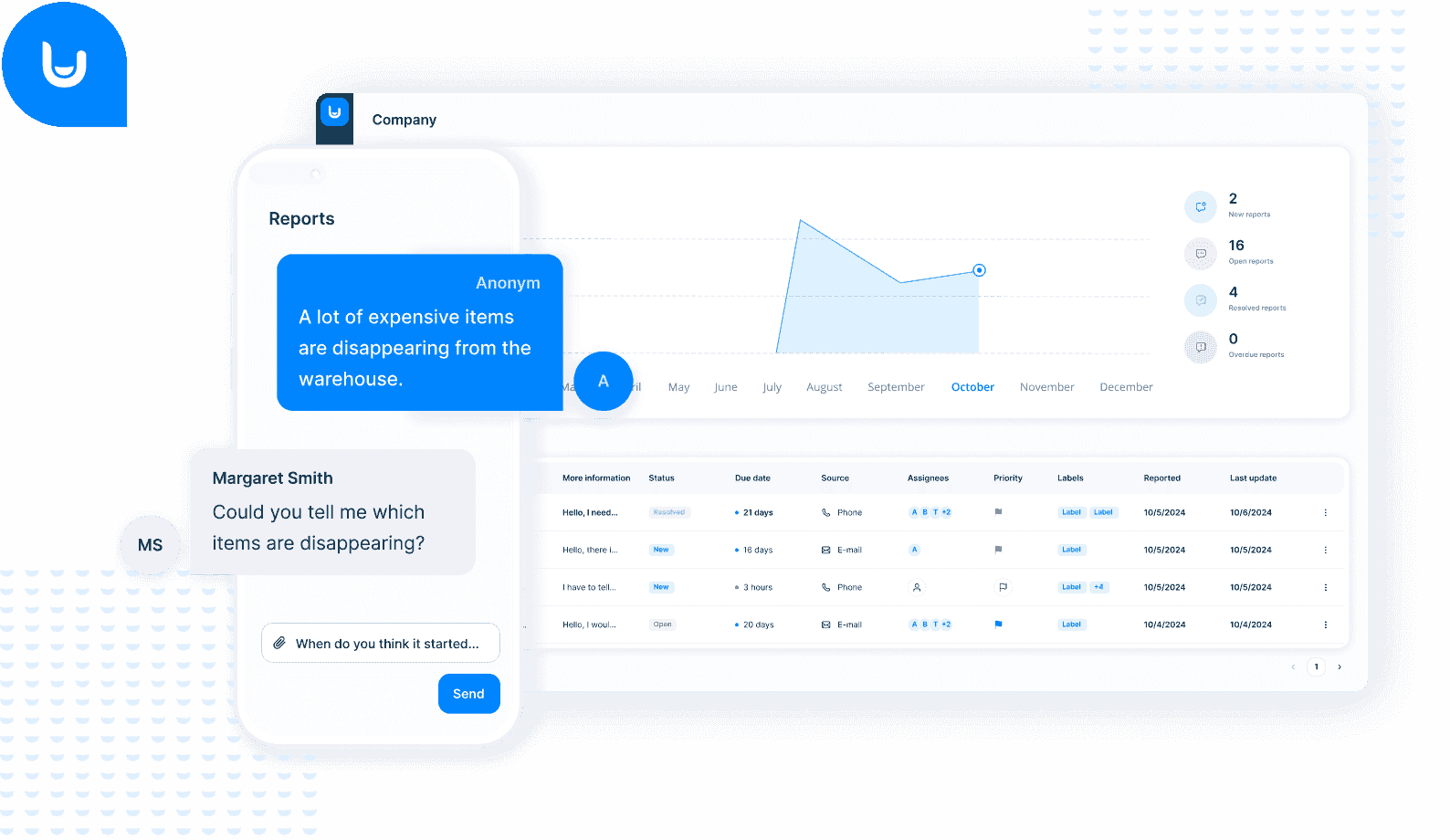
Among reporting and whistleblowing platforms, FaceUp stands out. Empowering 3,500+ people-first organizations in 70+ countries, it isn’t just another tool; it’s a single, intuitive entry point for reporting, investigations, and compliance follow-up.
FaceUp closes the gaps that typically exist between safety, HR, and legal workflows, connecting them without adding complexity. Employees can report confidently, cases stay fully trackable, and organizations gain clear, actionable insights.
Considerations:
FaceUp provides a trusted, central hub for ethical reporting, strengthening culture, safeguarding employees, and making sure no concern goes unnoticed. It’s the bridge that ties compliance systems, and people, together.
Even with a clear vendor landscape, choosing a platform can feel overwhelming. Here’s how you can move from “we need something” to “we know exactly what fits.”
Most organizations begin with:
Ask vendors:
The strongest compliance programs start with a small, focused rollout. Then expand with confidence.
Buying software is the easy part. Making it work in your organization is where most compliance programs fail or flourish. These are the levers high-performing teams focus on from day one.
Communicate why the software matters, safety, fairness, transparency, not just “compliance requirements.”
If reporting is difficult or feels unsafe, cases will never be logged. Tools like FaceUp help increase adoption through intuitive design, anonymous options, and mobile reporting.
The sooner the HRIS, LMS, and EHS systems connect, the faster the organization sees ROI.
Is your compliance training program meeting its full potential?
Track completion, comprehension, behavior change, and recertification cycles, not just checkboxes.
Review monthly:
For practical strategies to make sure your compliance program works in the real world, see our guide on how to ensure compliance in the workplace.
At the beginning of this article, we talked about that moment when organizations realize their compliance tools are no longer keeping pace with the real world. Once you’ve put the right systems in place, the real challenge becomes sustainability. Your compliance program shouldn’t fall apart when you grow, expand into new regions, or face stricter regulations.
The good news is that today’s workplace compliance platforms, whether EHS systems, HR tools, reporting platforms, or all-in-one solutions, are more powerful, more accessible, and more integrated than ever.
The right workplace compliance solution is the one that:
And, most importantly, is a tool your people will actually trust and use. Because compliance isn’t just a system. It’s a culture. And every culture starts with people feeling safe enough to tell the truth.
Want to strengthen your workplace compliance program? Download our HR Audit Checklist.
Or book a demo to explore how FaceUp supports reporting, investigations, and compliance workflows.
We’ll assess your needs and recommend the right setup for anonymous reporting or surveys - aligned with your compliance or HR goals.
Keep Reading
Alaa El-Shaarawi2026-10-0510 min
Legal & Compliance
Alaa El-Shaarawi2026-10-028 min
Legal & Compliance
Alaa El-Shaarawi2026-09-249 min
Legal & Compliance
Alaa El-Shaarawi2026-09-095 min
Legal & Compliance