

Bring All Confidential Reports Into One Secure Place
We’ll assess your needs and recommend the right setup for anonymous reporting or surveys - aligned with your compliance or HR goals.
Legal & Compliance

Alaa El-Shaarawi
Copywriter and Content Manager
Published
2026-07-09
Reading time
8 min
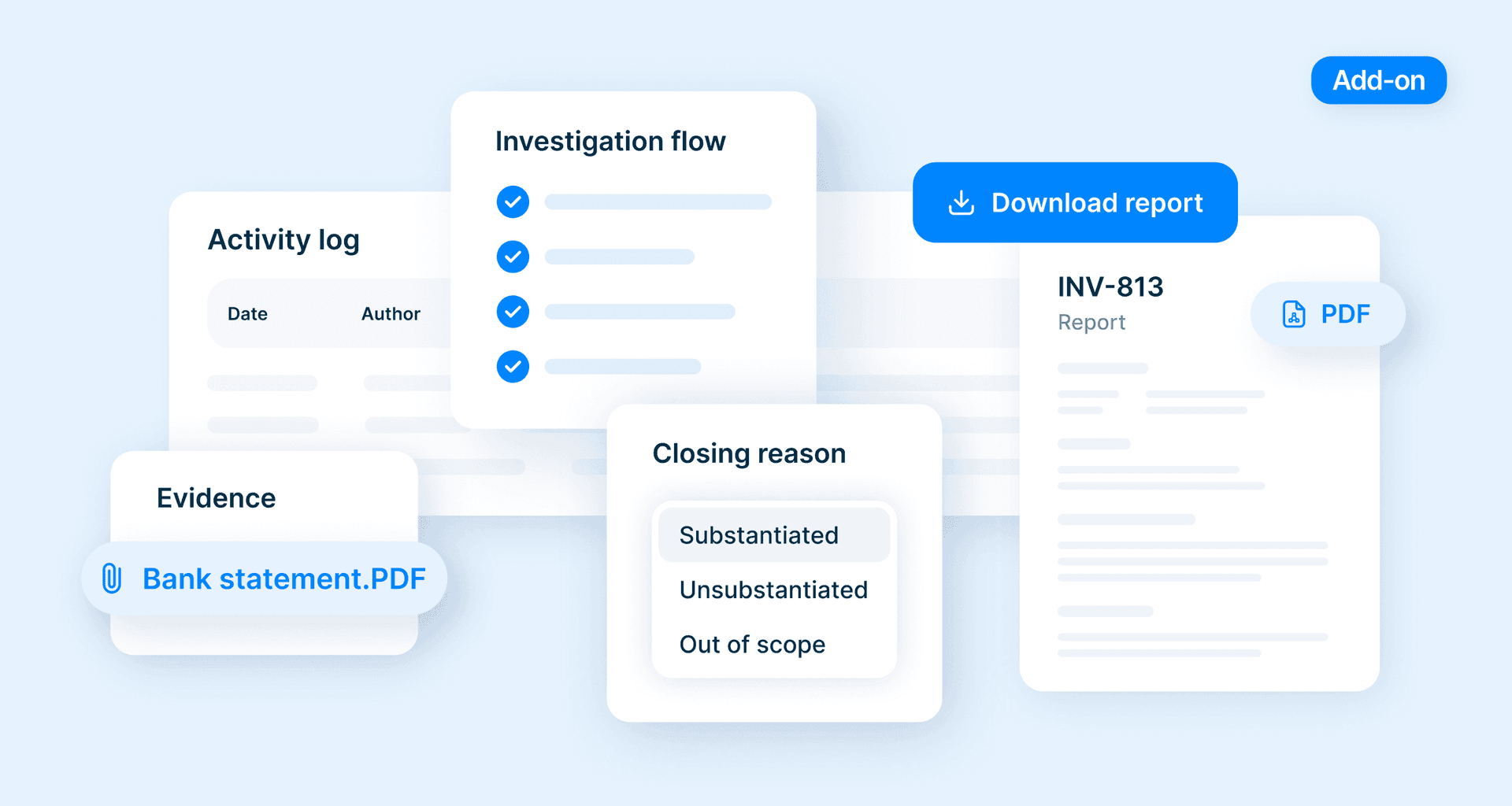
Table of contents
Subscribe to our newsletter

Today, we're introducing FaceUp Investigations—a dedicated workspace that helps compliance, HR, and legal teams manage formal workplace investigations from start to finish.
Workplace investigations often begin in your case management system but rarely stay there.
Interview notes end up in Word. Evidence is shared over email. Timelines live in spreadsheets. Policies sit in SharePoint or Google Drive. Conversations happen in Teams or Slack. Before long, a single investigation is spread across multiple systems, making it harder to stay organized, collaborate securely, and demonstrate how decisions were made.
That's why we built FaceUp Investigations.
FaceUp Investigations is a new add-on that gives compliance, HR, and legal teams a dedicated workspace for managing formal workplace investigations. Instead of piecing together documents, emails, and shared folders, every stage of the investigation—from planning and evidence collection to reporting—happens in one secure place.
The result is a process that's easier to manage, review, and defend.
Most organizations don't set out to create a fragmented investigation process. It happens naturally.
A report arrives through your whistleblowing hotline or case management system. An investigator starts taking notes in Word. Evidence is exchanged by email. Progress is tracked in Excel. Supporting documents are saved in a shared folder.
Each decision makes sense on its own. Together, they create an investigation that exists in five different places.
At first, that's manageable. There are only a few documents, one investigator, and a straightforward timeline. But as the investigation grows, so does the complexity.
New evidence arrives. Additional investigators become involved. Legal requests more documentation. Witnesses are interviewed. Findings evolve as new information comes to light.
Instead of focusing solely on establishing the facts, investigators find themselves asking questions like:
Those aren't investigative questions. They're administrative ones that slow teams down while increasing the risk of missing important context.
Even when the investigation reaches the right conclusion, demonstrating how that conclusion was reached can become surprisingly difficult if the process is scattered across disconnected tools.
Over the years, we've helped thousands of organizations strengthen their whistleblowing, employee relations, and compliance programs. As those programs matured, we noticed a consistent pattern.
Teams weren't asking us how to investigate misconduct. They already had experienced investigators, established procedures, and clear internal policies. What they needed was a better way to manage the investigation itself.
Formal investigations had become fragmented across general-purpose tools that weren't designed for investigative work. Evidence lived in one place, interview notes in another, communication somewhere else, and the final report often required hours of manual effort to pull everything together.
We built FaceUp Investigations to solve that problem.
Instead of adapting spreadsheets, email, and shared folders to support complex investigations, organizations can manage the entire investigation in one secure workspace.
From assigning investigators and documenting the investigation plan to organizing evidence, collaborating securely, maintaining a complete audit trail, and generating professional reports, every activity stays connected to the investigation it supports.
That means less time managing administration and more time focusing on what matters: conducting a fair, thorough, and well-documented investigation.
Curious what that looks like in practice? Watch a quick walkthrough of FaceUp Investigations to see how the add-on streamlines every stage of the investigation process.
Every organization has its own investigation process. FaceUp Investigations isn't designed to replace it, but to make it easier to follow.
By bringing every stage of a workplace investigation into one dedicated workspace, teams can stay organized, protect sensitive information, and document every important decision without relying on disconnected systems.
Here's how.
Every formal investigation starts with a plan.
Investigators need to define the scope of the allegation, assign responsibilities, establish timelines, and capture important context before evidence begins to accumulate.
Without a structured approach, investigations often evolve organically. Responsibilities shift, deadlines change, and key decisions end up buried in emails or meeting notes.
FaceUp gives every investigation its own dedicated workspace where teams can:
Because every investigation follows a consistent structure, teams can work more efficiently while still adapting to the needs of each case.

Collecting evidence isn't usually the hardest part of an investigation, keeping it organized is.
Evidence can come from almost anywhere: interview notes, screenshots, HR records, emails, CCTV footage, financial documents, policies, and supporting files.
When those materials are spread across different systems, investigators spend valuable time searching for information instead of evaluating it.
FaceUp keeps every piece of evidence connected to the investigation it supports.
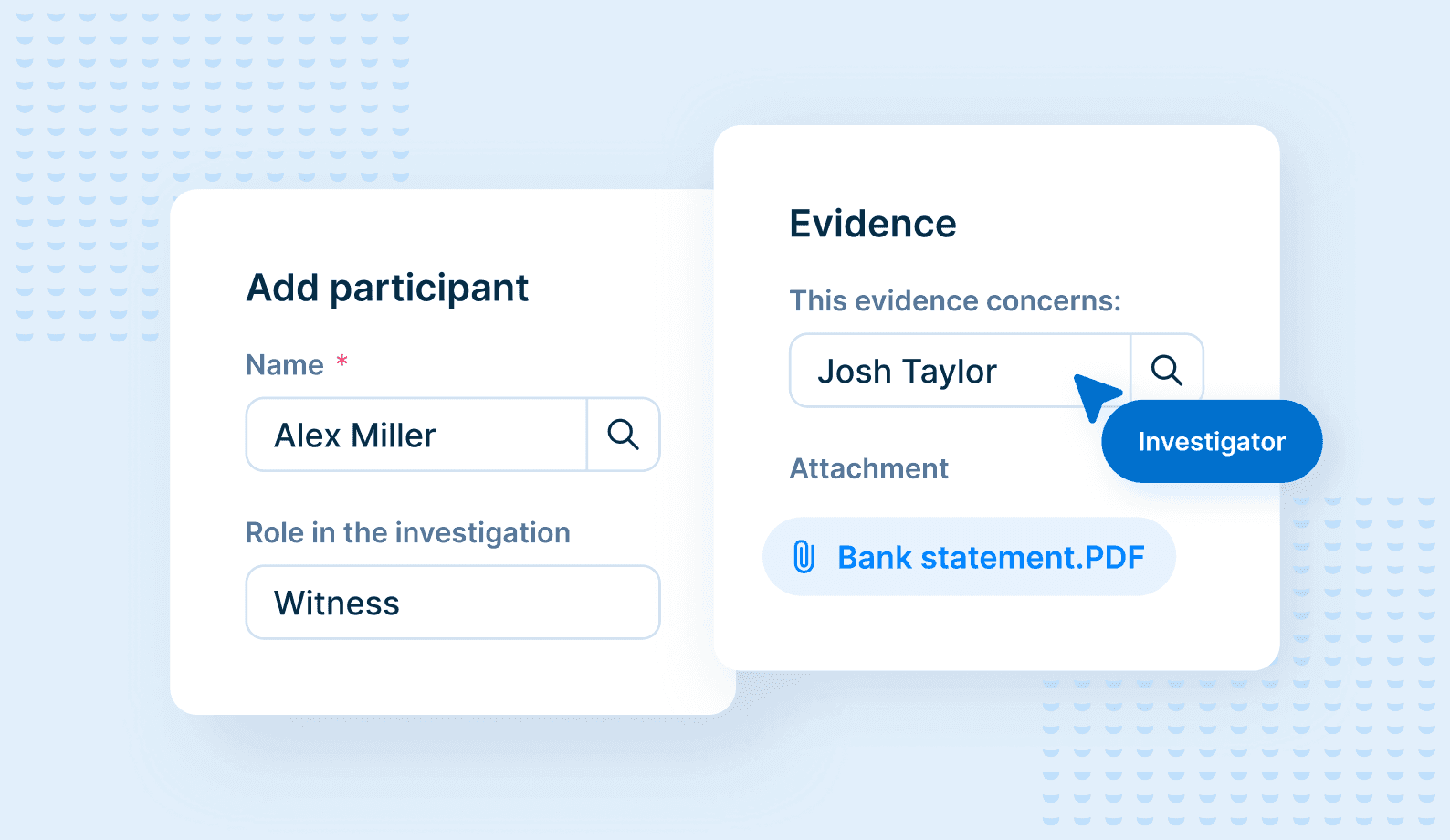
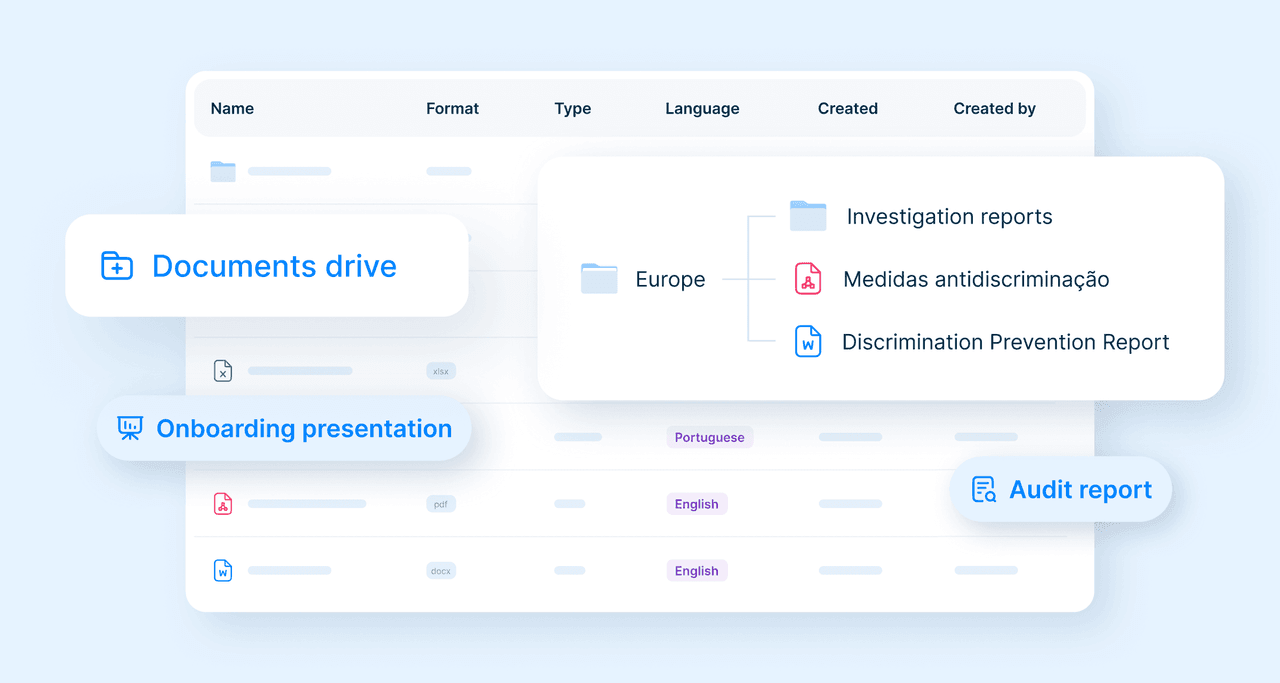
Investigators can upload files, categorize evidence, add descriptions, identify relevant materials, and link evidence to employees—all without leaving the investigation workspace.
Instead of wondering where something was saved, investigators always know where to find it.
The investigation becomes a single source of truth.
Workplace investigations rarely involve just one person.
HR may coordinate the investigation while Legal reviews evidence. Compliance oversees the process. External advisors or senior leadership may become involved depending on the nature of the allegation.
Collaboration is essential. Unrestricted access isn't.
FaceUp Investigations allows organizations to assign investigators directly to each investigation, ensuring only authorized users can access sensitive information and evidence.
Reporter identities remain separate from the investigation workspace, helping organizations protect confidentiality while giving investigators everything they need to work together effectively.
The result is secure collaboration without relying on lengthy email threads or shared folders.

One of the most important parts of an investigation isn't just what happened, but being able to prove how it did.
Months after an investigation closes, organizations may need to answer questions from legal counsel, auditors, regulators, or leadership:
Reconstructing that timeline manually can be difficult when information is scattered across emails, documents, and different systems.
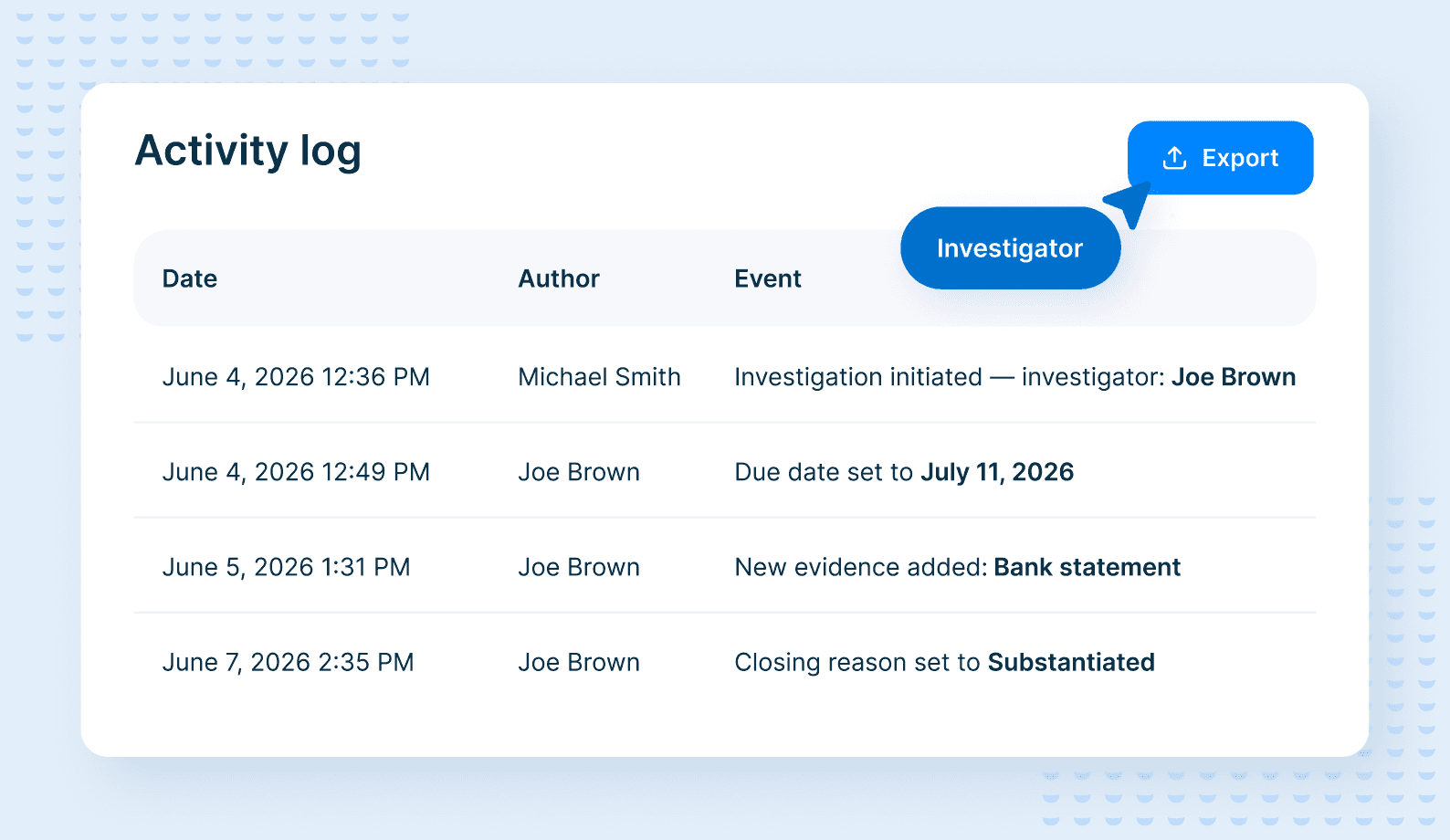
FaceUp automatically records key investigation activity, including investigator assignments, evidence updates, status changes, and investigation closure.
Instead of rebuilding the story of an investigation later, teams have a clear chronological record of what happened throughout the process.
For compliance teams, this means greater confidence during audits and internal reviews. For investigators, it means important actions are documented as they happen.
Completing an investigation doesn't always mean the work is finished.
Many teams still spend hours compiling interview notes, organizing evidence, summarizing timelines, and formatting documentation for stakeholders or legal review.
It's necessary work, but much of it is administrative.
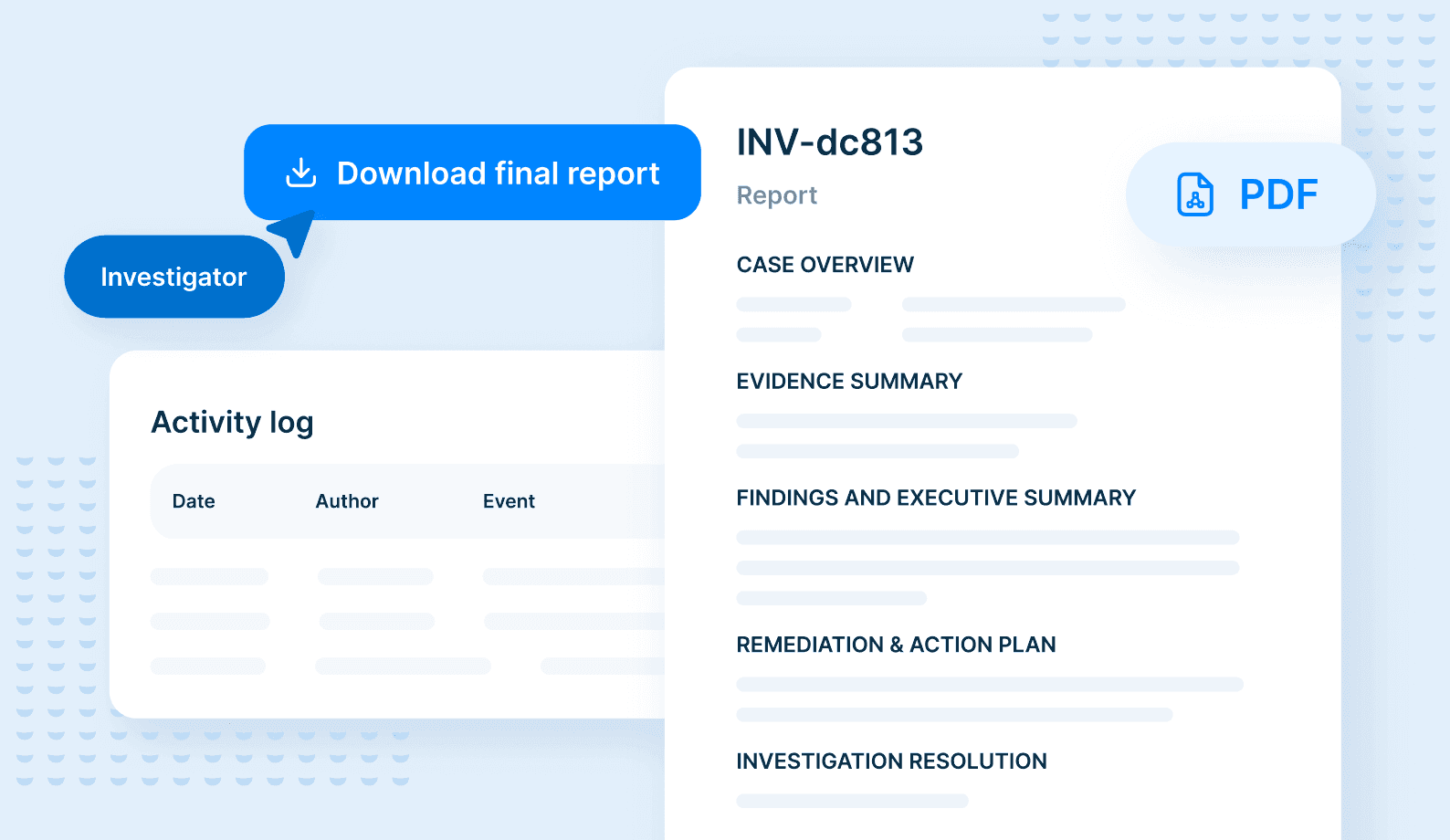
FaceUp Investigations generates a structured investigation report directly from the information already captured during the investigation.
Because the report is built from the investigation workspace itself, teams don't need to manually recreate findings or collect information from multiple sources.
The final report provides a consistent, professional record of:
Teams can spend less time preparing documentation and more time focusing on the quality of their investigations.
Not every workplace concern requires a formal investigation.
Many issues can be handled through standard case management workflows. A manager may resolve an employee concern, HR may address a policy question, or Compliance may review a report without needing a full investigative process.
But some situations require more.
Allegations involving fraud, harassment, discrimination, retaliation, conflicts of interest, safeguarding concerns, financial misconduct, or serious policy violations often involve:
In these situations, simply tracking updates on a case isn't enough.
Teams need a structured process that protects confidentiality, documents investigative decisions, and demonstrates that the organization handled the matter fairly.
That's where FaceUp Investigations provides the most value.
It gives organizations the structure they need when an issue moves beyond a standard case review and becomes a formal workplace investigation.
The goal of a workplace investigation isn't only to determine what happened, but to establish the facts through a process that employees, leadership, regulators, and legal teams can trust.
As investigations become more complex, the quality of that process matters more than ever. A correct decision can still be questioned if an organization cannot clearly demonstrate how it reached that conclusion.
FaceUp Investigations helps teams create that record.
By bringing investigation planning, evidence management, secure collaboration, audit trails, and reporting together in one workspace, organizations can run investigations that are more consistent, more transparent, and easier to review.
The result isn't just a better-organized investigation. It's a process that's easier to manage, easier to understand, and easier to defend.
Imagine receiving a request six months after an investigation has closed.
Legal counsel wants documentation for a potential claim. An auditor is reviewing your internal controls. A regulator asks how a sensitive case was handled. Leadership wants confidence that the process was fair.
The question isn't only:
"What was the outcome?"
It's:
"How did you reach that outcome?"
Who investigated the matter? What evidence was reviewed? Who had access to sensitive information? What decisions were made along the way? Was the process consistent and fair?
For many organizations, answering those questions means searching through inboxes, shared drives, spreadsheets, and meeting notes to reconstruct a process that was never stored in one place.
With FaceUp Investigations, the full investigation record stays connected from start to finish.
Every investigator assignment, evidence update, decision, and milestone is documented as it happens, giving teams a clear record they can rely on when questions arise.
Book a demo and explore how FaceUp helps compliance, HR, and legal teams run workplace investigations that are easier to manage, review, and defend.

We’ll assess your needs and recommend the right setup for anonymous reporting or surveys - aligned with your compliance or HR goals.
Keep Reading
Alaa El-Shaarawi2026-10-0510 min
Legal & Compliance
Alaa El-Shaarawi2026-10-028 min
Legal & Compliance
Alaa El-Shaarawi2026-09-249 min
Legal & Compliance
Alaa El-Shaarawi2026-09-095 min
Legal & Compliance