

Whistleblowing | Workplace Compliance
A primary UK anti-slavery regulation that consolidates criminal law on slavery and trafficking and requires large commercial organizations to publish annual statements on the steps they take to prevent modern slavery in their operations and supply chains. It is one of the UK’s key transparency-focused corporate compliance laws.
 Region: UK/
 Sector: Public & Private/
 Effective date: 26/03/2015/
 Last regulatory update: 03/25/2025/
 Mandatory:Yes/
Table of contents
The Modern Slavery Act 2015 consolidated existing UK criminal offenses related to slavery, servitude, forced or compulsory labor, and human trafficking into a single piece of legislation. Moreover, it introduced new requirements to promote transparency in the corporate supply chains of commercial organizations that supply goods and services.
The Act applies to any company or partnership that conducts any part of its business in the UK and has a total annual global turnover of £36,000,000 or more, including the turnover of its subsidiaries. Where multiple entities within a group meet the threshold, each must comply, although a parent company may issue a joint statement covering its subsidiaries, provided it addresses each entity's operations clearly.
It applies regardless of where companies are incorporated or formed. Criminal provisions under the Act have no territorial limitation and extend to any person who holds another in slavery or servitude, or facilitates the travel of a person for the purpose of exploitation. The Act also protects current or potential victims of slavery, servitude, forced labor, and human trafficking.
The Act is overseen by the Home Office, which also publishes additional guidance. The Secretary of State appoints the Independent Anti-Slavery Commissioner to encourage good practice in the prevention, detection, and investigation of modern slavery offenses and the identification of victims.
The National Crime Agency (NCA) and the Crown Prosecution Service (CPS) are responsible for investigating and prosecuting criminal offenses under the Act. The Secretary of State has the power to seek an injunction against organizations that fail to comply with the transparency obligations outlined in Section 54 of the Act.
Criminal offenses under Sections 1 and 2 of the Act, covering slavery, servitude, forced labor, and human trafficking, carry a maximum sentence of life imprisonment for individuals.
Offenses under Section 4, relating to acts carried out with the intent to facilitate a human trafficking offense under Section 2, carry a maximum sentence of 10 years in prison, increasing to life imprisonment where the offense involves kidnapping or false imprisonment.
Section 54 of the Act covers corporate transparency obligations and operates differently from the criminal provisions. There is no automatic financial penalty for failing to publish a modern slavery statement or for publishing an inadequate one. However, the Secretary of State may seek an injunction requiring compliance.
Failure to comply with such an injunction constitutes contempt of court and may result in an unlimited fine. In practice, the current primary drivers of compliance are reputational risk and commercial consequences, with failure to publish inviting scrutiny from campaign organizations, investors, and commercial partners.
This gap in effective consequence has been widely criticized, and reform is expected in the medium term. Under the proposed Modern Slavery Amendment Bill, organizations that fail to meet the minimum disclosure standards would be issued a formal warning and risk criminal liability and fines amounting to 4% of global turnover, up to a maximum of £20 million (where applicable under proposed reforms).
The House of Lords Select Committee published its recommendations in October 2024, proposing enhanced enforcement mechanisms, potential financial penalties for non-compliance, and the criminalization of falsifying modern slavery statements. The UK has not yet established or confirmed any legislative changes to date.
The primary corporate obligation under the Modern Slavery Act is to create an annual modern slavery statement, as defined in Section 54. All in-scope commercial organizations must produce a statement for each financial year that sets out the steps they have taken (which may include taking no steps) to ensure modern slavery is not occurring in their business or supply chains.
The statement must be approved by the board of directors or an equivalent governing body and be signed by a director or designated partner. If the organization has a website, the statement must be published there in a prominent location and be publicly available.
The Home Office’s March 2025 TISC statutory guidance introduced structured expectations for the statements and strengthened expectations around reporting quality and consistency. These include:
Core Section 54 Reporting Areas | |
Organizational Structure & Supply Chains | Describe the organization’s structure, business lines, and supply chain geography. |
Policies | Detail the policies related to modern slavery and human trafficking prevention. |
Due Diligence Processes | Outline the steps taken to identify and address modern slavery risk in the business and supply chain. |
Risk Assessment & Management | Explain how the organization assesses and manages the risk of modern slavery in its operations. |
Key Performance Indicators | Define the measures used to evaluate the effectiveness of anti-slavery policies. |
Training | Detail the training provided to staff, particularly to procurement, HR, and supply chain teams. |
Although these areas are not mandatory under current legislation, the 2025 guidance makes clear that organizations are expected to address them substantively and demonstrate year-over-year improvements in disclosure quality and transparency.
The Act does not create a standalone whistleblowing framework, but the guidance explicitly references grievance mechanisms and anonymous reporting channels as expected components of effective due diligence systems. Specifically regarding remediation, companies should provide details on mechanisms for whistleblowing or reporting suspected incidents of modern slavery.
Modern slavery affects an estimated tens of millions of people globally, with supply chains spanning multiple jurisdictions and tiers of suppliers creating real organizational exposure, particularly in industries reliant on low-cost manufacturing, agriculture, and logistics.
The Act’s transparency provision was among the first globally to require corporate reporting on supply chain risk, and it continues to set the standard for what investors, procurement teams, and civil society expect from organizations operating at scale.
Recently, scrutiny of the Act has intensified, with the House of Lords Select Committee finding that the UK had fallen behind international standards. With potential reforms on the horizon, organizations that treat the required statement as a formality rather than a genuine risk assessment and disclosure process face growing reputational and commercial exposure.
As stated, the Modern Slavery Act does not explicitly require organizations to operate a whistleblowing channel. However, meaningful compliance with the Act’s due diligence expectations, particularly regulatory expectations around identifying and remediating supply chain risk, depends on having channels for reporting concerns about forced labor or exploitation within their operations and supply chains.
FaceUp gives organizations access to an anonymous, multi-channel reporting system that supports web forms, iOS/Android mobile apps, and 24/7 hotlines in 113 languages, empowering employees to highlight perceived issues regardless of their location or literacy level.
Centralized and auditable case management enables compliance teams to track reports, assign investigations, document outcomes, and generate structured records with automatic activity logging, demonstrating evidence of meaningful due diligence to auditors, investors, and regulators.


Commercial organizations with a global turnover of 36,000,000 pounds or more, carrying on any part of a business in the UK.

Life imprisonment for criminal slavery and trafficking offenses;
unlimited fine for contempt of court if the section 54 injunction is ignored;
significant reputational risk for non-compliance.
FaceUp is an anonymous reporting and compliance platform designed to help businesses meet whistleblowing regulations worldwide, including those in the US, EU, UK, and UAE.
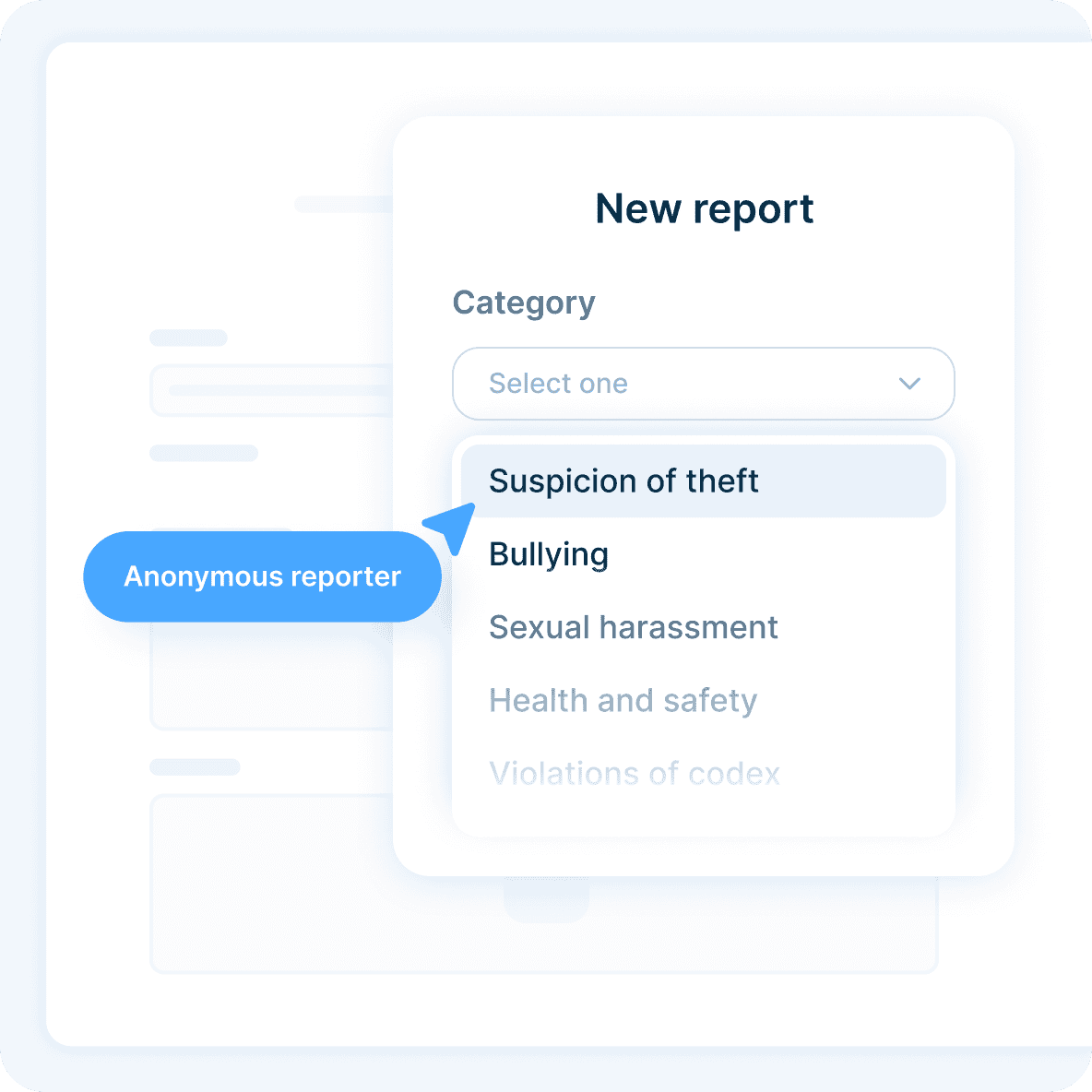
Give staff multiple secure channels to report their concerns, complete with an anonymous two-way chat.

Mobile-First Accessibility

No IP storage, no device IDs, encrypted submissions

Customizable forms, categories, routing rules, and more
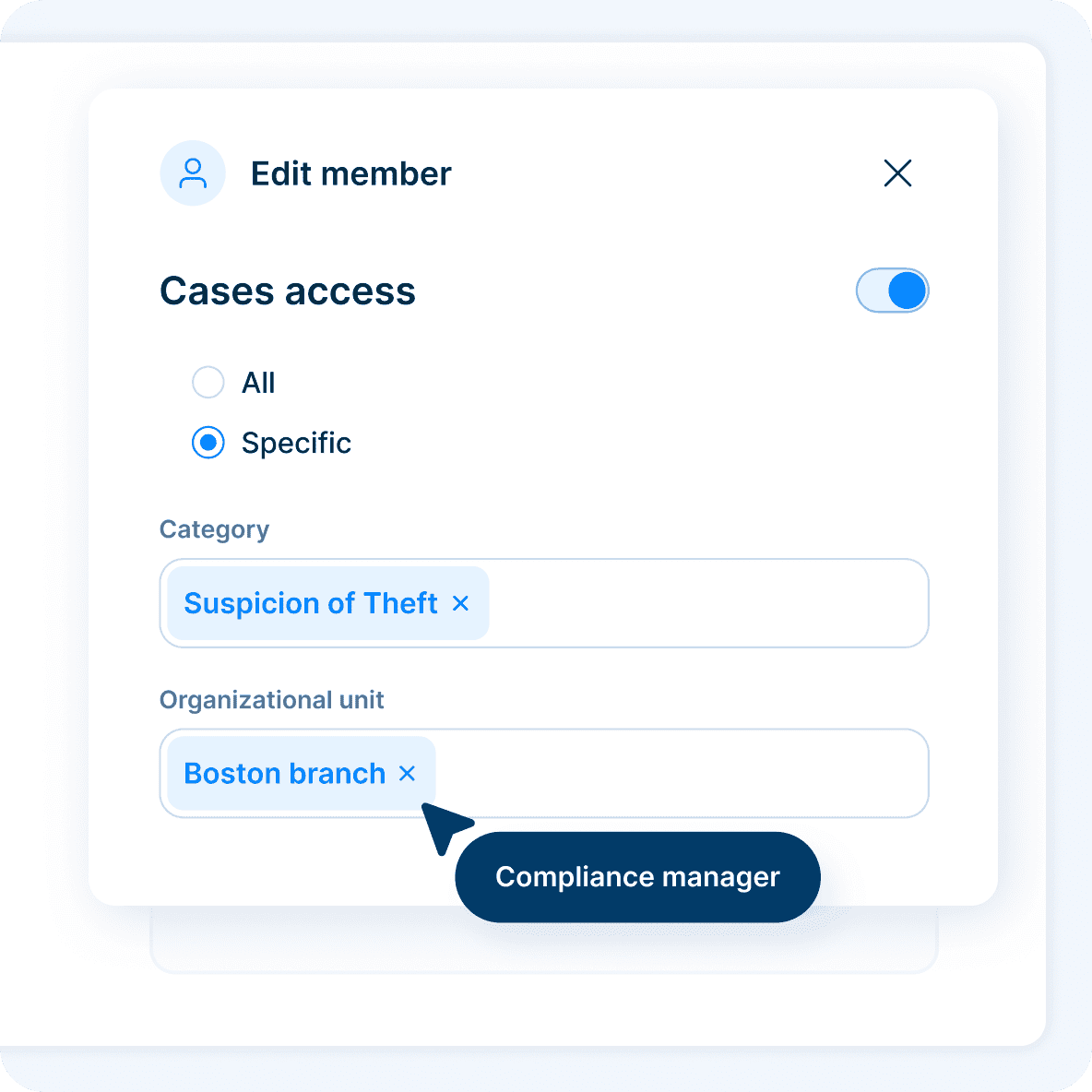
Create an easily verifiable audit trail through a customizable case management system with automatic routing.
Supports multiple locations, subsidiaries, or units

Entity-specific routing and access permissions

Optional notifications via email, Teams, or Slack
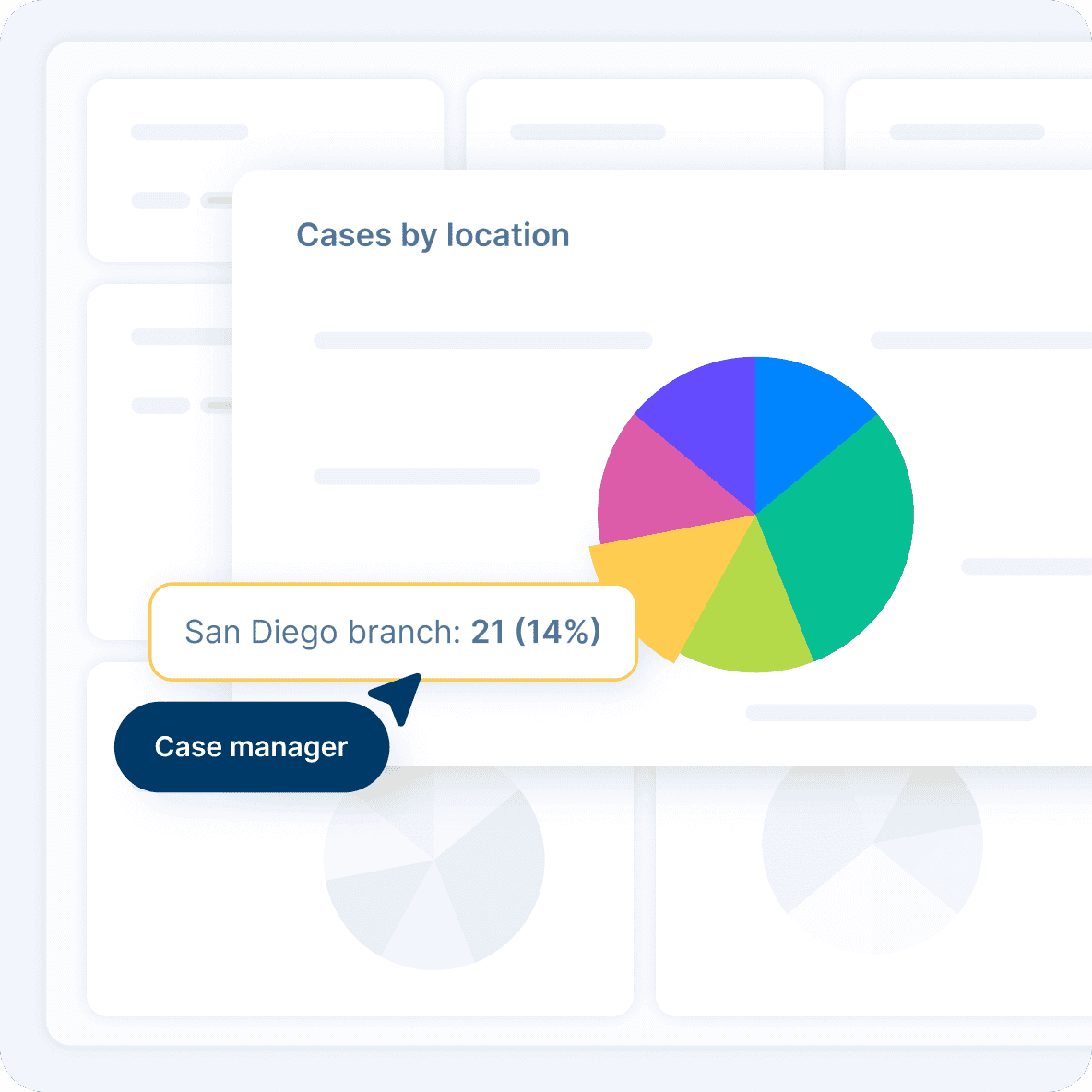
Identify trends, repeated issues, and escalation risks early with customizable visual real-time dashboards.

Filter by category, region, channel, and more

Share without revealing sensitive information

ISO 27001 and SOC 2-certified local servers