

Workplace Compliance
A voluntary compliance framework designed to assess how organizations manage customer data and ensure appropriate safeguards are in place to protect systems and information.
 Region: Global/
 Sector: Public & Private/
 Date Introduced: 06/15/2011/
 Last Update:10/15/2022/
 Mandatory:No/
Table of contents
The System and Organization Controls 2 (SOC 2) is an independent auditing framework developed by the American Institute of Certified Public Accountants (AICPA). It provides a standardized way for organizations to demonstrate to customers that they have effective controls in place to protect data and systems.
While not a legal requirement, modern organizations increasingly rely on third-party vendors to handle sensitive data and critical operations, making SOC 2 attestation a common prerequisite for enterprise B2B service procurement. Without it, each buyer would have to conduct their own security assessment, and vendors would have to repeatedly answer complex questionnaires.
SOC 2 solves this problem through a standardized evaluation framework conducted by an objective third-party auditor, resulting in a reusable SOC 2 report for the vendor and a significantly streamlined due diligence process for all parties involved. This makes it particularly important for SaaS platforms, cloud service providers, IT vendors, and more.
Types of SOC 2 Reports | |
| SOC 2 Type I | Evaluates whether controls are properly designed at a specific point in time. |
| SOC 2 Type II | Evaluates whether controls are both properly designed and operating effectively over a period of time (typically 3 - 12 months). |
SOC 2 requires organizations to establish and maintain effective internal controls across several areas, including risk identification and management; access controls; system operations; change management; data protection; monitoring and auditing; and governance and accountability. However, SOC 2 does not prescribe specific controls for these areas.
Effective Internal Reporting Control Requirements | |
Risk Identification and Management | Identify risks that could impact systems or data and implement measures to mitigate them. |
Access Controls | Restrict access to systems and data based on roles and responsibilities, including user onboarding and offboarding. |
System Operations | Monitor systems, detect incidents, and respond to anomalies or failures. |
Change Management | Ensure system changes are tested, approved, and documented before deployment. |
Data Protection | Safeguard data through encryption, classification, retention, and secure disposal. |
Monitoring & Auditing | Track activity, maintain logs, and review controls to ensure ongoing effectiveness. |
Governance & Accountability | Define responsibilities, policies, and oversight mechanisms across the organization. |
Instead, the framework requires organizations to identify their own risks, design controls to address those risks, and demonstrate that those controls operate effectively. These are then evaluated against the five Trust Services Criteria defined by the AICPA.
The Five Trust Services Criteria | |
Security | Systems and data are protected from unauthorized access, misuse, and damage. |
Availability | Systems are operational and accessible as required. |
Processing Integrity | Systems process data accurately, completely, and in a timely manner. |
Confidentiality | Sensitive information is protected from unauthorized disclosure. |
Privacy | Personal data is collected, used, retained, and disposed of appropriately. |
After establishing that they can meet these requirements, organizations seeking a SOC 2 attestation can choose whether to pursue a Type I or Type II report and undergo an independent audit conducted by a licensed CPA firm in accordance with AICPA standards.
There are several reasons why organizations seek SOC 2 attestation. From a sales perspective, SOC 2 helps build customer trust by providing independent validation that systems and data are handled securely. It also streamlines the procurement process by anticipating and meeting common enterprise buyer requirements.
From an organizational standpoint, SOC 2 improves internal processes by encouraging structured policies and risk management, strengthening security and incident response, and reducing overall operational risk.
While SOC 2 does not certify specific tools, organizations must implement controls to ensure the secure, structured, and auditable handling of sensitive information. FaceUp helps meet these requirements by providing confidential, easily accessible reporting channels in 113+ languages.
All reports received through any of our reporting channels (web, hotlines, iOS/Android app) and subsequent follow-up communications are encrypted, anonymized where applicable, and handled through a centralized case management system with role permissions and auditable data logs.
FaceUp is an anonymous reporting and compliance platform designed to help businesses meet whistleblowing regulations worldwide, including those in the US, EU, UK, and UAE.
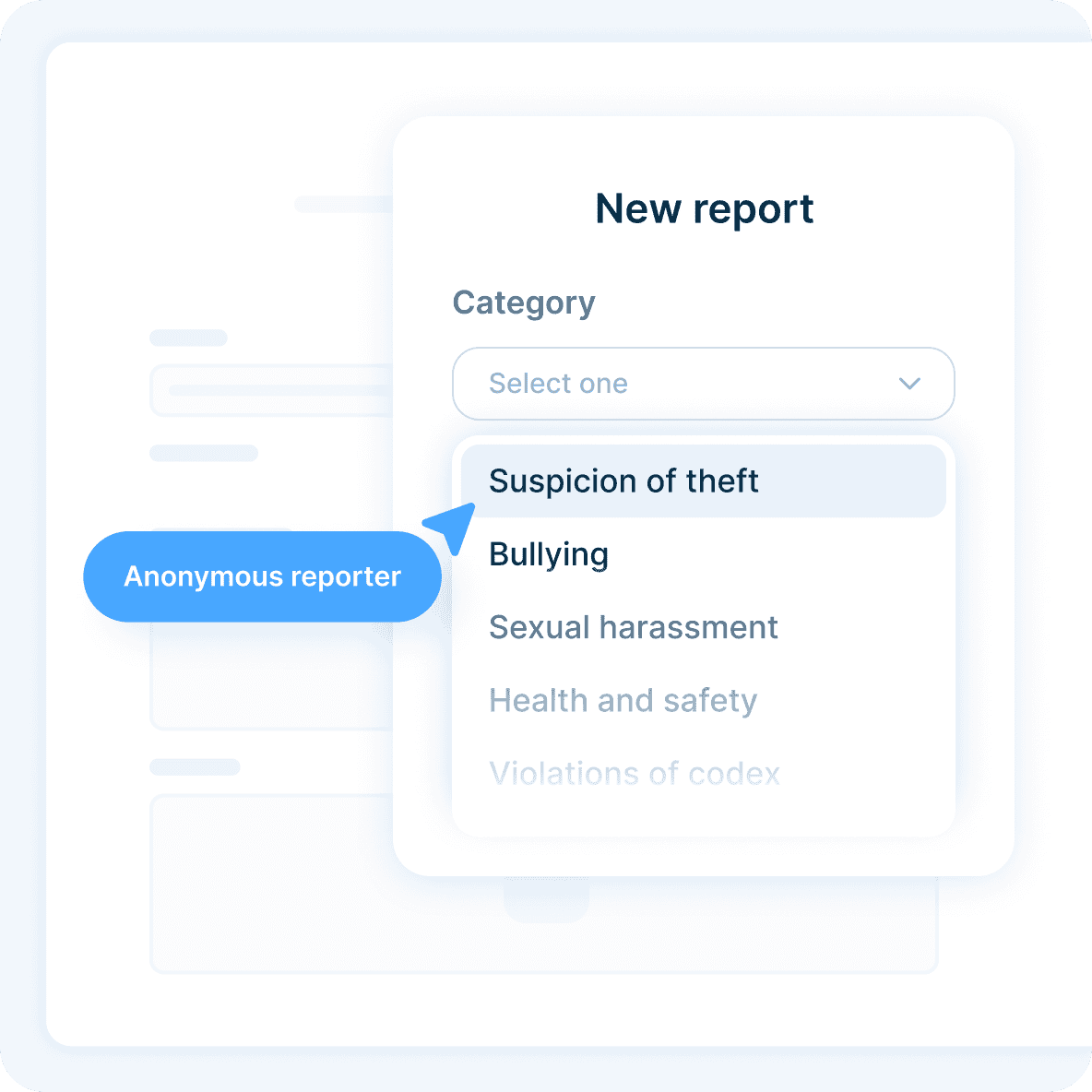
Give staff multiple secure channels to report their concerns, complete with an anonymous two-way chat.

Mobile-First Accessibility

No IP storage, no device IDs, encrypted submissions

Customizable forms, categories, routing rules, and more
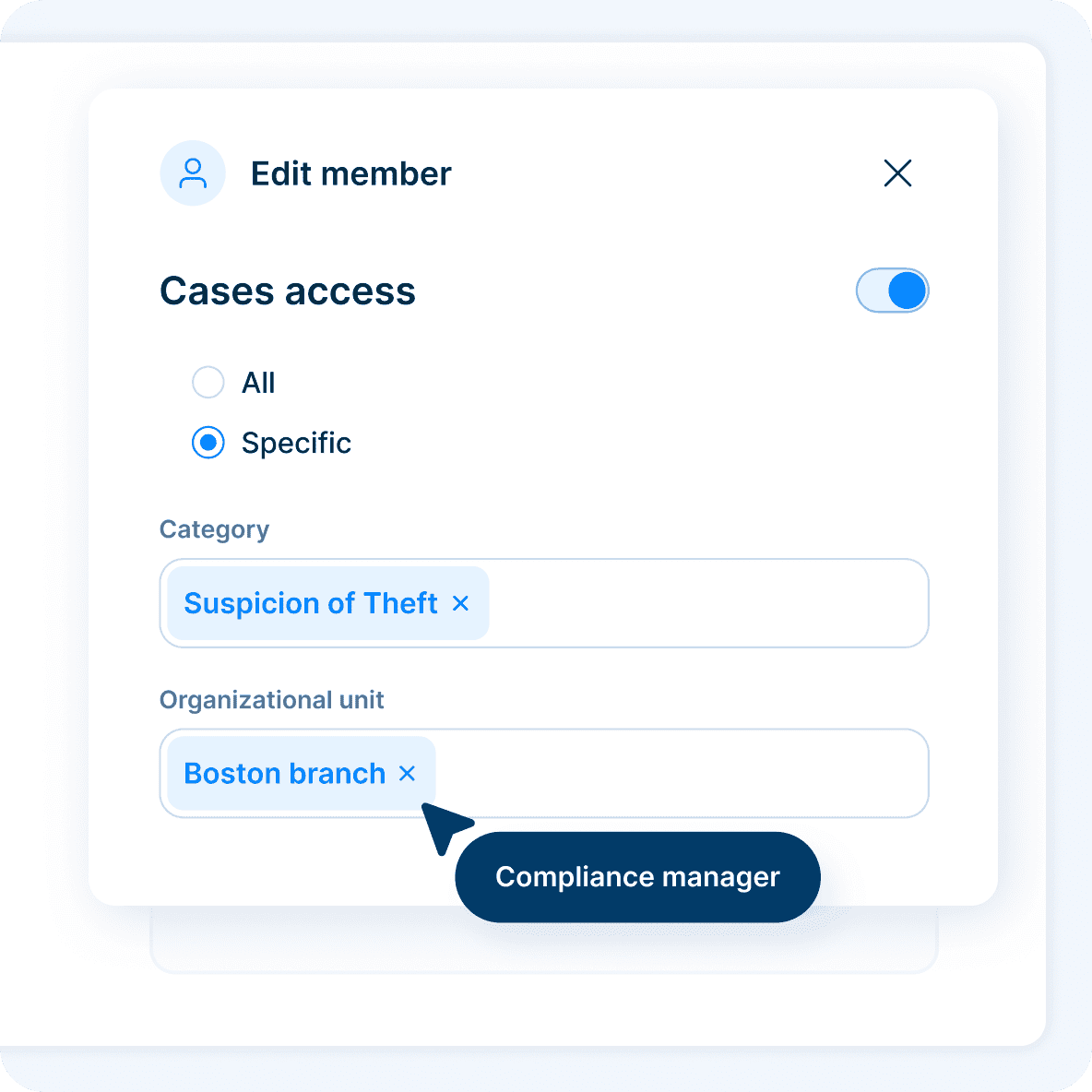
Create an easily verifiable audit trail through a customizable case management system with automatic routing.
Supports multiple locations, subsidiaries, or units

Entity-specific routing and access permissions

Optional notifications via email, Teams, or Slack
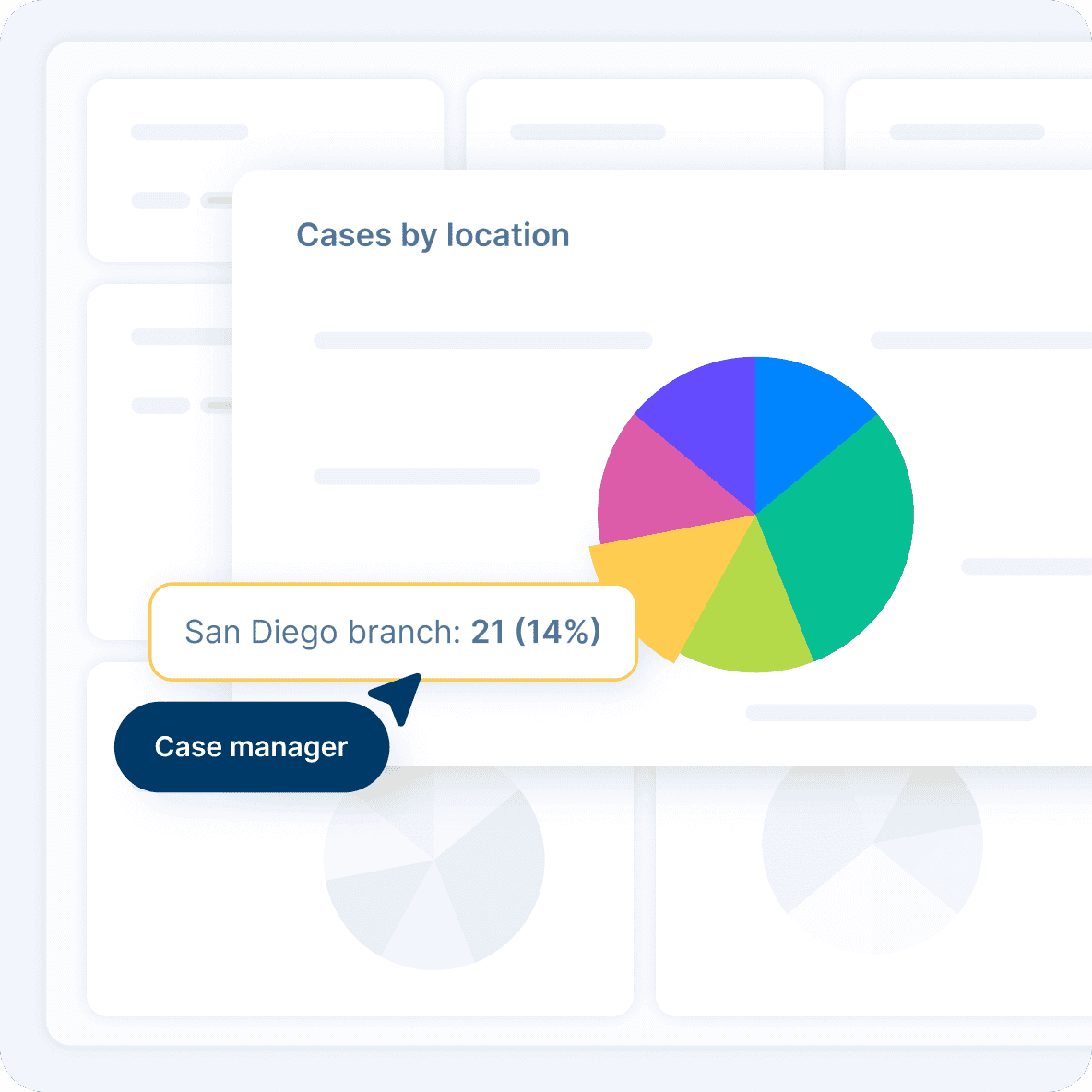
Identify trends, repeated issues, and escalation risks early with customizable visual real-time dashboards.

Filter by category, region, channel, and more

Share without revealing sensitive information

ISO 27001 and SOC 2-certified local servers