


Whistleblowing | Workplace Compliance
The General Data Protection Regulation, or GDPR, is the EU's primary data protection law, governing how organizations collect, process, and store personal data of individuals in the European Union and the European Economic Area (EEA).
 Region: EU/
 Sector: Public & Private/
 Effective date: 01/05/2023/
 Last regulatory update: 03/18/2026/
 Mandatory:Yes/
Table of contents
The Corporate Sustainability Reporting Directive (CSRD), formally known as EU Directive 2022/2464, is a cornerstone of the EU’s Sustainable Finance Agenda and the European Green Deal. Its aim is to transform corporate sustainability disclosure from a largely voluntary exercise into a regulated reporting framework with rigor comparable to that of financial reporting.
Companies in scope must publish annual sustainability reports covering environmental, social, and governance (ESG) matters in accordance with the European Sustainability Reporting Standards (ESRS), developed by the European Financial Reporting Advisory Group.
The CSRD replaced the Non-Financial Reporting Directive (NFRD), significantly expanding the scope of covered companies and the depth of required reporting. Compared to the NFRD’s 11,000 large public-interest entities, the CSRD’s original scope included roughly 50,000 companies, although its subsequent Omnibus I amendments reduced this number considerably.
Omnibus I raised the scope thresholds substantially, removing requirements for sector-specific reporting standards, simplifying assurance requirements, and introducing a value-chain cap that limits the information large companies can demand from small suppliers.
The CSRD was adopted by the European Parliament and Council of the EU on the 14th of December 2022. It went into effect on the 5th of January 2023, with its Omnibus I amendment entering into force on the 18th of March 2026. Member States have until 19 March 2027 to transpose the CSRD-related Omnibus I provisions into national law.
The CSRD directly complements the Corporate Sustainability Due Diligence Directive (CSDDD). Where the CSRD requires companies to report on sustainability matters, the CSDDD obliges them to act, identifying, preventing, and remediating actual and potential human rights and environmental impacts across their operations and value chains.
The enforcement of the CSRD sits entirely at the national level. Each Member State must designate competent authorities responsible for supervising compliance, defining penalties, and granting investigative powers to ensure that covered companies prepare and file sustainability reports in accordance with the directive and the ESRS.
At the EU level, the European Commission oversees transposition, adopts delegated acts such as the ESRS, and monitors Member States’ implementation. The European Financial Reporting Advisory Group (EFRAG) develops and maintains the ESRS and supporting guidance, although it is not an enforcement body.
The CSRD does not prescribe penalties at the EU level. While Omnibus I capped financial penalties at 3% of net worldwide turnover, enforcement and sanctions are set by individual Member States during transposition, meaning penalties vary considerably across jurisdictions. This requires organizations to assess exposure on a case-by-case basis.
Penalties for non-compliance must be effective, proportionate, and dissuasive, and responsible authorities must have the power to require cessation of non-compliant conduct, issue public notices, and impose penalties.
France, the first country to transpose the CSRD, established financial penalties of up to €18,750 for failure to publish a sustainability report. Obstructing an assurance audit or failing to appoint an accredited third-party auditor can result in exclusion from public procurement and criminal penalties, including fines of up to €375,000 and up to five years' imprisonment.
The Czech Republic introduced fines of up to 3% of a company's total assets for failing to submit a sustainability report, which is one of the more stringent approaches among early adopters. Meanwhile, other jurisdictions, such as Germany and the Netherlands, are still finalizing their national transposition frameworks, with penalties yet to be established.
Under the CSRD, as amended by Omnibus I, the companies required to comply with the directive starting on, or from the financial years after the 1st of January 2027, include:
Core CSRD Requirements | |
Double Materiality Assessment | Identify sustainability matters that are material either because they affect the organization’s financial performance or because of the organization’s impacts on people and the environment. These are known as financial materiality and impact materiality. |
Reporting Against the ESRS | Sustainability statements must follow the updated European Sustainability Reporting Standards. |
Climate Transition Plan | Organizations that already have a climate transition plan are required to disclose it, including any associated targets and milestones. The Omnibus I amendment removed the former obligation to adopt one. |
Value-Chain Information Cap | Limit requests for information from entities with fewer than 1,000 employees in their value chain that go beyond the scope of voluntary reporting standards for SMEs. |
Assurance | Sustainability statements are subject to limited assurance by a statutory auditor or independent assurance provider. |
Digital Tagging | Sustainability information is digitally tagged in accordance with the European Single Electronic Format (ESEF) to enable machine-readable data access. |
Governance Disclosures | Disclose information on the role of the board and management in overseeing sustainability matters, including any relevant expertise and processes for stakeholder engagement. |
Organizations already subject to the EU Whistleblower Directive must provide evidence of the robustness of their reporting and grievance mechanisms as part of their CSRD disclosures, which cover topics such as business conduct, anti-bribery, and internal controls.
The CSRD represents a structural shift in how large EU companies and EU-based multinationals are held accountable for their environmental and social impacts. By requiring sustainability disclosure under audited, standardized frameworks, the directive aims to close the gap between what companies say about their sustainability and what they actually do.
For investors, lenders, and business partners, this creates a new layer of reliable information for decision-making. Large companies that cannot withstand audit scrutiny expose themselves to regulatory sanctions, reputational damage in capital markets, and exclusion from procurement processes where sustainability credentials are increasingly required.
The CSRD does not directly require organizations to operate a whistleblowing platform. However, the directive’s governance and business conduct reporting requirements on anti-corruption, business ethics, and internal controls require companies to demonstrate that they have functioning mechanisms to identify and address misconduct.
FaceUp helps organizations comply with the CSRD and the EU Whistleblower Directive by providing easy-to-use anonymous reporting channels and a centralized case management system with audit-ready logs that support auditors, employees, and internal compliance teams.

EU companies with more than 1,000 employees and net annual turnover above 450 million euros;
non-EU companies with equivalent EU market presence;
Wave 1 large public-interest entities continue reporting under prior thresholds through 2026

Set by individual Member States, capped at 3% of a company’s net worldwide turnover.
FaceUp is an anonymous reporting and compliance platform designed to help businesses meet whistleblowing regulations worldwide, including those in the US, EU, UK, and UAE.
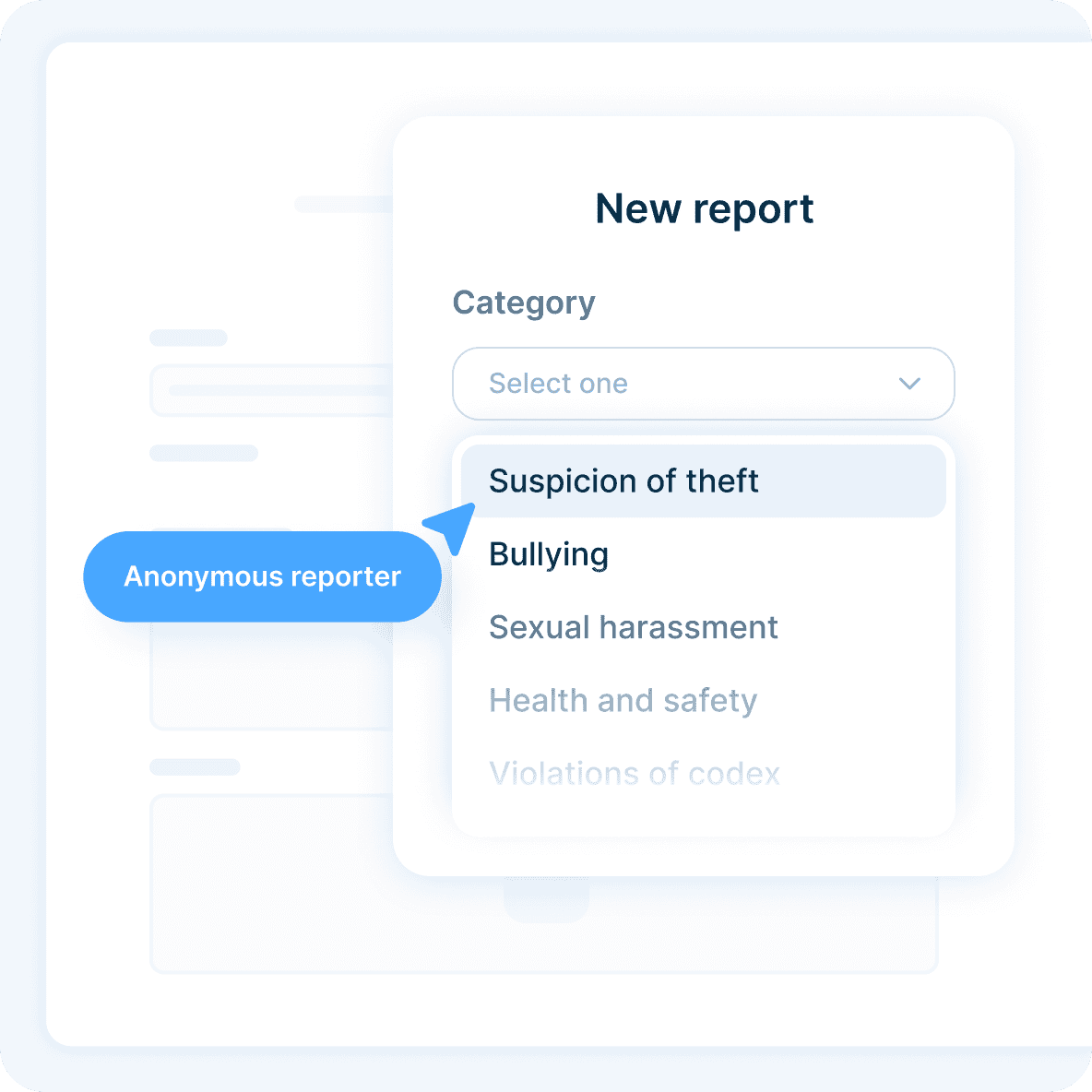
Give staff multiple secure channels to report their concerns, complete with an anonymous two-way chat.

Mobile-First Accessibility

No IP storage, no device IDs, encrypted submissions

Customizable forms, categories, routing rules, and more
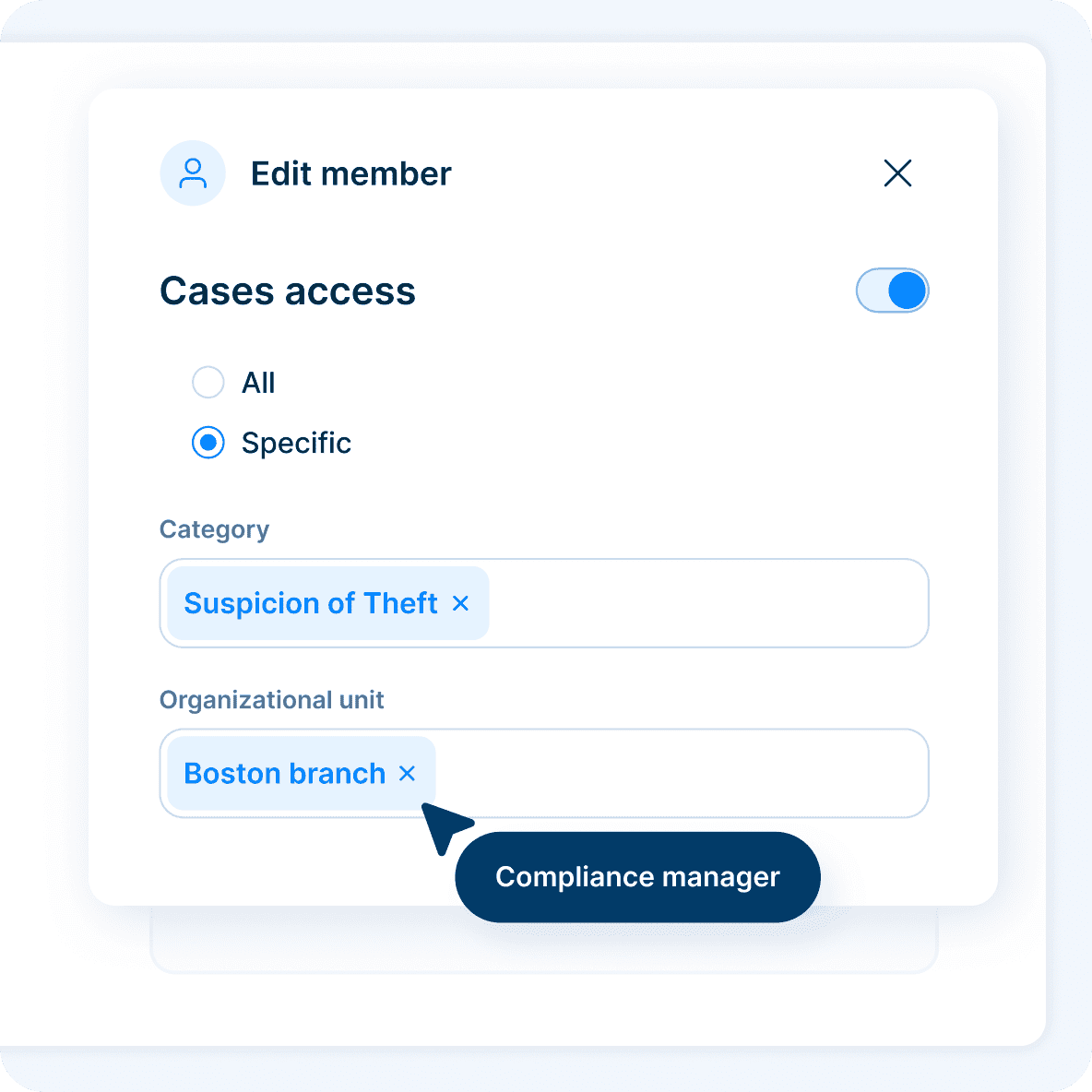
Create an easily verifiable audit trail through a customizable case management system with automatic routing.
Supports multiple locations, subsidiaries, or units

Entity-specific routing and access permissions

Optional notifications via email, Teams, or Slack
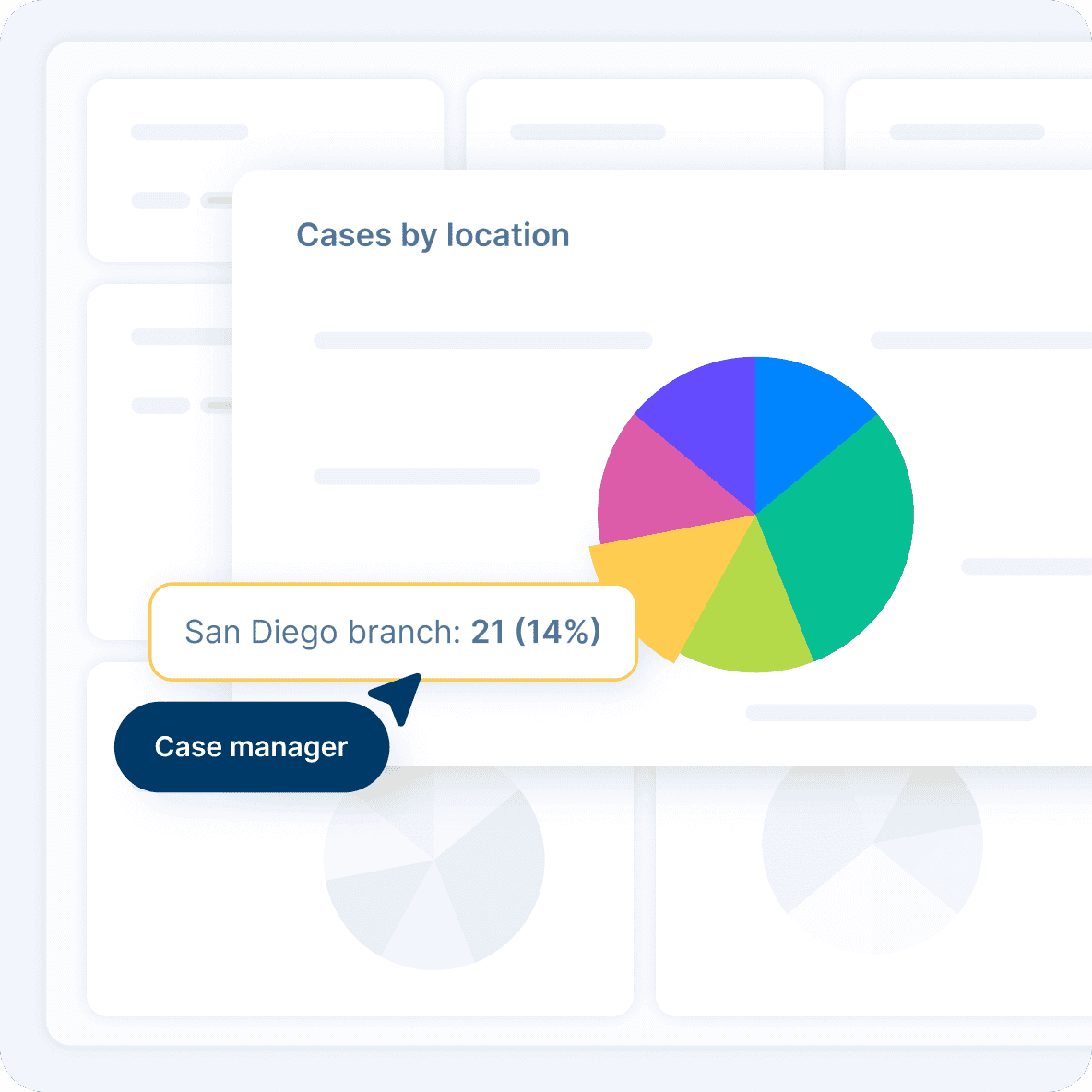
Identify trends, repeated issues, and escalation risks early with customizable visual real-time dashboards.

Filter by category, region, channel, and more

Share without revealing sensitive information

ISO 27001 and SOC 2-certified local servers