

Whistleblowing | Workplace Compliance
A chapter of the Federal Sentencing Guidelines that prescribes how fines are calculated for organizations convicted of federal crimes, introducing the culpability score system, and outlining permissible ways to reduce sanctions through an effective compliance and ethics program, and self-reporting.
 Region: USA/
 Sector: Public & Private/
 Effective date: 11/01/1991/
 Last regulatory update: 11/01/2025/
 Mandatory:Yes/
Table of contents
Chapter 8 of the Federal Sentencing Guidelines took effect on November 1, 1991, establishing how federal courts calculate fines, probation, and other sanctions for organizations convicted of federal crimes. The guidelines are updated annually. The current version is the Guidelines Manual, effective November 1, 2025.
The Guidelines were significantly expanded on by Amendment 673 on November 1, 2004, through the addition of Section 8B2.1, “Effective Compliance and Ethics Program.” This change came in response to a Sarbanes-Oxley Act mandate that the U.S. Sentencing Commission ensure its organizational guidelines were sufficient to deter and punish misconduct.
Organizations bound by Chapter 8 include corporations, partnerships, and other entities sentenced in federal court following a criminal conviction. The framework does not directly protect a defined class of individuals in the way a whistleblower statute does.
Instead, it protects the integrity of an organization’s compliance and ethics function by requiring that individuals with day-to-day compliance responsibilities, among other things, have a direct reporting line to the organization’s governing authority.
Key U.S. Sentencing Guidelines, Chapter 8 Provisions | |
Culpability Score (8C2.5) | Calculates an organization's fine multiplier based on six factors, including whether it has an effective compliance and ethics program. |
Effective Compliance & Ethics Program (8B2.1) | Sets the seven required elements of a program that qualifies for sentencing credit, including due diligence, training, and an anonymous reporting mechanism. |
Self-Reporting Credit (8C2.5(g)) | Reduces the culpability score by up to 5 points for organizations that self-report an offense, fully cooperate, and accept responsibility before an imminent investigation. |
Exclusion for High-Level Involvement (8C2.5(f)(3)) | The compliance program credit does not apply if high-level personnel participated in, condoned, or were willfully ignorant of the offense. |
Remedial & Probation Orders (8B1, 8D1) | Courts can order restitution, community service, and probation conditions, including requirements to implement or improve a compliance program. |
The U.S. Sentencing Commission (USSC) drafts and annually amends the Guidelines under statutory authority from Congress. Federal district courts apply Chapter 8 at sentencing following an organizational conviction, calculating the culpability score and resulting fine range under the guidance of the Department of Justice (DOJ).
The DOJ prosecutes the underlying offense and, in practice, also evaluates the effectiveness of the compliance program when deciding whether to bring charges, offer a deferred prosecution agreement, or recommend a lower sentence.
Chapter 8 does not itself create criminal offenses or set penalty caps. It determines how severely an already-convicted organization is punished. The culpability score raises or lowers a base fine using a fine multiplier.
An organization without an effective compliance and ethics program at the time of the offense can face a fine calculated at several times the base amount, while an organization that had one in place, and was not implicated by the involvement of high-level personnel, can have the fine multiplier reduced substantially.
Courts also weigh restitution, disgorgement, and probation, which can include court-ordered implementation of a compliance program or independent monitoring, as part of an organization's sentence.
To qualify for sentencing credit under 8B2.1, an organization must exercise due diligence to prevent and detect criminal conduct and promote a culture that encourages ethical conduct and compliance with the law.
This means the organization’s governing authority, typically the board of directors, must be knowledgeable about the program and exercise reasonable oversight of its implementation. The organization must also assign a high-level individual overall responsibility for the program, along with day-to-day operational responsibility to someone with a direct reporting line back to the governing authority or audit committee.
Organizations are expected to communicate standards and procedures periodically and practically, providing role-appropriate training, and taking reasonable steps to ensure the program is being followed, including monitoring and auditing systems designed to detect criminal conduct.
Critically, the guidelines require an anonymous or confidential reporting mechanism, such as a hotline, that allows employees and agents to report potential misconduct or seek guidance without fear of retaliation.
If an offense occurs despite the program, self-reporting to appropriate authorities within a reasonable period, before an imminent threat of disclosure or investigation, and fully cooperating with the resulting investigation can independently reduce an organization’s culpability score.
Chapter 8 functions as the federal government’s most direct financial argument for building an effective compliance program, rather than a symbolic one. The difference between having and not having an effective program at the moment an offense occurs can significantly affect an organization’s fine.
Because DOJ prosecutors also reference these same criteria when deciding whether to charge a company or whether to offer a deferred or non-prosecution agreement, Chapter 8’s influence extends well beyond the small number of organizations that are actually convicted and sentenced.
The guidelines also make clear that a program on paper is not enough. Courts and prosecutors look specifically for whether the compliance function had genuine authority, resources, and a reporting line to the board, and whether concerns raised through an anonymous channel were actually acted on.
Section 8B2.1 specifically requires a system through which employees and agents can anonymously or confidentially report or seek guidance regarding potential criminal conduct, without fear of retaliation. FaceUp directly helps organizations meet this need with an easy-to-use platform that can be deployed in as little as two hours, depending on the required complexity.
Anonymous multi-channel intake across web forms, 24/7 hotlines, and iOS/Android mobile apps empowers staff to raise concerns anytime, anywhere, in 113 languages. Centralized case management with role-based permissions and full audit trails also provides your governing authority with the documented oversight that Chapter 8 expects.
That same audit trail supports a self-reporting and cooperation strategy if an offense does occur, helping organizations demonstrate that their compliance program was functioning and actively monitored, which can strengthen both their claim to sentencing credit and the DOJ's evaluation of the program.


Any organization sentenced in a U.S. federal court following a criminal conviction.

Fine multipliers are determined by culpability score; having an effective compliance and ethics program can substantially reduce the multiplier, while high-level involvement in the offense can eliminate the credit entirely.
FaceUp is an anonymous reporting and compliance platform designed to help businesses meet whistleblowing regulations worldwide, including those in the US, EU, UK, and UAE.
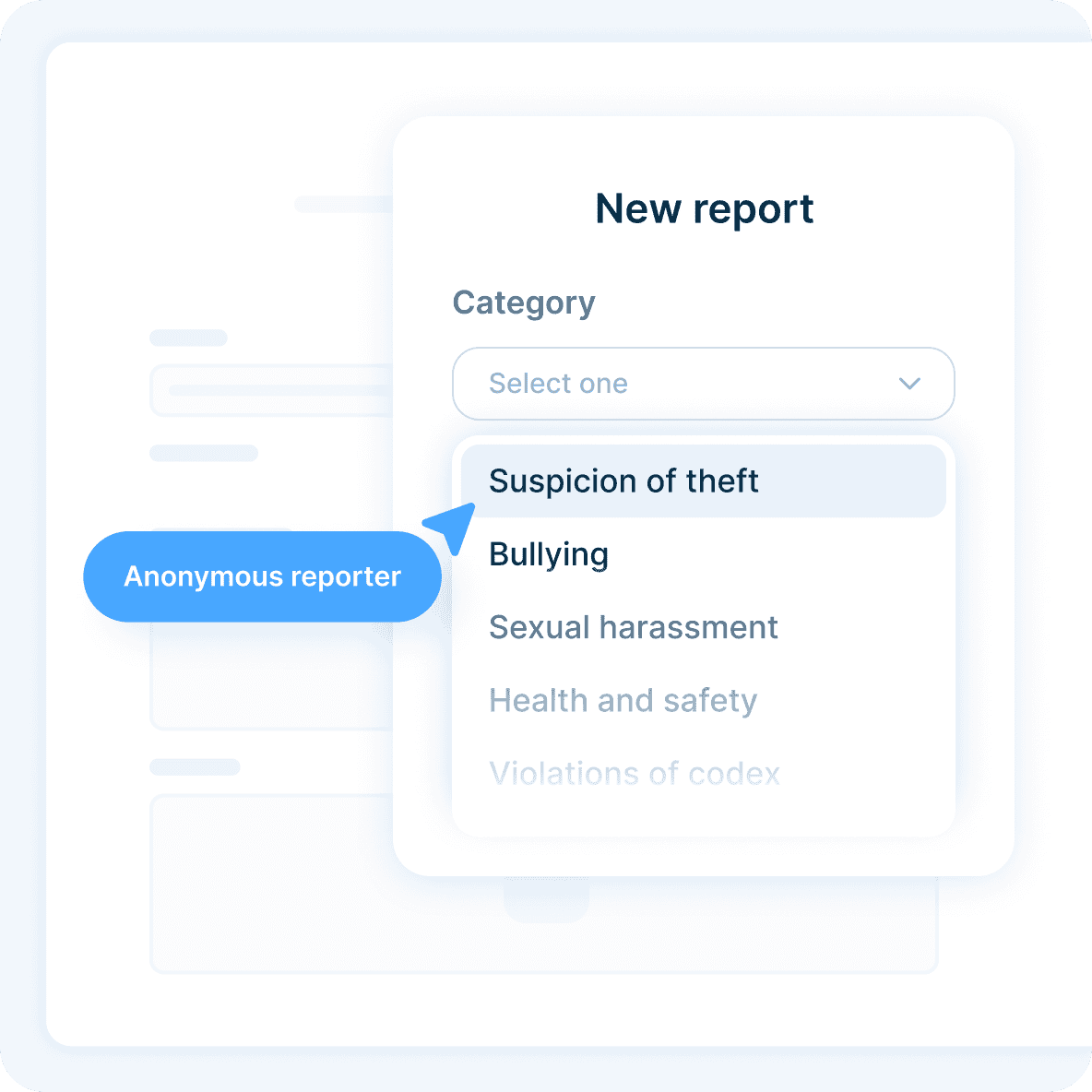
Give staff multiple secure channels to report their concerns, complete with an anonymous two-way chat.

Mobile-First Accessibility

No IP storage, no device IDs, encrypted submissions

Customizable forms, categories, routing rules, and more
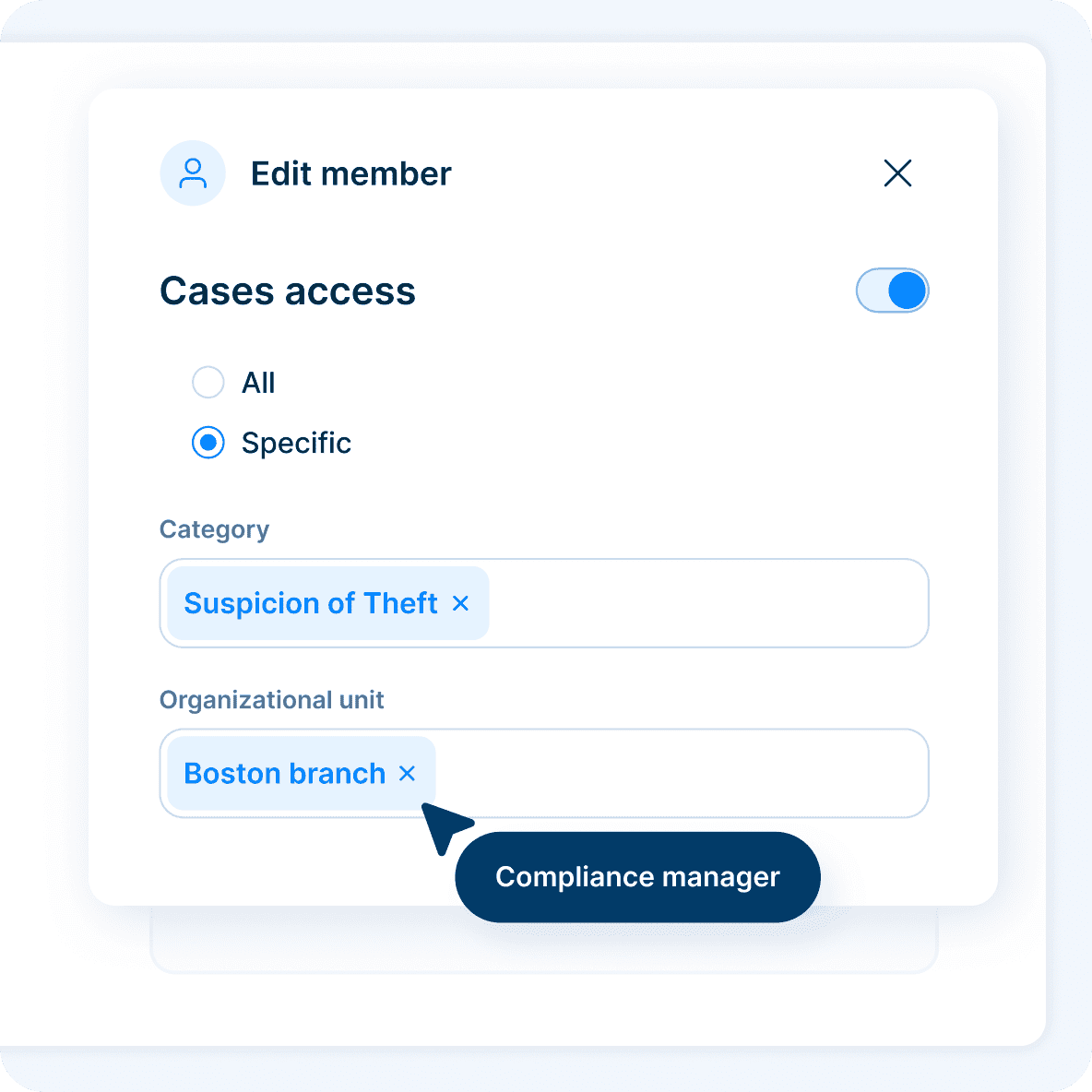
Create an easily verifiable audit trail through a customizable case management system with automatic routing.
Supports multiple locations, subsidiaries, or units

Entity-specific routing and access permissions

Optional notifications via email, Teams, or Slack
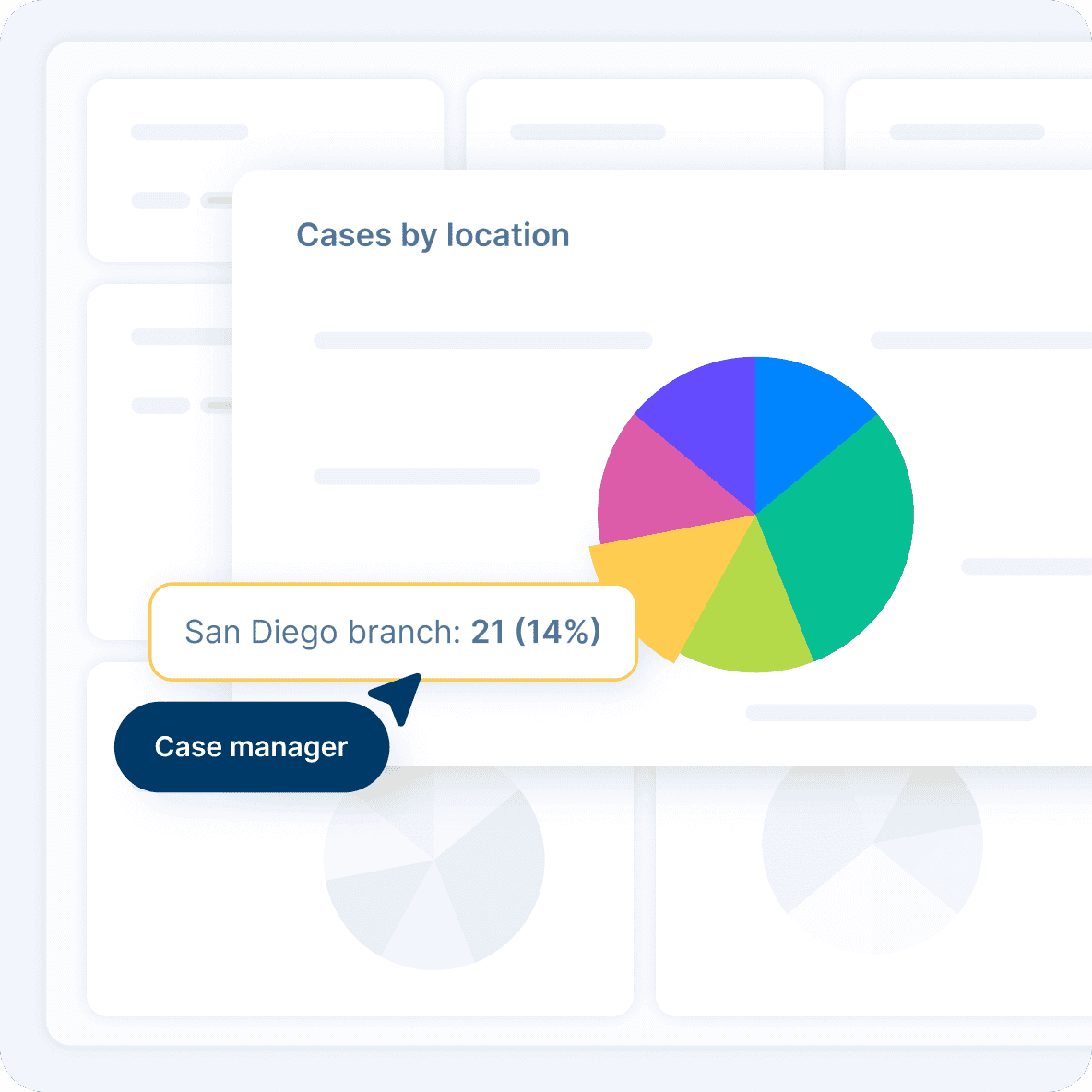
Identify trends, repeated issues, and escalation risks early with customizable visual real-time dashboards.

Filter by category, region, channel, and more

Share without revealing sensitive information

ISO 27001 and SOC 2-certified local servers