

Whistleblowing | Workplace Compliance
The General Data Protection Regulation, or GDPR, is the EU's primary data protection law, governing how organizations collect, process, and store personal data of individuals in the European Union and the European Economic Area (EEA).
 Region: EU/
 Sector: Public & Private/
 Effective date: 05/25/2018/
 Last regulatory update: N/A/
 Mandatory:Yes/
Table of contents
Europe’s General Data Protection Regulation is a unified data protection framework for all EU member states, replacing the Data Protection Directive 95/46/EC. It is also one of the most consequential privacy laws globally, applying to organizations worldwide that process the personal data of individuals in the EU or EEA.
Generally speaking, GDPR gives individuals greater control over how their personal data is collected, processed, and used. Individuals have the explicit right to access, rectify, restrict, or erase their data, with companies required to comply within clearly defined timelines.
The regulation distinguishes between two key roles a company can play. The “Controller” is an entity that determines the purposes and means of processing personal data. The “Processor” acts on behalf of the controller and carries out the actual processing. Both roles have strictly defined parameters for their lawful function, and both can face standalone enforcement action.
The GDPR is enforced by national Data Protection Authorities (DPAs) in each EU and EEA member state, acting as lead supervisory authorities in all cases concerning “Controllers” headquartered in their region. Based on the EU’s “one-stop-shop mechanism”, DPAs can set precedents for penalties that may then be enforced across all member states.
The European Data Protection Board (EDPB) coordinates enforcement across member states and issues binding decisions in cross-border cases. National courts hear GDPR-related disputes, while the Court of Justice of the European Union (CJEU) provides authoritative interpretations of EU law and ensures the consistent application of the GDPR across member states.
The GDPR has a tiered penalty structure. The more serious tier addresses violations of core obligations, such as unlawful data processing, violations of data subject rights, and breaches of international transfer rules. These violations can carry fines of up to €20 million or 4% of the offender’s total global annual turnover, whichever is greater.
The lower tier covers procedural violations, such as breaches of notification obligations and Data Protection Officer (DPO) requirements. These can result in fines of up to €10 million or 2% of total global annual turnover, whichever is greater. Additionally, DPAs have the power to impose temporary or permanent bans on data processing. Penalties apply to both controllers and processors.
To be GDPR-compliant, organizations need to implement a system of checks and balances across the entire data lifecycle. First, companies must have a lawful basis for processing personal data, whether consent, a contract, a legal obligation, a vital interest, or another lawful basis recognized under the regulation. Consent must be freely given, specific, informed, and withdrawable.
Controllers and processors must both maintain written records of processing activities, including the data processed, its purpose, retention periods, and security measures. Data subjects have the right to access, change, restrict, erase, or port their data, and in some circumstances object to processing altogether. Companies must respond to requests within one month, or up to three months in complex cases.
Data protection must be integrated into systems from the outset, and organizations are required to be able to detect, assess, and notify supervisory authorities of qualifying data breaches within 72 hours. Affected individuals must also be notified when a breach is likely to result in a high risk to their rights and freedoms.
Additionally, certain organizations, such as public authorities and those conducting large-scale systematic monitoring or processing of sensitive data, must appoint a Data Protection Officer (DPO) and conduct a Data Protection Impact Assessment (DPIA) prior to launching high-risk processing activities.
Finally, any processor engaged by a controller must be bound by a data processing agreement specifying the permitted scope and obligations. Transfers of personal data outside the EU require an adequacy decision, standard contractual clauses, binding corporate rules, or another approved transfer mechanism.
The GDPR directly intersects with whistleblowing programs and the EU Whistleblower Directive. Organizations operating reporting channels must establish a lawful basis for processing under Article 6 and, where reports may involve special category data, must also satisfy Article 9. Article 88 may provide an additional basis where member states have enacted specific employment rules that extend to internal reporting systems.
When organizations process personal data within a whistleblowing system, including the identity of reporters, persons named in reports, and the substance of allegations, that processing must comply with GDPR requirements relating to lawful processing, data minimization, retention limits, and confidentiality.
The GDPR fundamentally changed the relationship between organizations and individuals whose data they process. Prior to 2018, data protection was often treated as a legal formality. Today, the GDPR’s enforcement record, including numerous high-profile fines against major technology companies, has demonstrated that compliance obligations carry significant legal and financial consequences.
The GDPR has raised the baseline for how public and private entities handle sensitive information across their operations, including investigations, HR processes, and whistleblowing systems.
While the GDPR does not directly require whistleblowing systems, its focus on protecting data privacy places them under increased scrutiny. FaceUp helps companies comply with these requirements by supporting localized data storage and access control via role-based permissions.
Reports can be collected anonymously through web forms, iOS/Android mobile apps, and Live, Automated, and AI-Powered Hotlines, while centralized case management allows companies to define retention periods through configurable data retention controls.
The audit trail generated by every case action supports the accountability documentation that controllers are required to maintain, and the system's design supports the completion of the DPIA that organizations operating a whistleblowing channel should consider conducting before launch.


Any organization, wherever established, that processes personal data of individuals in the EU or EEA.

Up to €20 million or 4% of annual global turnover for serious violations.
Up to €10 million or 2% of annual global turnover for procedural violations.
FaceUp is an anonymous reporting and compliance platform designed to help businesses meet whistleblowing regulations worldwide, including those in the US, EU, UK, and UAE.
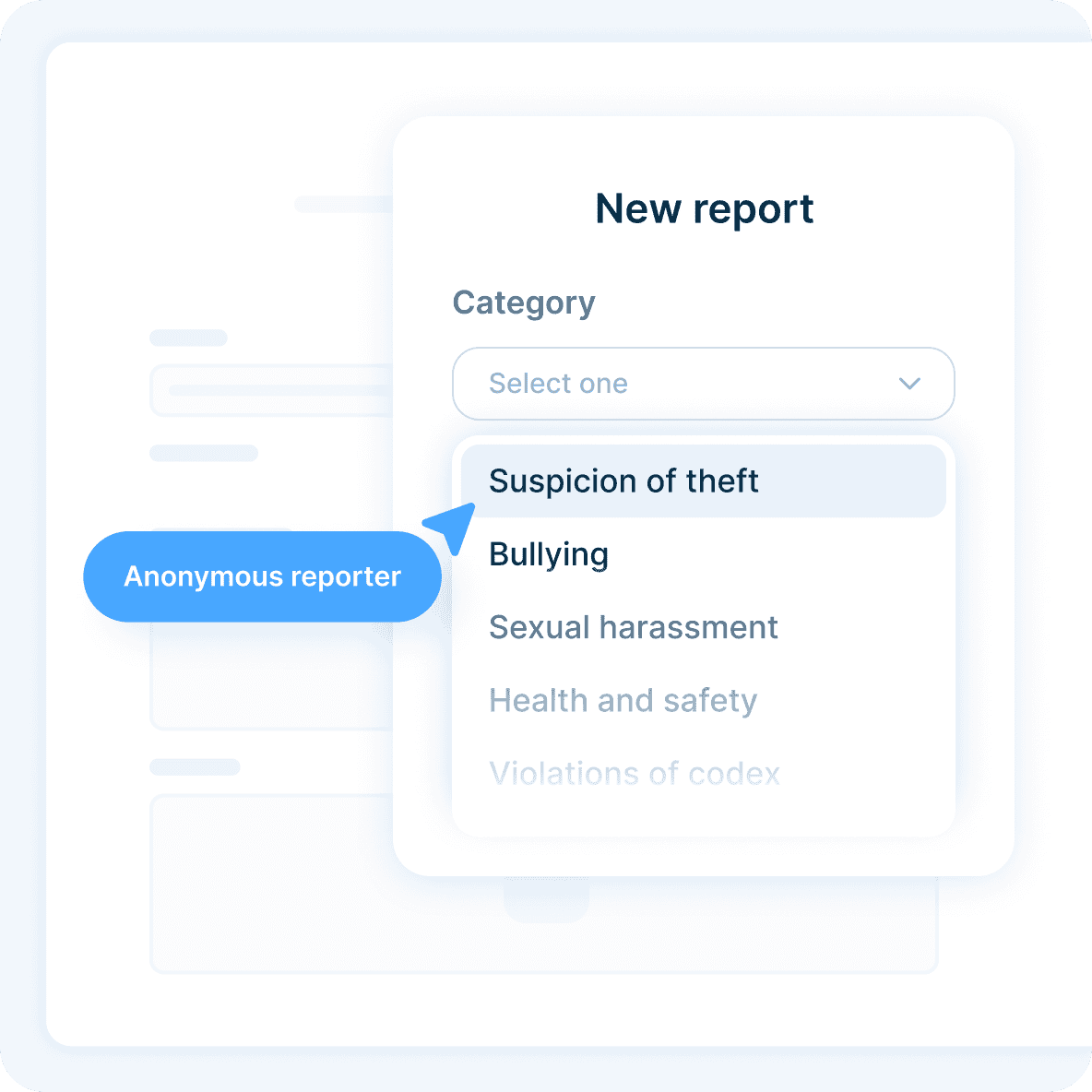
Give staff multiple secure channels to report their concerns, complete with an anonymous two-way chat.

Mobile-First Accessibility

No IP storage, no device IDs, encrypted submissions

Customizable forms, categories, routing rules, and more
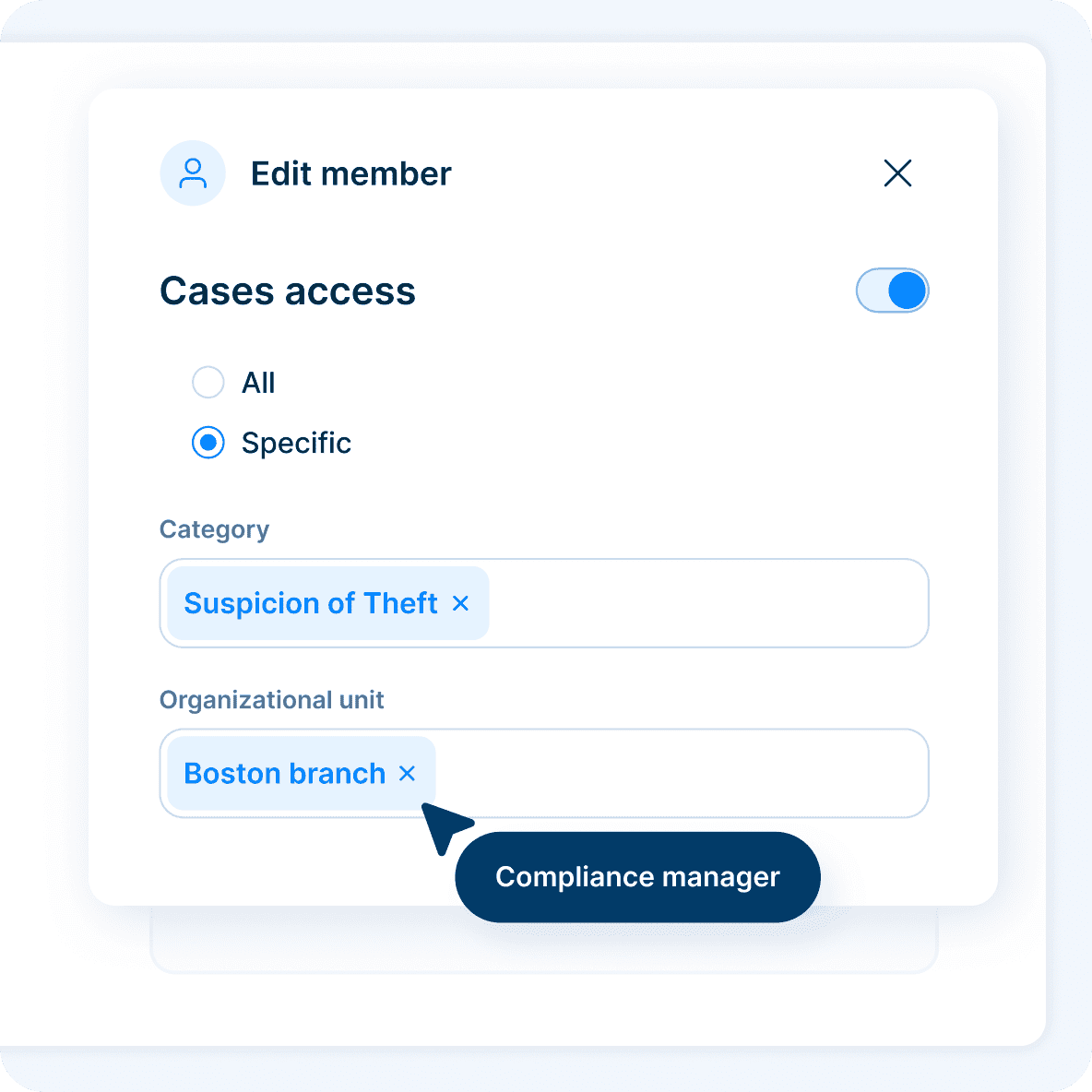
Create an easily verifiable audit trail through a customizable case management system with automatic routing.
Supports multiple locations, subsidiaries, or units

Entity-specific routing and access permissions

Optional notifications via email, Teams, or Slack
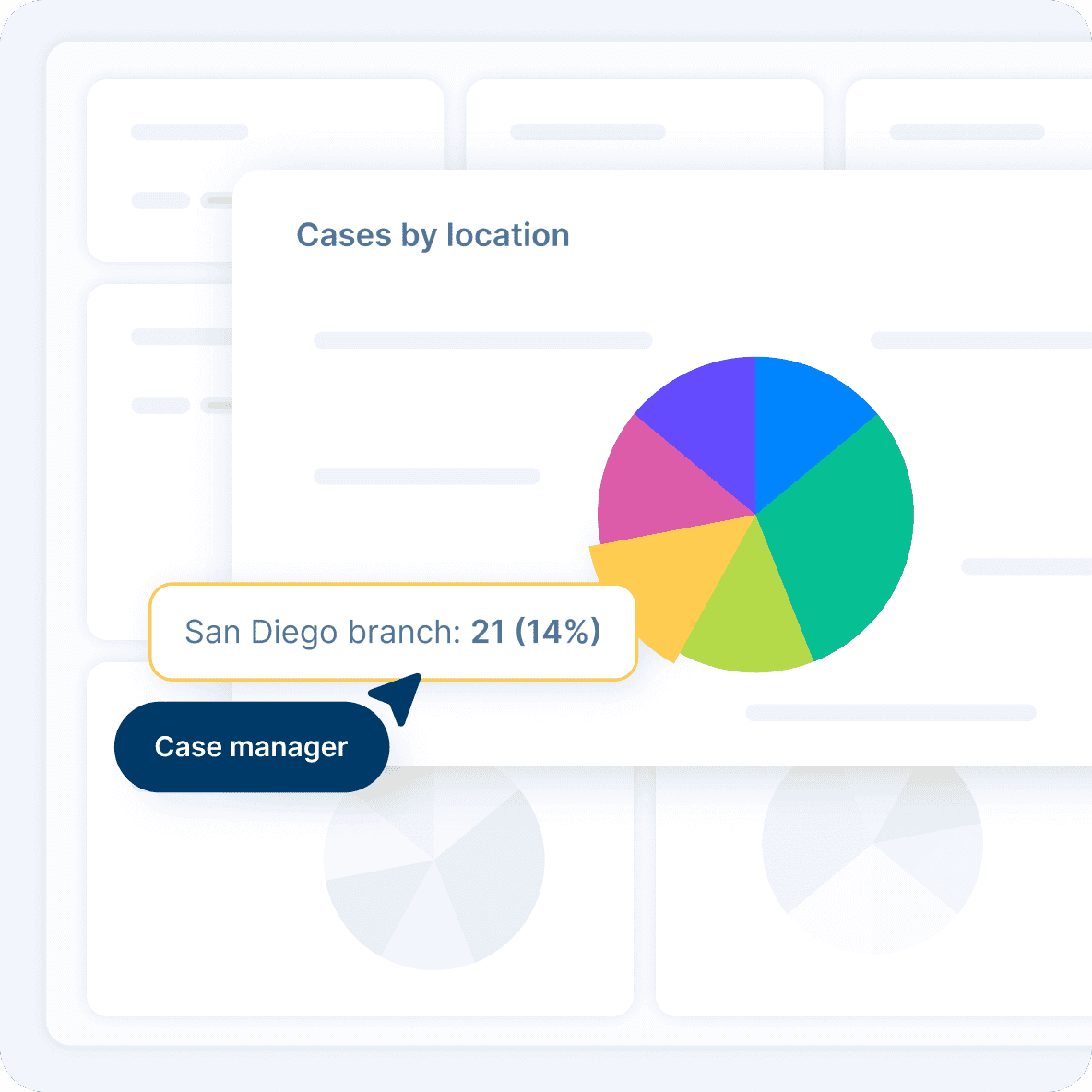
Identify trends, repeated issues, and escalation risks early with customizable visual real-time dashboards.

Filter by category, region, channel, and more

Share without revealing sensitive information

ISO 27001 and SOC 2-certified local servers